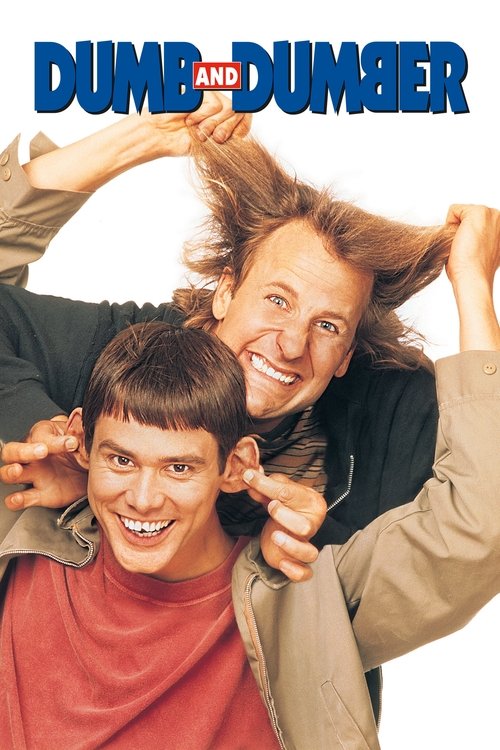
Dumb and Dumber (1994)
Directed by Peter Farrelly
No · Ultra Based
How we score movies →Consciousness Markers
The cast is predominantly white and male. The female lead exists as a love interest rather than a developed character with agency.
The female protagonist is objectified and passive. The narrative centers entirely on male desire and male friendship.
No LGBTQ+ representation or themes present in the film.
No engagement with racial themes or consciousness whatsoever. The film is racially homogeneous by design.
No environmental themes or climate messaging of any kind.
The protagonists spend the stolen money freely without irony or critique. Capitalism is never interrogated.
The film relies on body humor and physical mockery. Bodies are instruments of comedy, not subjects of acceptance.
The characters' stupidity is played for laughs, not treated with nuance or dignity. No neurodivergent representation.
No historical claims or revisionism of any kind. The film is set in the present day without historical context.
The film contains no moralizing, preaching, or preachy elements. It is pure entertainment without message.


Synopsis
Lloyd and Harry are two men whose stupidity is really indescribable. When Mary, a beautiful woman, loses an important suitcase with money before she leaves for Aspen, the two friends (who have found the suitcase) decide to return it to her. After some "adventures" they finally get to Aspen where, using the lost money they live it up and fight for Mary's heart.
Why it received this score
Dumb and Dumber presents itself as a film of absolute ideological innocence. Released in 1994, it arrives at a moment when the specific constellation of modern progressive anxieties had not yet calcified into the cultural force we now recognize. The film concerns itself entirely with slapstick, bodily humor, and the romantic misadventures of two profoundly stupid men. There is no subtext here, no hidden agenda, no whispered commitment to social consciousness. It is pure, unadulterated comedy of the lowest order, which is to say the highest order of its particular ambition.
The film's female lead, Mary, exists primarily as an object of desire rather than a subject of her own narrative. The supporting cast is uniformly white and male. There is no meaningful representation, no exploration of identity politics, no suggestion that the world contains multitudes worth celebrating. The film traffics in stereotypes about masculinity, femininity, and human worth that would make a modern progressive critic weep into their kombucha. Yet this is not malice. It is simply the casual thoughtlessness of an era before such matters became the central preoccupation of cinema.
To score this film on metrics designed for 2020s cultural analysis is to perform a kind of category error. We are measuring a 1994 comedy by standards that did not exist in 1994. The film does not fail these standards through commission; it fails them through temporal displacement. It is a relic of a more innocent age, when filmmakers could be stupid without it being a statement.
Analysis generated by our Consciousness Algorithm
Critic Reviews
“This wacky buddy road film... has a brilliant glow of intelligence behind the stupidness. It's easily the funniest movie of the year.”
“A flat-out celebration of stupidity, bodily functions and pratfalls. Yet the wholeheartedness of this descent into crude and rude humor is so good-natured and precise that it's hard not to partake in the guilty pleasures of the exercise.”
“There are limits to how much comic irony can be wrung out of the sight of two grown men acting like complete cretins.”
“An abominable, abdominal comedy. Aside from its tastelessness and dawdling pace, the movie’s chief problem is the lackluster chemistry between leading lummoxes Jim Carrey and Jeff Daniels.”