Dry Leaf (2025)
Directed by Alexandre Koberidze
No · Ultra Based
How we score movies →Consciousness Markers
The cast includes Georgian actors in a Georgian film, with no apparent attention to diversity metrics. The female protagonist exists primarily as an absence rather than as a character developed through representation politics.
The film depicts rural, non-urban spaces and working-class characters, but this reflects the narrative setting rather than any critique of capitalism. There is no examination of class structures or economic systems.
The protagonist is female, but her gender is narratively incidental. There is no examination of patriarchy, misogyny, or female agency. Her disappearance and the search for her are treated as universal human tragedy rather than specifically gendered oppression.
Rural Georgian landscapes feature prominently, but the film shows no environmental consciousness or climate activism. The rural setting is aesthetic and emotional rather than political or ecological in orientation.
The film is deliberately opaque and resists explicit meaning-making. It trusts the viewer to interpret its metaphors without didactic guidance, though the three-hour duration and deliberate pacing could read as self-serious to some.
No LGBTQ+ themes are evident in the film. The relationship between Lisa and Levani is presented as a close friendship without any explicit sexual or romantic dimension that would trigger contemporary social consciousness about queer representation.
The film is set in rural Georgia with an ethnically Georgian cast. There is no engagement with race, colonialism, or racial justice frameworks. The setting reflects the filmmaker's own cultural context rather than any deliberate statement about racial representation.
No neurodivergent representation is evident. The invisible characters could be interpreted metaphorically as existing outside normal perception, but the film makes no explicit engagement with disability or neurodiversity frameworks.
Body positivity is entirely absent from the film's concerns. The protagonist is absent from the screen, and other characters are presented without any commentary on body image or physical appearance.
The film contains no historical narrative or revisionist engagement with historical events. It is a contemporary work set in present-day Georgia without historical pretensions.
Synopsis
Lisa, a photographer, has gone missing. The last known detail is that she had been photographing rural football stadiums in villages across Georgia. Her father, Irakli, sets out to search for her, traveling from place to place. Levani, Lisa's best friend – and an invisible person – also sets off to help.
Why it received this score
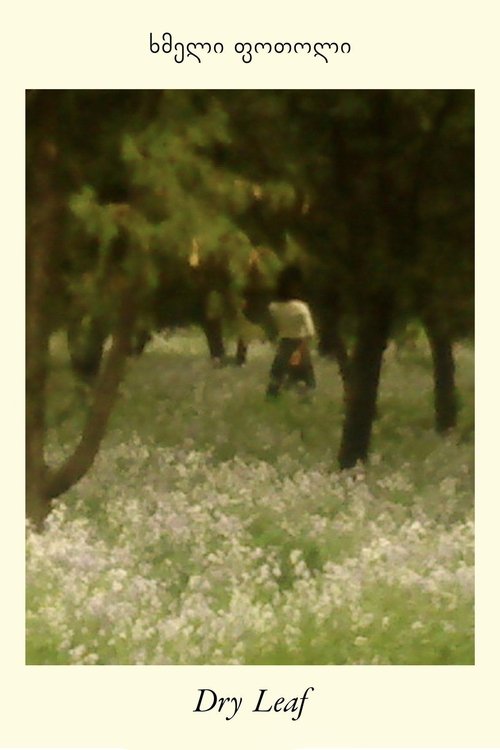
Alexandre Koberidze's "Dry Leaf" is a three-hour experimental meditation on loss and visibility, shot deliberately on an outdated smartphone to render its Georgia countryside in pixelated abstraction. The film's central conceit involves invisible characters, most notably Levani, the missing girl's best friend who exists only as a voice and presence without form. This is not a gimmick in service of social commentary about marginalization or erasure, though critics have intuited such meanings. Rather, it functions as pure metaphor, a poetic device to explore grief and the ineffable nature of human connection. Koberidze employs the low-fidelity aesthetic not to make any statement about technology or inequality but to create a visual poetry that matches his emotional register.
The film's sensibility is orthogonal to contemporary progressive consciousness. It contains no representation agenda, no interrogation of power structures, no climate consciousness, no examination of identity categories. Its female protagonist is a photographer, but this detail serves the narrative of her disappearance rather than any feminist framework. The rural Georgian setting and the presence of Koberidze's actual father in the cast suggest an intimate, familial meditation rather than a work of ideological statement. The invisible characters invite metaphorical interpretation about loss and invisibility, but the film resists anchoring these metaphors to any particular social justice framework. This is an artist working in the tradition of European art cinema, concerned with form, duration, and the ineffable rather than with cultural consciousness.
What distinguishes "Dry Leaf" is its refusal to perform progressive consciousness. In the landscape of contemporary cinema, this reads as almost radical. The film treats its audience with the assumption that we are capable of sitting with ambiguity and emotional complexity without the scaffolding of explicit social meaning. It is a work about time, memory, and the limits of representation, which happen to be concerns that predate and will outlast the current moment's particular preoccupations.
Analysis generated by our Consciousness Algorithm
Critic Reviews
“Defiantly peculiar and only a little overlong at three hours, Dry Leaf is a joy for devotees of the strange, singular and sometimes transcendent. It’s a movie to ride shotgun alongside, with the windows down on a lazy trip to nowhere in particular, that ends up taking you everywhere in particular.”
“Koberidze invites us to reshape and reappraise our perspective on what constitutes beauty. It’s a bold decision and, coupled with the endurance-testing pacing and running time, one which will make the film something of a marketing challenge beyond the die-hard Koberidze fan base. And yet there is something alluring here – it’s a meditative and elusive picture that conveys a spiritual beauty as much as an aesthetic one.”
“Alexandre Koberidze reminds us that not seeing is sometimes a way of seeing the world differently. ”
“The sensory appeal of the technical limitations only lasts for so long. And as a feature, “Dry Leaf” does feel oh so long once there soon proves to be little variety to the bag of visual tricks over three hours.”