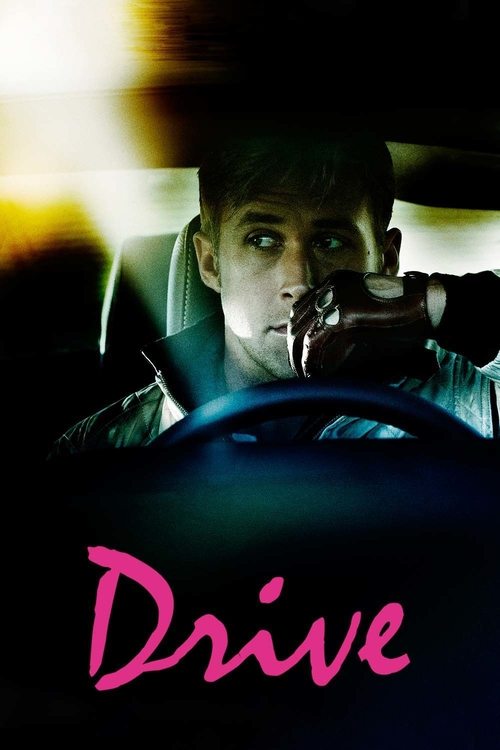
Drive (2011)
Directed by Nicolas Winding Refn
No · Ultra Based
How we score movies →Consciousness Markers
The film depicts crime and wealth inequality in Los Angeles, but these are presented as noir atmosphere rather than ideological critique of capitalism.
The cast reflects conventional Hollywood casting with no deliberate representation strategy or diverse casting choices that signal progressive intent.
No LGBTQ+ characters, themes, relationships, or subtext are present in the film.
Female characters exist primarily as passive love interests and emotional motivators for the male protagonist, with no feminist critique or consciousness evident.
The film contains no engagement with racial themes, racial justice, or any form of racial consciousness.
No environmental or climate-related themes, imagery, or messaging are present.
No engagement with body representation, body standards, or body positivity themes.
No representation of or thematic engagement with neurodivergence or disability.
The film is set in contemporary Los Angeles and contains no historical revisionism or reinterpretation of past events.
The film is deliberately sparse in dialogue and does not preach or lecture audiences about social issues, maintaining an atmospheric rather than preachy approach.


Synopsis
Driver is a skilled Hollywood stuntman who moonlights as a getaway driver for criminals. Though he projects an icy exterior, lately he's been warming up to a pretty neighbor named Irene and her young son, Benicio. When Irene's husband gets out of jail, he enlists Driver's help in a million-dollar heist. The job goes horribly wrong, and Driver must risk his life to protect Irene and Benicio from the vengeful masterminds behind the robbery.
Why it received this score
Nicolas Winding Refn's "Drive" is a meticulously composed exercise in aesthetic minimalism and moral ambiguity. The film presents a Los Angeles suffused with neon and shadow, where a taciturn protagonist navigates the criminal underworld with the precision of a samurai and the emotional capacity of a stone. Refn's directorial vision prioritizes mood and visual composition over narrative exposition or thematic elaboration. Dialogue is sparse, violence is sudden and brutal, and the emotional arc is conveyed through extended silences and lingering gazes. This is cinema as mood rather than message.
The female characters in the film, most notably Carey Mulligan's Irene, function as emotional anchors for the male protagonist's transformation. Irene is sympathetic and vulnerable, but she remains fundamentally passive within the narrative structure. She is something to be protected, a catalyst for violence, rather than an active agent in her own story. The film shows no interest in interrogating this dynamic or presenting it as problematic. It simply presents it as the natural order of its particular universe.
What one observes across the entire runtime is a deliberate indifference to contemporary social consciousness. The film is interested in style, violence, and the existential loneliness of its protagonist. It contains no lectures about systemic inequality, no celebration of diversity, no interrogation of gender dynamics, no environmental concern. It is, in this sense, a film from another era of cinema, one that preceded the constellation of progressive sensibilities that would come to dominate cultural discourse. "Drive" remains steadfastly unconcerned with the world outside its perfectly composed frame.
Analysis generated by our Consciousness Algorithm
Critic Reviews
“Starring Ryan Gosling as a Hollywood stuntman/getaway driver, Drive takes the tired heist-gone-bad genre out for a spin, delivering fresh guilty-pleasure thrills in the process. ”
“Drive feels like some kind of masterpiece - it's as pure a version of the essentials as you're likely to see. ”
“The film is little more than an exercise in style, but it's dazzling and mythic, a testament to the fundamental appeal of fast cars, dangerous men, and tension that squeezes like a hand to the throat.”
“Every bit as dumb as August's "Conan the Barbarian" but awash in neon-lit nightscapes and existential dread, with killings so graphic that you can't entirely believe what you're gagging at.”