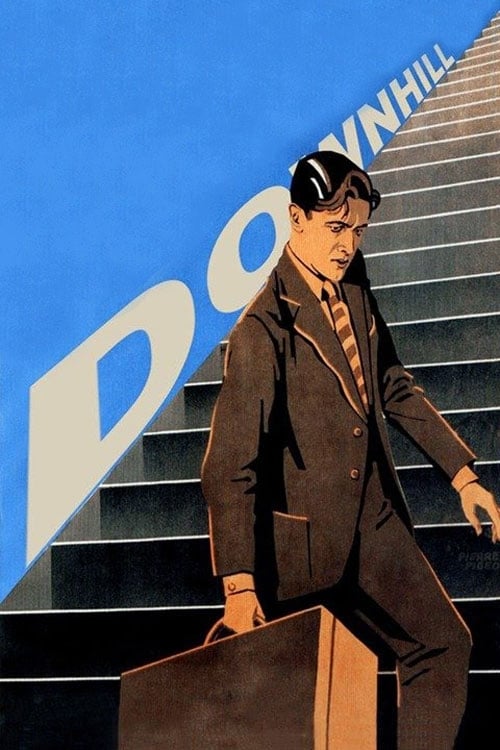
Downhill (1927)
Directed by Alfred Hitchcock
No · Ultra Based
How we score movies →Consciousness Markers
The film contains minimal preachy elements, though its moralistic narrative about social consequences carries faint traces of moral instruction.
The cast reflects 1920s British theater conventions with no deliberate diversity or representation strategy evident.
No LGBTQ+ themes or representation are present in the film.
The film does not engage with feminist themes or gender critique.
No racial consciousness or diversity themes appear in the film.
Climate change or environmental activism are entirely absent from the narrative.
The film does not critique capitalism or economic systems; its focus is personal morality.
Body positivity or discussions of physical appearance and acceptance are not present.
No representation of neurodivergence or disability consciousness appears in the film.
The film does not reinterpret historical events or narratives.


Synopsis
When school captain Roddy Berwick takes the blame for his friend's scandal, he is expelled and disowned by his family. Cast out of his privileged world, Roddy drifts through a series of humiliations—from waiter to penniless actor to gigolo—descending ever further into ruin and self-disgust.
Why it received this score
Downhill presents itself as a meditation on class, scandal, and social degradation, themes that feel almost quaint in their specificity to the concerns of 1920s British society. The film follows a privileged young man's descent through various humiliating positions as he bears the consequences of taking the fall for his friend. This is, at its core, a tragedy about social structure and shame, not a work concerned with contemporary progressive consciousness. The casting reflects the theatrical world from which Hitchcock emerged, with no apparent deliberation toward diverse representation as a cultural statement. The film's moral framework is conservative, concerned with the consequences of scandal rather than interrogating the systems that produce such consequences.
In the vocabulary of modern cultural analysis, Downhill registers as nearly silent. There are no LGBTQ+ themes presented as such, no interrogation of gender roles that might be called feminist, no racial consciousness, no environmental messaging, and certainly no anti-capitalist sentiment. The protagonist's degradation is presented as a natural consequence of his circumstances rather than as an opportunity for social critique. What we encounter instead is a straightforward narrative of falling status, a plot device as old as drama itself. Hitchcock would eventually become a master of suspense and psychological tension, but in this early work, he remains primarily interested in documenting the mechanics of social collapse.
This is not to diminish the film's cultural or historical significance. It deserves recognition as an important artifact of early British cinema and as evidence of Hitchcock's developing craft. Yet it would be a category error to assess it through the lens of sensibilities that would not emerge for nearly a century. The film exists in a different moral universe entirely, one where social class and personal honor carry meanings that later cinema would either complicate or abandon entirely.
Analysis generated by our Consciousness Algorithm
Critic Reviews
“I loved Downhill for precisely what it meant to be—a character-driven comedy working its way through a painful and real conflict.”
“As an attempt to scale the craggy heights of a marriage in crisis, Downhill may be more bunny slope than black diamond — a force mineure, but still worth the trip.”
“It can’t quite match the power of Östlund’s film, or its bemused, clinical (dare I say Scandinavian?) sensibility, but it has an awkward, American charm all its own.”
“When the best thing about a movie is the title, that’s never a good sign. It’s all downhill from there? Exactly, and that’s the case with Downhill.”