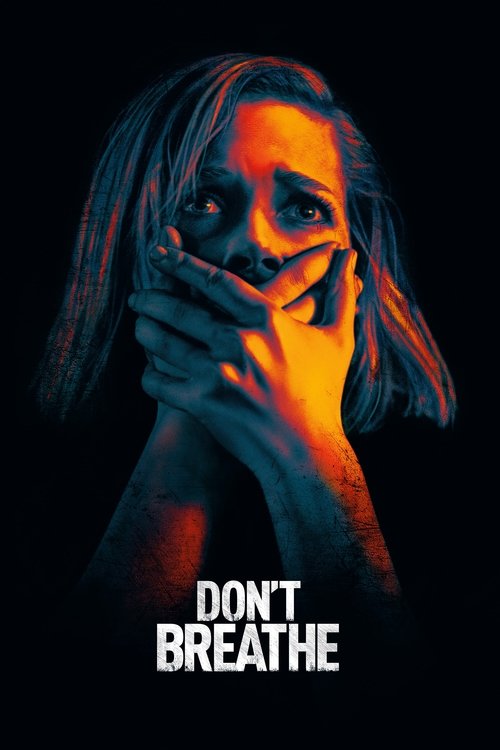
Don't Breathe (2016)
Directed by Fede Álvarez
No · Ultra Based
How we score movies →Consciousness Markers
The protagonist's blindness is central to the plot, though the film's portrayal is ambiguous. The blind man is extraordinarily capable and dangerous, which subverts stereotypes but remains morally complicated.
The cast includes actors of various ethnic backgrounds, though this appears incidental to the story rather than deliberate representation. The diverse casting reflects the urban setting naturally.
The teenagers' motivation stems from economic hardship and desperation, suggesting class struggle, but the film treats this as character motivation rather than systemic critique.
One of the primary protagonists is a young woman (Jane Levy's character), but the film does not engage with feminist themes or commentary. Her agency exists within the heist narrative only.
No LGBTQ+ themes, characters, or subtext are present in the film.
The film contains no explicit racial consciousness, commentary on race relations, or thematic engagement with racial identity.
Climate change or environmental concerns are entirely absent from the film's narrative.
The film contains no commentary on body image, body diversity, or body positivity messaging.
No historical revisionism or reinterpretation of history is present in the film.
The film does not pause to deliver moral lectures or preachy commentary about social issues.


Synopsis
A group of teens break into a blind man's home thinking they'll get away with the perfect crime. They're wrong.
Why it received this score
Don't Breathe is a competently constructed thriller that traffics primarily in suspense rather than social commentary, despite the rich thematic possibilities lurking beneath its surface. The film's central conceit involves a reversal of power dynamics, with the ostensible victim becoming the story's most formidable force, but this inversion serves narrative tension more than it serves any coherent statement about disability or vulnerability. Stephen Lang's blind veteran is portrayed as superhuman in his capabilities, which technically avoids the pitfall of depicting disability as helplessness, yet the film remains fundamentally uninterested in interrogating what this representation might mean. The teenagers' economic desperation provides a faint echo of class commentary, as their neighborhood is visibly deteriorating and their motivation stems from genuine scarcity rather than mere greed. Yet this context functions as plot scaffolding, not as social critique. The diverse casting, while present, appears organic to the urban setting rather than the result of any deliberate commitment to representation.
What emerges from this analysis is a film that exists almost entirely in the register of pure genre exercise. The moral ambiguity at its core, where we are asked to sympathize with criminals and fear their victim, could have generated substantial thematic weight had the filmmakers been interested in exploring it. Instead, Álvarez treats the scenario as a mechanism for generating scares and reversals. The film's restraint regarding social commentary becomes almost noteworthy in its completeness, as if the director consciously decided that the story's inherent tensions were sufficient without additional ideological burden. This is not necessarily a criticism. The film succeeds on its own terms as a horror-thriller, but those terms remain largely divorced from the cultural preoccupations that might otherwise define it as a work of progressive sensibility.
The absence of any lecture-like quality is perhaps the film's most definitive characteristic. It refuses to pause and explain itself, to justify its moral positions, or to telegraph its sympathies. This restraint itself becomes a kind of statement, though not one that typically registers on contemporary social consciousness scales. Don't Breathe functions as a thriller first and a cultural artifact second, which may explain why it generates so little friction on either side of contemporary cultural debates. It is, in its way, perfectly neutral, which is precisely the opposite of what one might expect from a film that could have been a meditation on class, disability, violence, and justice.
Analysis generated by our Consciousness Algorithm
Critic Reviews
“The tension never lets up and the shocking twists in the story need to be seen to be believed.”
“A home invasion story that is as artfully terrifying as "Home Alone" was entertainingly hilarious.”
“This elegant and surprisingly fast-paced blend of horror and suspense overcomes some of its more ridiculous ingredients thanks to endless invention.”
“There is an unpredictability to the film that is, at times, refreshing. This unpredictability turns into meandering, however, leading to narrative incoherence at many points.”