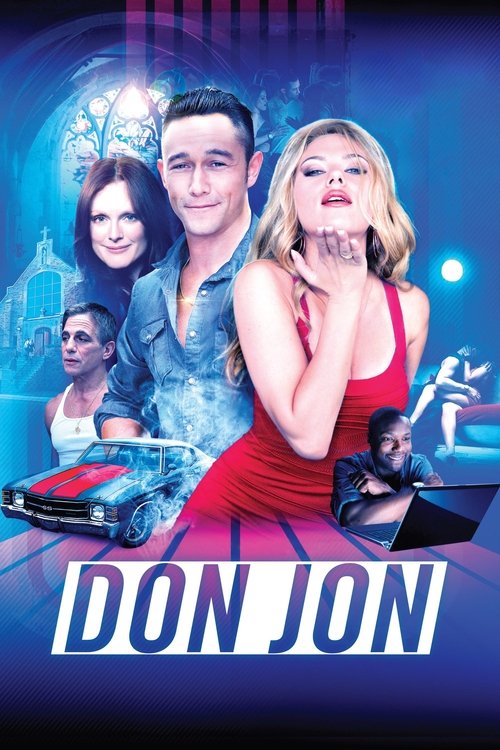
Don Jon (2013)
Directed by Joseph Gordon-Levitt
No · Based
How we score movies →Consciousness Markers
The film engages with gender dynamics and male-centered objectification, presenting these as problems to be overcome. However, the resolution emphasizes male redemption through romantic partnership rather than systemic critique, limiting the feminist substance.
The cast includes women in substantive roles, particularly Julianne Moore, but the film's narrative structure limits most female characters to supporting functions in the male protagonist's journey. Brie Larson appears in a minor role with minimal development.
The film occasionally veers into preachy territory regarding male socialization and pornography's effects on relationships, though this tendency is relatively restrained compared to more overtly pedagogical films.
The film is set in New Jersey with a predominantly white cast and contains minimal racial consciousness or engagement with diversity. Rob Brown appears in the cast but his character receives minimal screen time or development.
The film contains no LGBTQ+ themes, characters, or representation. Sexuality is discussed exclusively in heterosexual contexts.
There is no engagement with climate change, environmental concerns, or ecological consciousness in the film.
The film contains no critique of capitalism or class systems. Jon's working-class background is presented as cultural identity rather than economic commentary.
The film does not engage with body positivity themes. The narrative is primarily concerned with sexual objectification rather than body image acceptance.
There is no representation of neurodivergence or engagement with disability and neurodivergent themes in the film.
The film is a contemporary comedy-drama with no historical narrative or revisionist historical claims.


Synopsis
A New Jersey guy dedicated to his family, friends, and church, develops unrealistic expectations from watching porn and works to find happiness and intimacy with his potential true love.
Why it received this score
Don Jon presents a peculiar temporal artifact, a film that seems to believe it is conducting serious gender criticism while simultaneously undermining its own thesis through narrative choices that haven't aged well. The film's central conceit, that pornography consumption damages one's capacity for genuine intimacy, carries a certain conservative moral undertone that feels oddly at odds with the progressive intentions suggested by its treatment of female characters. Julianne Moore's character, a widow struggling with grief and mortality, receives more substantive character development and agency than the film's younger female leads, which creates an unintentional hierarchy of female worth based on age and emotional availability. The film conflates pornography consumption with toxic masculinity, yet the resolution suggests that redemption comes through romantic partnership and spiritual growth rather than through any fundamental reckoning with the systems that produce such consumption.
The film's treatment of masculinity is where its progressive sensibilities begin to fray noticeably. Jon's journey involves learning to see women as full human beings rather than objects, which is presented as a revelation earned through female mentorship and romantic vulnerability. This framework, while superficially sympathetic, still centers male growth and emotional development as the primary narrative thrust, with women positioned as instruments of that transformation. Scarlett Johansson's character exists largely as a projection screen for Jon's fantasies and insecurities rather than as a fully realized person with her own interiority. The film touches on issues of male socialization and familial expectations, but these explorations remain largely surface-level, never interrogating the deeper structures that produce such behaviors or the genuine harm they cause.
The film mistakes the representation of progressive ideas for the execution of them. The film's engagement with pornography, addiction, and gender relations feels more like a sketch than a genuine inquiry. By 2013 standards, the willingness to center pornography as a serious narrative subject was relatively bold, yet the moral framework surrounding it remains distinctly conservative. The film wants credit for being provocative while ultimately endorsing a fairly conventional vision of redemption through love and spiritual practice. It is a film that believes itself to be more socially conscious than it actually is, which may be its most revealing quality.
Analysis generated by our Consciousness Algorithm
Critic Reviews
“Gordon-Levitt won't take safe for an answer. So Don Jon tends to stumble as it finds its feet. Still, you leave this movie feeling had at instead of had. The experience is elating. ”
“A beguiling romantic comedy with a heart, soul and pulse that will pleasure you for a full 90 minutes with hardly breaking a sweat.”
“Gordon-Levitt proves a natural filmmaker, nimbly staging Jon's highly amusing Catholic confessions, along with porn montages that mimic the dopamine-charged editing of "Requiem for a Dream." He also gets a terrific performance out of Tony Danza as Jon's hilariously blinkered brute of a dad. ”
“Crude, repetitive and rigorously single-minded, the popular actor’s writing and directing debut lays it all on a bit thick, as the few points the film has to make are underscored time and time again.”