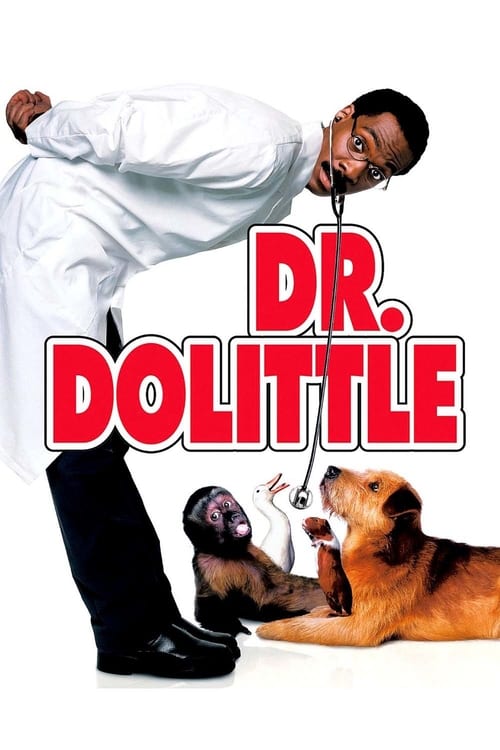
Doctor Dolittle (1998)
Directed by Betty Thomas
No · Ultra Based
How we score movies →Consciousness Markers
The film features a racially diverse cast including Eddie Murphy, Ossie Davis, Kristen Wilson, and Raven-Symoné, reflecting late-1990s casting practices, but this diversity appears incidental to the narrative rather than intentional.
While the cast is racially diverse, the film shows no awareness of racial dynamics or systemic issues. Diversity is treated as a neutral fact rather than a subject for exploration.
Female characters exist primarily in supporting roles. Kristen Wilson and Raven-Symoné appear in the cast, but their characters lack agency or meaningful development in the narrative.
The film occasionally lectures about the importance of family or listening to others, but these messages are delivered through conventional family entertainment rather than pointed cultural commentary.
The film briefly gestures toward corporate medical bureaucracy as an obstacle, but resolves this conflict without any systemic critique or challenge to capitalist structures.
Although the film involves communication with animals, there is no environmental consciousness or climate advocacy present. The animals exist for comedic purposes only.
No LGBTQ+ themes or representation are present in this family comedy. The film contains no romantic or sexual subplots that might engage with these concerns.
No meaningful engagement with body positivity or fat acceptance. The film treats bodies as neutral vessels for comedy rather than sites of cultural significance.
The film contains no representation of or engagement with neurodivergence. The protagonist's ability to talk to animals is played as magical rather than neurological.
This contemporary comedy makes no claims about historical events or narratives. No revisionist history is present.


Synopsis
A successful physician and devoted family man, John Dolittle seems to have the world by the tail, until a long suppressed talent he possessed as a child, the ability to communicate with animals is suddenly reawakened with a vengeance. Now every creature within squawking distance wants the good doctor's advice, unleashing an outrageous chain of events that turns his world upside down.
Why it received this score
Doctor Dolittle arrives at the tail end of the 1990s as a thoroughly unremarkable piece of commercial entertainment, a film so committed to the pursuit of family-friendly box office returns that it scarcely bothers to think about anything at all, let alone questions of social consciousness. Eddie Murphy's physician protagonist speaks to animals, chaos ensues, and the narrative machinery grinds forward with the inevitability of a greeting card factory. The film's modest diversity in casting reflects the late 1990s Hollywood tendency toward colorblind representation rather than any coherent artistic vision, and its female characters exist primarily as supporting apparatus in the machinery of male comedy.
What emerges most clearly from this enterprise is a film wholly indifferent to cultural critique or progressive sensibility. The animals in the film communicate their desires and needs, but there is no engagement with environmental consciousness, no suggestion that our relationship to the animal world requires reconsideration. The corporate medical establishment that briefly threatens our hero's peace of mind dissipates without meaningful commentary on systemic power. The film's understanding of human diversity consists of casting actors of different backgrounds and then asking them to deliver jokes about talking dogs, an approach that mistakes representation for consciousness.
We are left with a film that occupies a comfortable middle ground of absolute inoffensiveness, a 104-minute exercise in the accumulation of no particular meaning. It is not actively hostile to progressive values, but neither does it engage with them, and that indifference may be the most honest thing the film has to offer. It exists, it makes its animal noises, and it departs, leaving no trace upon the cultural landscape.
Analysis generated by our Consciousness Algorithm
Critic Reviews
“Director Betty Thomas demonstrates her expertise at keeping indulgence at bay in even the coarsest of comic situations.”
“Too many adults have a tendency to confuse bad taste with evil influences; it's hard for them to see that the activities in Doctor Dolittle, while rude and vulgar, are not violent or anti-social.”
“Given a choice between the puerile but essentially innocent whimsy of Dr. Dolittle and the dimwitted nastiness of, say, Dirty Work, parents should be grateful for the Eddie Murphys and Jim Carreys of the world for at least providing a kinder, gentler option.”