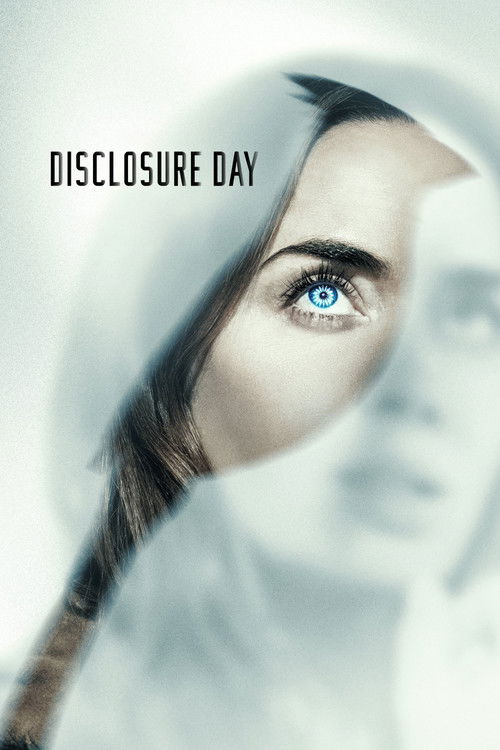
Disclosure Day (2026)
Directed by Steven Spielberg · $114.6M domestic
No · Based
How we score movies →Consciousness Markers
The antagonist force is explicitly a corporation concealing alien secrets from the public, a concrete deployment of the evil-corporation archetype. The whistleblower narrative frames corporate power as the primary obstacle to truth.
The ensemble includes Colman Domingo and Emily Blunt as a female co-lead, reflecting a consciously diverse cast. The film does not appear to foreground these identities as thematic material, but the composition itself is deliberate.
Critics describe the film as a 'thinking person's blockbuster' built around 'big questions' about power, institutional deception, and collective will. Spielberg's characteristic humanism carries some thematic weight, though reviewers stop well short of calling it preachy.
Emily Blunt anchors one of the two lead narratives as a scientist, and the film treats her character with full agency. There is no evidence of explicit feminist messaging or commentary beyond the casting itself.
The meteorologist lead experiences 'strange phenomena' that could carry faint atmospheric anxiety, but the context is unambiguously alien contact rather than climate crisis messaging.
No evidence of LGBTQ+ themes, characters, or narrative elements in available research or critical coverage.
No evidence of racial themes, race-conscious framing, or commentary on systemic racism in any available coverage of the film.
No evidence of body positivity themes, messaging, or relevant character dynamics in any available material.
No evidence of neurodivergence themes or representation in any available material.
The film is a near-future science fiction thriller with no historical revisionism. There is no historical period or received narrative being reexamined.
Synopsis
A cybersecurity expert becomes a whistleblower after uncovering secrets about aliens, putting him on the run from a corporation. Meanwhile, a meteorologist experiencing strange phenomena joins forces with him to prove there's life beyond our understanding.
Why it received this score
Steven Spielberg returns to the alien contact genre he helped define, and the results are, by most accounts, competent and occasionally moving. Where "Close Encounters of the Third Kind" treated extraterrestrial visitation as a spiritual event and "E.T." treated it as a tearful goodbye, "Disclosure Day" treats it as a corporate liability. This is progress of a kind. The film follows a cybersecurity whistleblower and a meteorologist as they converge on the same unsettling truth, pursued by institutional forces that would prefer the truth remain unsettling in private. The machinery is familiar. The execution is professional.
The film's social consciousness is present but not overbearing, which is itself a form of restraint worth acknowledging. The villain is a corporation, as corporations so often are in films made by people who work for corporations. The ensemble is assembled with evident intentionality, featuring Colman Domingo alongside Emily Blunt in what critics describe as a dual lead structure, though neither character's identity appears to function as thematic commentary. Spielberg remains committed to his brand of large-scale humanism, the kind that believes collective will and individual courage can defeat organized institutional deception, which is either inspiring or a fantasy depending on your current reading list.
What keeps "Disclosure Day" from registering as a full-throated cultural intervention is its genre loyalty. It wants, above all else, to be a thriller, and thrillers have always been more interested in momentum than in making you feel bad about your consumption habits. The anti-capitalist undercurrent is real but subordinate to the chase. The casting is diverse but the diversity is not the point. Critics note the film "doesn't rate among the icon's finest," which is the kind of sentence that functions as both a compliment and a verdict. It is, in the end, a Spielberg film about the power of ordinary people against extraordinary forces, and he has made this film before, and he will presumably make it again, and audiences will cry in the final thirty minutes regardless.
Analysis generated by our Consciousness Algorithm