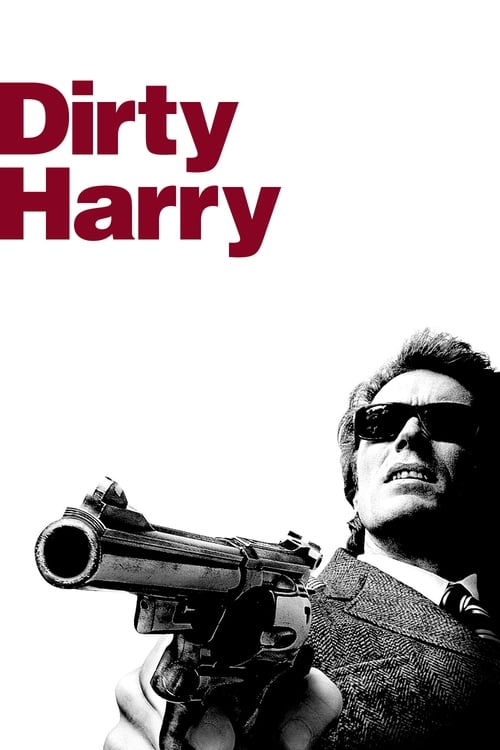
Dirty Harry (1971)
Directed by Don Siegel
No · Ultra Based
How we score movies →Consciousness Markers
Cast includes some minority actors in supporting roles, but without intentional representation strategy or thematic engagement with their presence.
Female characters exist in the film but serve functional roles. No feminist agenda or commentary on gender dynamics is evident.
Some moments of philosophical exposition from the protagonist about justice and law enforcement, though these reflect character voice rather than authorial sermonizing.
Set in San Francisco with a diverse city backdrop, but the film demonstrates no conscious engagement with racial themes or systemic considerations.
The film presents a fundamentally pro-establishment perspective on law enforcement and institutional power, with no critique of capitalism or wealth structures.
No LGBTQ+ themes, characters, or representation present in the narrative.
Environmental concerns are entirely absent from the narrative and thematic framework.
No engagement with body positivity or related body image themes present in the film.
No representation or thematic engagement with neurodivergence or related conditions.
The film makes no attempt to revise historical narratives or challenge established historical interpretations.


Synopsis
When a madman dubbed 'Scorpio' terrorizes San Francisco, hard-nosed cop, Harry Callahan – famous for his take-no-prisoners approach to law enforcement – is tasked with hunting down the psychopath.
Why it received this score
Dirty Harry arrives at a moment when American cinema had not yet developed the vocabulary of contemporary progressive sensibilities, and the film itself speaks in a language entirely foreign to that later idiom. Don Siegel's 1971 thriller is fundamentally a product of its era, a meditation on law enforcement's efficacy and the frustrations of bureaucratic constraint rather than an exercise in cultural consciousness. The film's interests lie in the mechanics of pursuit, the philosophy of extrajudicial force, and the moral exhaustion of a cop operating within systems that feel inadequate to the chaos of modern crime.
The casting reflects the demographic realities of a 1970s San Francisco police department with no apparent interest in commentary on those realities. Harry Guardino and Reni Santoni appear as supporting officers without fanfare or thematic elaboration. There are no moments of reflection on systemic inequality, no interrogation of power structures, no suggestion that the film's worldview requires examination through contemporary frameworks. The representation present is incidental rather than intentional, the byproduct of basic historical accuracy rather than deliberate creative choice.
What emerges is a film so thoroughly committed to a pre-cultural-consciousness approach to its subject matter that it registers as almost quaintly indifferent to the concerns that would later animate cinema's engagement with social questions. This is not a condemnation but a classification. Dirty Harry belongs to a different era entirely.
Analysis generated by our Consciousness Algorithm
Critic Reviews
“Try to get Siegel’s masterful camera rise out of your head: gun-happy Harry looming over his jabbering perp, who screams like a stuck pig as the shot recedes high into a dense night fog. This is not a cop film. It’s a monster movie.”
“A crisp, beautifully paced film, full of Siegel's wonderful coups of cutting and framing.”