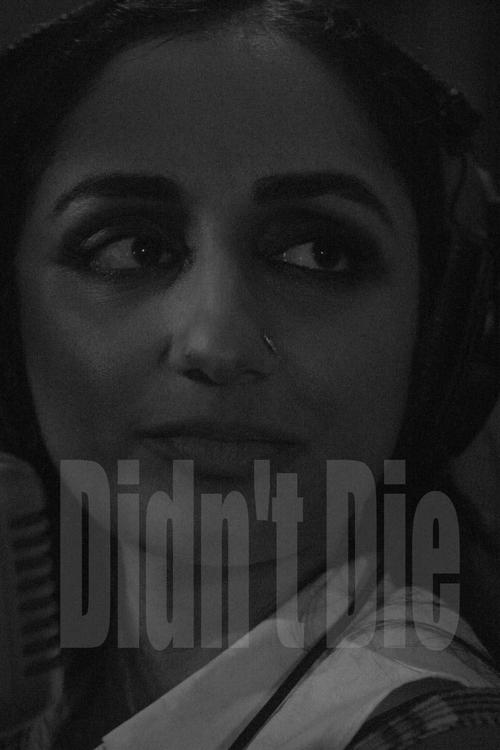
Didn't Die (2026)
Directed by Meera Menon
Partly · Woke-Adjacent
How we score movies →Consciousness Markers
The lead role features Indian-American actress Kiran Deol in a position of narrative centrality. The supporting cast includes multiple actors of color in roles that appear organically motivated by character rather than tokenistic inclusion.
The film's pandemic allegory and focus on community resilience could be read as implicitly addressing collective trauma, but racial consciousness does not appear to be an explicit thematic focus or organizing principle.
The protagonist is a woman navigating crisis and agency, though the film does not appear to foreground explicitly feminist critique or gender-specific themes as central to its narrative arc.
The film contains mild critique of podcast culture and attention economy mechanics through its central premise, but this critique is secondary to character study rather than a primary ideological commitment.
While the film explores themes of trauma and community, reviews suggest it maintains a character-driven approach rather than preachy messaging or expository dialogue about social issues.
The pandemic allegory creates a contemporary reimagining of disaster narrative, but the film does not appear to engage in historical revisionism in the traditional sense.
No climate-related themes appear in the film's premise or available critical reception. The zombie apocalypse is treated as metaphor for pandemic rather than environmental collapse.
No clear LGBTQ+ representation or themes are evident in available descriptions and reviews. The film focuses on survival and community without apparent queer dimensions.
No body positivity themes are evident in the available critical descriptions. The film does not appear to engage with body representation as a central concern.
No neurodivergence representation or themes are mentioned in reviews or descriptions. The film does not appear to engage with this marker.
Synopsis
A podcast host desperately clings to an ever-shrinking audience in the zombie apocalypse.
Why it received this score
Meera Menon's "Didn't Die" presents itself as a meditation on pandemic trauma and community resilience, deployed through the clever conceit of a podcast host struggling to maintain her show as society collapses. The film's central character, Vinita Malhotra, is played by Kiran Deol, an Indian-American actress, and the casting appears organically motivated by narrative rather than performative. The film's pandemic allegory, rendered in black-and-white, suggests an earnestness about its themes of disconnection and the fragility of human connection in crisis. What the film explores is a character-driven piece that deprioritizes zombie spectacle in favor of examining how modern people might actually behave when stripped of their digital infrastructure.
The film's progressive sensibilities manifest most clearly in its thematic preoccupations. There is genuine attention to lingering collective trauma and the need for community bonds in the aftermath of catastrophe. The choice to center the narrative on a woman of color navigating crisis, paired with a diverse ensemble cast, reflects contemporary casting practices. Menon's sardonic tone suggests a film willing to critique the podcast industry itself, implying a mild critique of attention economy mechanics and influencer culture. Yet the film lacks the preachy urgency one might expect from a truly committed contemporary progressive narrative. The social commentary remains diffuse rather than pointed.
What ultimately limits the film's score is its reluctance to embrace outright messaging. The film works as character study instead of manifesto, which may be its artistic strength but represents a dilution of cultural consciousness markers. The themes of community and mutual aid exist but are not foregrounded with sufficient ideological clarity. The pandemic allegory, while present, operates more as atmospheric choice than thematic thesis. This is a film that gestures toward progressive sensibilities without committing fully to them, content instead to explore how people endure rather than how systems should change.
Analysis generated by our Consciousness Algorithm