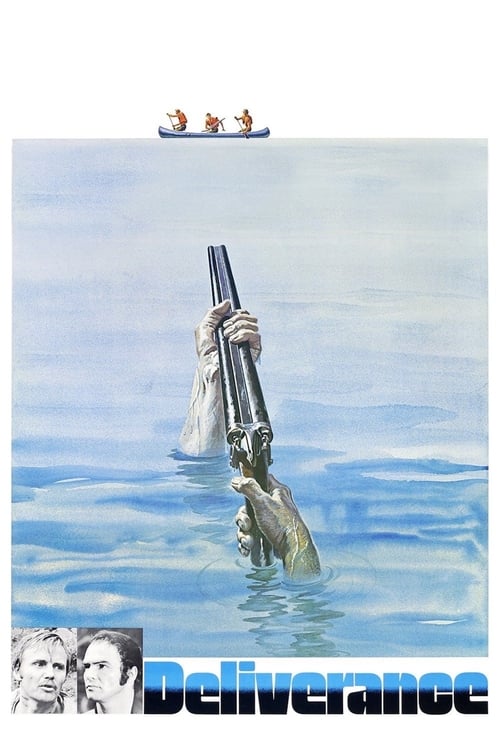
Deliverance (1972)
Directed by John Boorman
No · Ultra Based
How we score movies →Consciousness Markers
The film's central premise involves mourning environmental destruction caused by dam construction. However, this concern operates in isolation without broader ecological consciousness or systemic critique.
The environmental message arrives with some earnestness but remains underdeveloped and unaccompanied by dialogue or explicit statement. The film trusts the premise to carry weight rather than lecturing the audience.
While the dam represents commercial development destroying nature, the film frames this as an inevitable force rather than a system to be interrogated or resisted. No class consciousness or economic critique emerges.
Rural Appalachian characters are portrayed as dehumanized caricatures without interior lives or dignity. The casting reinforces a hierarchy in which affluent white urbanites are the only characters worthy of the camera's empathy.
No LGBTQ+ themes, characters, or representation present in the film. The work exists in a heteronormative universe without question or acknowledgment.
Female characters are entirely absent or peripheral. Women exist only as motivation for male protagonists, with no agency, dialogue, or presence of their own.
The film contains no examination of race or racial dynamics. All significant characters are white, and the narrative shows no awareness of this homogeneity.
The film contains no body positivity messaging. Physical vulnerability and masculine prowess define the narrative, with the body presented as a site of conquest rather than acceptance.
No representation of or dialogue concerning neurodivergence. The film operates within conventional assumptions about cognition and ability.
The film contains no revisionist historical engagement. It functions as a contemporary thriller with no historical dimension to examine or reframe.


Synopsis
Intent on seeing the Cahulawassee River before it's turned into one huge lake, outdoor fanatic Lewis Medlock takes his friends on a river-rafting trip they'll never forget into the dangerous American back-country.
Why it received this score
Deliverance stands as a fascinating artifact of early 1970s cinema, a film that possessed certain progressive instincts yet remains stubbornly rooted in the unexamined assumptions of its era. The movie opens with a genuine environmental consciousness: the inciting incident involves the imminent flooding of a river valley due to dam construction, a lament for nature's destruction that aligns with the nascent environmentalism of the period. Yet this ecological concern exists in isolation, unaccompanied by any broader social awareness. The film's treatment of rural Appalachian characters descends into caricature of the most pronounced variety. The local inhabitants function as obstacles and threats, depicted with a kind of anthropological disgust that suggests they exist outside the bounds of human dignity. The film's notorious scenes of violence involve an assault that the narrative frames as inevitable when civilized men encounter savagery, a construction that betrays assumptions about class and geography that modern sensibilities would rightfully interrogate.
The casting and characterization reflect a world in which progressive consciousness had not yet extended to considerations of representation or dignity beyond the immediate circle of affluent white protagonists. The film's four main characters exist in a universe of their own making, and everyone else is scenery or threat. There is no attempt at nuance in depicting Appalachian life, no interest in the interior lives or legitimate grievances of the people who live along that river. What emerges instead is a film that uses a landscape and its inhabitants as a stage for masculine testing and self-discovery, concerns that preoccupy cinema of this period with near-total indifference to any perspective but that of the dominant group. The environmental message, however genuine, cannot obscure this fundamental orientation.
The film's gender dynamics prove equally instructive about its historical moment. The women in "Deliverance" exist almost entirely off-screen, referenced only as reasons for the men to survive their ordeal. The female body appears briefly and without agency, a trophy rather than a character. Such omissions were unremarkable in 1972, which itself tells us something valuable about what counted as acceptable narrative in mainstream cinema. Modern viewers confronting this film must reckon with the distance between its genuine ecological concern and its complete indifference to the humanity of anyone outside its narrow demographic focus. It is a work of its time in the most precise sense.
Analysis generated by our Consciousness Algorithm
Critic Reviews
“The gorgeous backdrop of the film makes the violence and darkness even more disturbing - but this is more than just a horror film. There's real substance in themes, performances and John Boorman's superb direction.”
“Dickey taps into that stark mortal terror of abandoning control, where to become a wild man is somehow a form of connection.”
“For all the furious excitement of its river-rafting sequences, and the harshness and humiliation of its explosive central rape scene, Deliverance is an elegiac movie, mourning the rural mountain culture soon to be inundated by a new hydro-electric dam.”
“In the depiction of sudden, violent death, there is the rhapsodic wallowing in the deadly beauty of it all: protruding arrows, agonizing expiration, etc. It’s the stuff of which slapdash oaters and crime programmers are made but the obvious ambitions of Deliverance are supposed to be on a higher plane.”