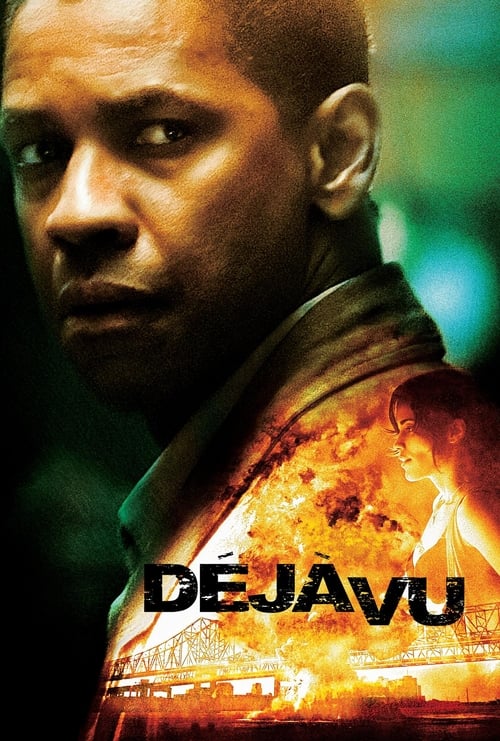
Déjà Vu (2006)
Directed by Tony Scott
No · Ultra Based
How we score movies →Consciousness Markers
Features a Black lead and Black supporting actress, reflecting 2000s diversity practices but lacking contemporary social consciousness about representation.
Set in post-Katrina New Orleans with a diverse cast, but contains no explicit commentary on systemic racism or social inequality.
Female characters exist primarily as romantic interests and plot devices rather than autonomous agents with agency.
Action-oriented narrative that accepts surveillance as morally justified without preachy social commentary or moral questioning.
No LGBTQ+ themes, characters, or content present in this straightforward action thriller.
No climate-related themes or environmental messaging present.
Narrative celebrates federal government surveillance apparatus as a tool for good without moral questioning.
No body positivity messaging or representation of diverse body types.
No neurodivergent characters or themes present.
Not a historical film and contains no historical revisionism.


Synopsis
Called in to recover evidence in the aftermath of a horrific explosion on a New Orleans ferry, Federal agent Doug Carlin gets pulled away from the scene and taken to a top-secret government lab that uses a time-shifting surveillance device to help prevent crime.
Why it received this score
Déjà Vu arrives as a curious artifact of the mid-2000s action film, a time when progressive sensibilities had not yet calcified into the specific constellation of markers that would define the subsequent decade's cultural conversation. Tony Scott's surveillance thriller operates entirely within the post-9/11 framework that normalized expansive government monitoring as necessary security infrastructure, asking no uncomfortable questions about power, privacy, or the state's reach. The film assembles a cast that happens to be racially diverse, with Denzel Washington commanding the lead role and Paula Patton providing romantic interest, but this diversity reflects the demographic realities of contemporary Hollywood rather than any conscious engagement with representation as a social project. There is no discourse here, no thesis about systemic inequality or marginalization. The ferry bombing in post-Katrina New Orleans serves as plot machinery rather than an opportunity for reflection on disaster, racial geography, or institutional failure. Scott was a technician interested in kinetic spectacle and temporal paradox, not social commentary. The film's fundamental orientation toward law enforcement and surveillance as forces for good, combined with its complete absence of any progressive social consciousness about gender, sexuality, ecology, or systemic power, marks it as a thoroughly pre-woke entertainment product. It is the work of a filmmaker content to entertain without enlightening, to thrill without troubling the viewer's conscience.
Analysis generated by our Consciousness Algorithm