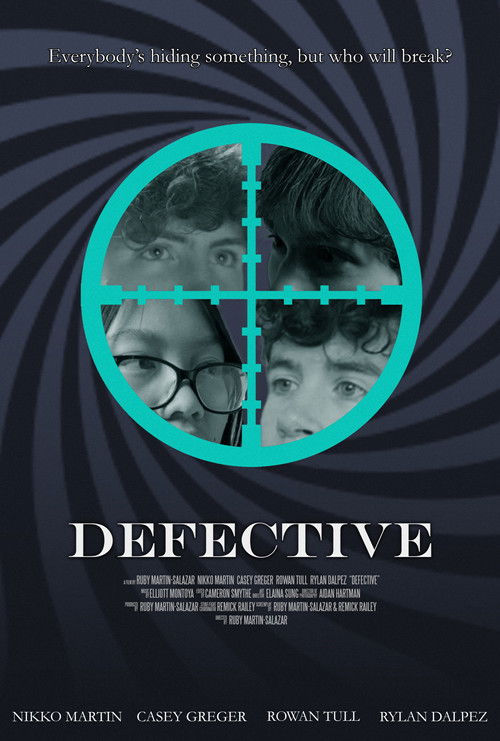
DEFECTIVE (2026)
Directed by Ruby Martin-Salazar
No · Based
How we score movies →Consciousness Markers
The film's depiction of a corporate espionage world and authoritarian state suggests some critique of institutional power, though whether this constitutes genuine anti-capitalist ideology or merely genre convention remains unclear.
The film's critique of state violence and systemic oppression may carry preachy weight, but as an action thriller it presumably prioritizes narrative momentum over explicit thematic exposition.
The cast consists primarily of lesser-known actors without clear demographic intentionality. No indication of deliberate effort toward diverse casting beyond natural ensemble composition.
The cast includes diverse names suggesting racial variety, but the film does not appear to foreground racial themes or systemic racism in its narrative about state oppression.
While the film critiques systemic oppression, there is no specific indication of feminist ideology or female-centered narrative perspective. Gender dynamics are not highlighted in available materials.
The film appears to be set in a fictional dystopian present rather than revisiting historical events. It does not appear to reinterpret established history.
An action thriller set in corporate environments is unlikely to foreground body positivity messaging. No evidence of such themes in available information.
No evidence of significant LGBTQ+ themes or representation in available plot information. The film does not appear to center or explore queer narratives.
No indication that climate change or environmental themes factor into this thriller about state violence and corporate espionage.
No indication that neurodivergence or disability representation features in this plot about law enforcement and espionage.
Synopsis
A special agent sent to recapture a traitorous former member discovers they may have been right to leave - and that the organization is now after him.
Why it received this score
DEFECTIVE arrives as a dystopian thriller preoccupied with state violence and the machinery of authoritarian oppression. The narrative concerns a shadowy organization that deems citizens "Defective" and executes them summarily, a setup that trades in critiques of systemic power and bodily autonomy that have become standard currency in contemporary genre filmmaking. The film's interests are nominally progressive, centered on exposing the cruelty of institutional control and the disposability of those deemed undesirable by the apparatus.
Yet the film remains a thriller first, social commentary second. Director Ruby Martin-Salazar deploys the language of political critique without necessarily committing to its implications. The cast, drawn from relative unknowns, suggests a project more concerned with craft and suspense than with demographic representation as a statement. The film critiques systems of control but does not particularly interrogate its own position within them, nor does it seem invested in centering the voices of those most vulnerable to such systems.
What we have is a competent genre exercise that borrows the vocabulary of progressive anxiety without the accompanying rigor. The film's engagement with power structures reads as thematic window-dressing rather than genuine structural critique. It is the work of a director capable of tension and narrative momentum, but lacking the conviction to let ideology reshape form itself.
Analysis generated by our Consciousness Algorithm