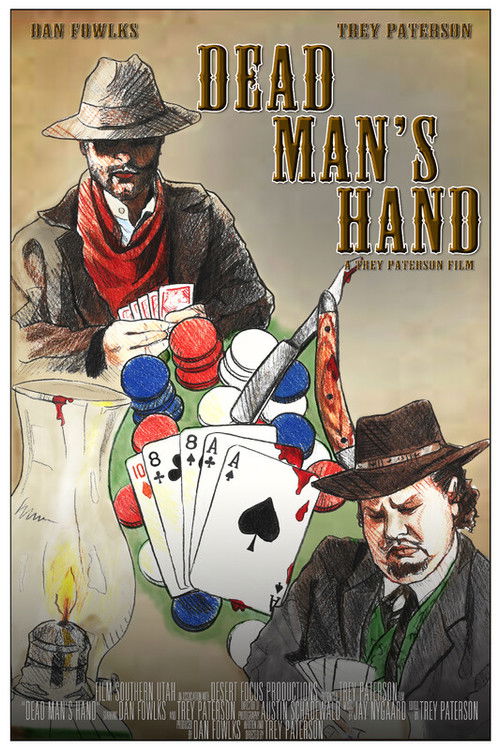
Dead Man's Hand (2026)
Directed by Trey Paterson
No · Ultra Based
How we score movies →Consciousness Markers
A two-man cast in a single saloon location. The film offers no evidence of deliberate diversity casting or representation as a thematic concern. It simply has two people, and that is that.
No LGBTQ+ themes, characters, or subtext are documented in any available material. The film appears to be a straight-faced thriller in every sense of the word.
There are no women in this film. The feminist agenda, if it exists anywhere in the universe, has declined to attend this particular poker game.
No racial themes, commentary on systemic inequity, or conscious interrogation of race are identifiable in the available information. The film's concerns appear to be cards and mortality.
Set in a 19th-century saloon, the film predates the carbon economy by several decades and shows no interest in bridging that gap. Zero evidence of climate consciousness.
Gambling is, technically, a form of unregulated private enterprise, but the film shows no sign of critiquing it as such. No anti-capitalist messaging is present.
No body positivity themes are present or suggested. The bodies in this film are, by all accounts, primarily concerned with surviving the evening.
No neurodivergent characters or related themes are documented. A high-stakes poker player might reasonably be described as a particular psychological type, but the film does not appear to make this argument.
The film does not appear to subvert or interrogate the mythology of the American West. It inhabits the genre without auditing it.
A 15-minute two-hander thriller in a saloon has neither the runtime nor the apparent inclination to deliver a sermon. No lecture energy detected.
Synopsis
A late night poker game between a cowboy and a professional gambler, alone in a saloon. Things turn deadly as one of them is not what they seem.
Why it received this score
Dead Man's Hand is a 15-minute short film about two men playing poker in a saloon until one of them dies. This is, by the standards of contemporary cinema, a remarkably focused ambition. There are no systems to dismantle, no identity frameworks to interrogate, and no moment where a character pauses the mounting tension to share their feelings about structural inequality. The film simply presents two people, a table, and the ancient human tradition of bluffing.
Director, writer, and star Trey Paterson has constructed what might generously be called a monument to restraint. Two characters, one location, fifteen minutes. The progressive content checklist, which has become as essential to modern filmmaking as a camera and a budget, appears to have been misplaced entirely during pre-production. There is no representation arc. There is no allyship. The climate does not come up. One searches the available documentation for a single marker of contemporary social consciousness and finds only the quiet, indifferent creak of saloon floorboards.
It is a genuinely unusual artifact in the current landscape, not because it is reactionary or contrarian, but because it seems to have simply not noticed that a landscape exists. The film is about a poker game. It ends badly for someone. The cultural conversation rages on elsewhere, and Dead Man's Hand is not listening. We score it accordingly.
Analysis generated by our Consciousness Algorithm