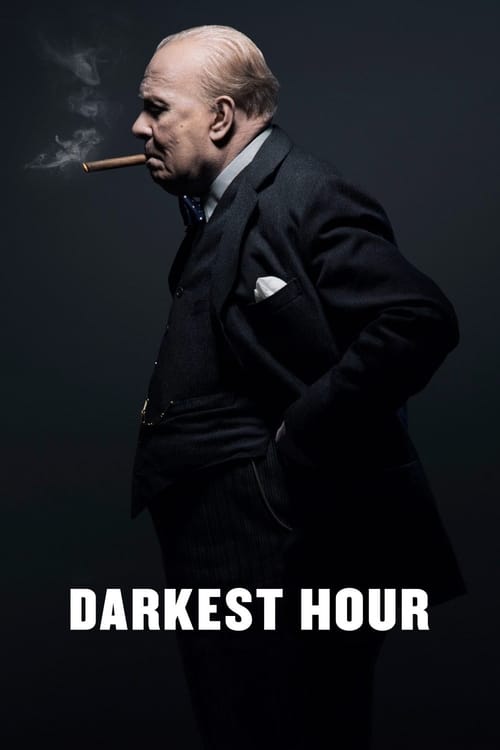
Darkest Hour (2017)
Directed by Joe Wright
No · Ultra Based
How we score movies →Consciousness Markers
The film takes artistic liberties with historical events, most notably the Underground sequence that likely never occurred, dramatizing history for cinematic effect.
The cast is predominantly white British actors reflecting the historical period without contemporary diversity considerations or deliberate representation choices.
No LGBTQ+ themes, representation, or narratives are present in the film.
The film centers entirely on male political leadership with minimal female presence and no feminist commentary or agenda.
The film does not engage with racial themes, consciousness, or commentary about its historical moment.
No climate-related themes or environmental messaging appear in the film.
The film contains no critique of capitalism or promotion of anti-capitalist themes.
The film does not engage with body positivity messaging or representation.
No representation or discussion of neurodivergence is present in the narrative.
While the film contains political speeches and debate, it lacks the characteristic tone of films designed to lecture audiences about social issues.


Synopsis
In May 1940, the fate of World War II hangs on Winston Churchill, who must decide whether to negotiate with Adolf Hitler or fight on knowing that it could mean the end of the British Empire.
Why it received this score
Darkest Hour arrives as a monument to the classical historical biopic, a form so established in its conventions that one might mistake it for a museum exhibit. Gary Oldman's Churchill stumbles through war rooms and Parliament with the theatrical weight of a Shakespearean actor discovering method acting for the first time, all prosthetics and gravitas. The film treats its subject with the reverence of a state funeral, content to dramatize political decision-making without interrogating the figure at its center or the historical moment surrounding him. Director Joe Wright stages scenes with considerable visual flair, but visual sophistication cannot substitute for intellectual curiosity about what might make this story matter beyond its surface narrative of male determination during crisis. The film's most notable departure from historical record, Churchill's descent into the Underground to commune with ordinary Londoners, serves as pure cinematic invention designed to humanize its protagonist rather than challenge or complicate him. This is heritage filmmaking of the most conservative stripe, a celebration of British institutional steadiness that asks nothing of its audience beyond passive appreciation of craft and costume design.
Analysis generated by our Consciousness Algorithm
Critic Reviews
“I’ve been trying to think when there was a historical drama I found as electrifying as Joe Wright’s Darkest Hour. It may have been Steven Spielberg’s “Munich,” which topped my 10-best list a dozen years ago. ”
“Handsomely filmed, intelligently written, accented with just a dash of outright hokum, Darkest Hour ends a year already laden with terrific films about the same subject — including the winsome comedy-drama “Their Finest” and Christopher Nolan’s boldly visual interpretive history “Dunkirk” — and ties it up with a big, crowd-pleasing bow.”
“Across the veil of years, we have seen tall Churchills, obese Churchills, sloppy Churchills, gross Churchills and scowling bull dog Churchills, and yet not one movie or TV Churchill has come close to giving us the man in full, both in look and spirit, until Gary Oldman in Darkest Hour.”
“Darkest Hour is pure, uncut Oscar bait that goes through every bullcrap great man biopic platitude imaginable in its two-hour runtime. The reason to rush to such a harsh judgement is perhaps because it’s so damn hard to understand the actual reason for making this film in the first place other than racking up gold statues.”