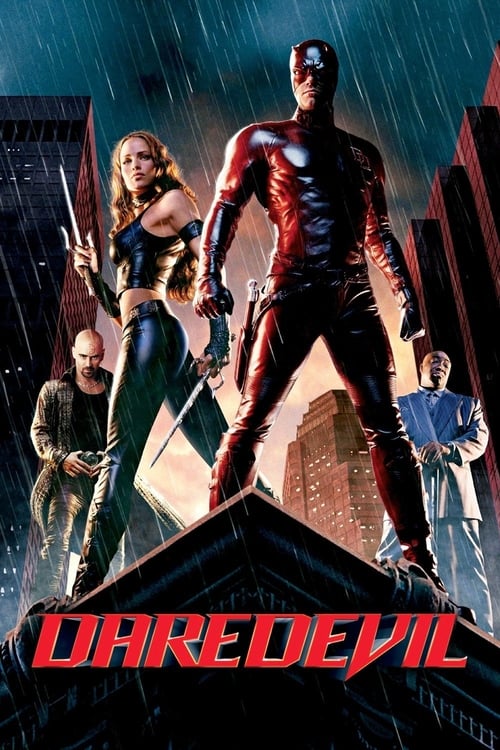
Daredevil (2003)
Directed by Mark Steven Johnson
No · Ultra Based
How we score movies →Consciousness Markers
Michael Clarke Duncan as Wilson Fisk provides some racial diversity in a key role, though casting choices appear conventional rather than deliberate representation strategies.
Jennifer Garner's Elektra has action sequences and agency, but remains fundamentally positioned as a love interest within conventional heterosexual dynamics.
Daredevil's blindness is central to the character, but treated as a superhero condition rather than neurodivergence or disability representation in a modern progressive sense.
No LGBTQ+ themes, characters, or subtext present in the film.
No explicit engagement with racial themes, politics, or consciousness. The film treats its multiethnic cast as incidental to the action narrative.
No climate-related themes, environmental messaging, or ecological consciousness present.
No critique of capitalism, wealth inequality, or corporate power structures.
No body positivity themes or engagement with non-normative body representation.
No revisionist historical framing or alternative historical narratives present.
The film contains no preachy speeches, explicit moral lectures, or heavy-handed messaging about social issues.


Synopsis
A man blinded in a childhood accident fights crime using his superhumanly-elevated remaining senses.
Why it received this score
Daredevil arrives as a product of early 2000s superhero cinema, a moment in time when progressive sensibilities had not yet calcified into the specific cultural markers we now recognize. The film centers on a blind protagonist who overcomes his disability through superhuman abilities, a framing that treats blindness as an obstacle to be transcended rather than as a site of cultural exploration or representation. Ben Affleck's Matt Murdock is competent and heroic, but the film makes no attempt to engage with disability politics in any meaningful way. The narrative simply accepts that a blind man can fight crime effectively, then moves on to standard action sequences.
The supporting cast reflects the demographic composition typical of early 2000s action cinema. Jennifer Garner appears as the primary female character, positioned within conventional love interest and action partner dynamics. Michael Clarke Duncan provides significant screen time as Wilson Fisk, though his casting and characterization do not suggest deliberate representation choices so much as conventional casting for a major villain role. The film contains no evident engagement with racial consciousness, LGBTQ+ themes, feminist critique, climate concerns, anti-capitalist sentiment, body positivity, neurodivergence, or revisionist history.
The most striking feature is the absence of the cultural apparatus that would later define progressive cinema. This is neither condemnation nor celebration, but straightforward observation about a film created before these specific markers became industry considerations. Daredevil exists as a superhero action vehicle, untethered to the social consciousness that would eventually become inextricable from contemporary Hollywood filmmaking.
Analysis generated by our Consciousness Algorithm
Critic Reviews
“In short, the actors deserve a big round of applause -– especially Affleck, for finally wiping the smug look off of his face (OK, 80% smug-free); Garner, for her dead sexy mix of attitude and adrenaline; and the grunting, googly-eyed Farrell, for … well, for being "fookin’" nuts, I guess.”
“The movie is, in short, your money's worth, better than we expect, more fun than we deserve.”
“Not woeful, not wonderful, merely watchable. ”
“Affleck and impressively amazonian Alias star Jennifer Garner (as the ninjitsu-savvy daughter of a wealthy tycoon) are lankier than "Spider-Man's" Maguire and Dunst, which is good if you like lanky, but their relationship substitutes cliché for chemistry.”