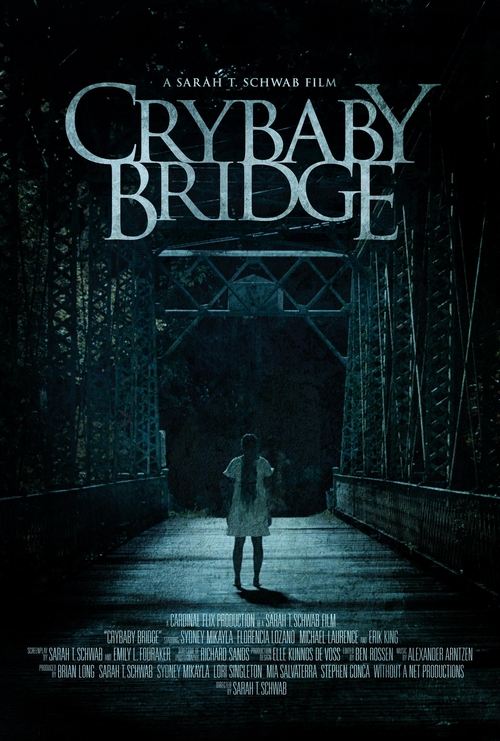
Crybaby Bridge (2026)
Directed by Sarah T. Schwab
No · Based
How we score movies →Consciousness Markers
The film centers a Black family and places a young Black teenage girl as its protagonist. The casting is deliberate and visible, though the story does not appear to foreground racial identity as its primary engine.
A teenage girl's pregnancy, bodily autonomy, and personal identity are the narrative's core concerns. The film treats these with seriousness, though it does not appear to frame them as explicitly feminist argument.
A Black family relocating from Philadelphia to rural Pennsylvania carries implicit racial geography, but the film's focus on psychological horror and family secrets suggests this tension is atmospheric backdrop rather than the text's explicit subject.
The director has positioned the film around themes of generational trauma and isolation, and the film carries some thematic weight. Critics note it struggles to deliver these themes effectively, which suggests the messaging is present but not overbearing.
The urban-to-rural move gestures at a class and socioeconomic contrast, but the film does not appear to develop this into any sustained critique of capitalism or wealth.
The pregnant teen protagonist places the body in the foreground of the narrative, but this is framed as psychological and dramatic stakes rather than a body-positive message.
No LGBTQ+ themes, characters, or storylines are evident in any available material.
No climate themes, environmental messaging, or ecological consciousness appears anywhere in the film's known content.
No neurodivergent characters or themes are present in available descriptions or reviews.
The film draws on American urban folklore surrounding Crybaby Bridges, but reframing a folk legend through a personal lens does not constitute revisionist history.
Synopsis
After being bullied at school, a pregnant teen's family sets out to move from the city to the countryside, unexpectedly revealing a coveted secret of her past that threatens the fresh start they seek.
Why it received this score
Crybaby Bridge arrives bearing a modest but coherent portfolio of social preoccupations: teenage pregnancy, adoption, bullying, generational trauma, and the peculiar American mythology of rural roads where bad things allegedly happen to infants. Director Sarah T. Schwab has assembled these elements into a psychological horror-adjacent drama about a Black family fleeing Philadelphia for the Pennsylvania countryside, only to discover that secrets, like certain relatives, tend to make the trip uninvited. The film's instincts are sound. A pregnant sixteen-year-old protagonist navigating identity and family history is a more interesting horror anchor than most.
The casting places Erik King and Florencia Lozano as the parents and Sydney Mikayla as the young woman at the center of the proceedings, and by all accounts the four principal performers do the heavy lifting the script requires of them. The film's social consciousness is present but not aggressive. The racial geometry of a Black family transplanting itself into rural white Pennsylvania hovers at the edges of the frame without ever being summoned to the podium for a speech. The class contrast between urban and rural life similarly exists as texture. Schwab appears more interested in psychological dread than in delivering a seminar, which is, in this critic's considered estimation, a reasonable set of priorities.
Where the film earns its modest scores on the progressive-sensibility ledger, it does so quietly: a teenage girl's body and history as the locus of the narrative, a family that looks like America increasingly does, a villain that turns out to be the past rather than a stranger. None of this is loudly announced. The film has been described as not fully working as either drama or horror, which places it in a large and distinguished category of films that mean well and arrive sincerely. It is, in the final accounting, a film with a conscience and a limited theatrical footprint. Both conditions are more common than people admit.
Analysis generated by our Consciousness Algorithm