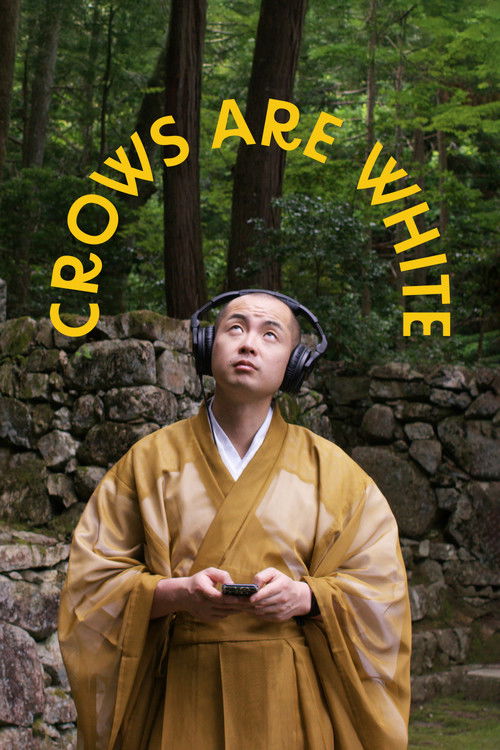
Crows Are White (2026)
Directed by Ahsen Nadeem
Partly · Woke-Adjacent
How we score movies →Consciousness Markers
The film's central tension is Nadeem reconciling a 'secret life' with the expectations of his traditional Muslim family, widely understood to involve queer identity. This is a meaningful and substantive thematic thread, though the film handles it with restraint rather than as a political statement.
The film centers an immigrant Muslim filmmaker of South Asian background as its sole subject, and his non-Western perspective is the entire lens of the documentary. This is autobiography rather than representational casting, but the effect is the same: a non-white, non-Western voice occupying the frame without apology.
The immigrant identity and cross-cultural displacement are present as biographical context, but the film does not frame Nadeem's experience through an explicitly racial lens or engage with systemic racism as a theme.
The film takes a quietly critical stance toward religious orthodoxy and the demand for blind faith, but reviewers consistently describe its tone as witty and self-reflective. It questions institutional religion without sermonizing about it.
No feminist themes, female-centered narrative, or gender politics are present in the film's documented content.
No climate or environmental themes are present in the film.
No anti-capitalist themes or critique of economic systems are present in the film.
No body positivity themes are present in the film.
No neurodivergence themes are present in the film.
No revisionist history or reframing of historical narratives is present in the film.
Synopsis
After decades of living a secret life, a filmmaker travels to a strict Japanese monastery in search of guidance but the only monk willing to help him prefers ice cream and heavy metal over meditation. CROWS ARE WHITE is an exploration of truth, faith and love, from the top of a mountain to the bottom of a sundae.
Why it received this score
Ahsen Nadeem's debut documentary arrives with an unusual structural premise: a Muslim filmmaker of Saudi origin travels to a rigidly orthodox Japanese Buddhist monastery, ostensibly seeking spiritual clarity, and finds instead a monk who listens to heavy metal and has strong opinions about ice cream. The film was shot over five years across three continents, which is either a sign of deep artistic commitment or a very long avoidance of having a direct conversation with one's parents. Probably both.
The "secret life" Nadeem has been concealing from his family appears to involve his identity in ways that organized religion, whether the Islam of his upbringing or the Zen Buddhism he is auditing, tends to regard with some institutional skepticism. This gives the film a genuine emotional spine. The cross-cultural, interfaith framing allows Nadeem to interrogate rigid belief systems with the plausible deniability of a travel documentary, which is a technique deserving of more respect than it typically receives. The unconventional monk Ryushin functions as a kind of spiritual pressure valve, his enthusiasm for soft serve and distortion pedals undercutting the monastery's demand that initiates affirm, on faith, that crows are white. The film understands that this is a metaphor. It applies the metaphor to itself.
On the spectrum of progressive social consciousness, "Crows Are White" is a film about a queer immigrant questioning religious authority, which in the current climate is practically a manifesto. And yet it refuses to behave like one. There is no lecture. There is no coalition-building. There is a man on a mountain eating ice cream with a monk, trying to figure out how to tell his mother the truth. The film's social awareness is entirely in service of its human story, not the other way around. This is, in the current documentary landscape, a somewhat eccentric choice.
Analysis generated by our Consciousness Algorithm