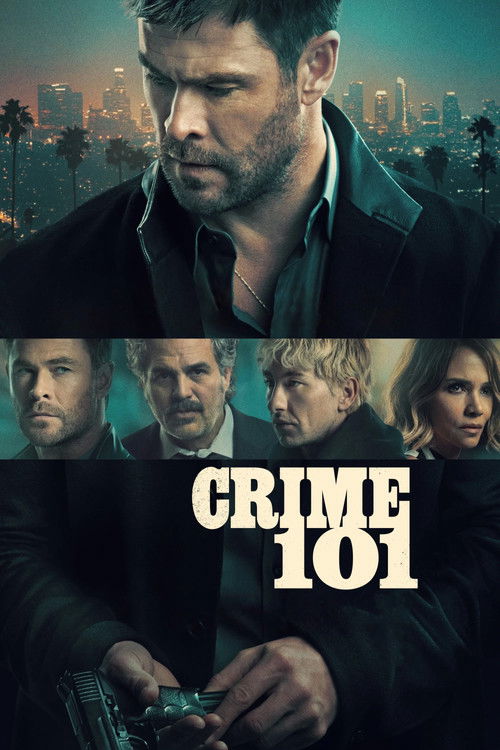
Crime 101 (2026)
Directed by Bart Layton · $8.8M domestic
No · Based
How we score movies →Consciousness Markers
The film features a diverse ensemble cast including Halle Berry and Corey Hawkins in substantive roles. However, representation appears to be a casting choice rather than integral to character development or thematic exploration.
The narrative critiques corporate malfeasance through the insurance broker character and explores themes of systemic exploitation. However, these critiques remain underdeveloped and serve primarily as character motivation rather than ideological commitment.
Halle Berry plays a disillusioned insurance broker facing personal crossroads, suggesting some engagement with female agency and exhaustion. However, her character remains secondary to the male-centered heist narrative.
The cast includes Black actors in significant roles, but the film demonstrates minimal engagement with systemic racism or racial dynamics. Diversity appears to be a casting decision rather than thematic substance.
The film features occasional monologues about crime, morality, and systemic failure, but these speeches feel organic to character rather than preachy. The overall tone avoids heavy-handed messaging, though social commentary remains thin.
Mark Ruffalo's detective character displays obsessive-compulsive traits and behavioral patterns suggesting neurodivergence, though this appears to be character quirk rather than substantive representation or commentary.
No evident LGBTQ+ themes, representation, or storylines in this crime thriller. The narrative focuses entirely on heterosexual relationships and criminal enterprise.
Climate change and environmental consciousness are entirely absent from this crime thriller. The film shows no concern with ecological themes whatsoever.
No meaningful engagement with body positivity or size representation. The film adheres to conventional casting of conventionally attractive actors in leading roles.
This contemporary crime thriller contains no historical narrative or revisionist historical content. Historical reexamination is not relevant to the film's scope.
Synopsis
When an elusive thief whose high-stakes heists unfold along the iconic 101 freeway in Los Angeles eyes the score of a lifetime, with hopes of this being his final job, his path collides with a disillusioned insurance broker who is facing her own crossroads. Determined to crack the case, a relentless detective closes in on the operation, raising the stakes even higher.
Why it received this score
Crime 101 presents itself as a contemporary heist thriller with social ambitions, yet the film's engagement with meaningful cultural commentary amounts to little more than surface-level window dressing. Bart Layton's script deploys the requisite ensemble cast and nods toward character complexity, but the narrative ultimately retreats into the familiar rhythms of crime genre convention. The Los Angeles freeway serves as a metaphorical backdrop for urban decay and systemic disillusionment, a visual choice that feels more aesthetic than substantive.
The cast, which includes Halle Berry and Mark Ruffalo alongside Chris Hemsworth and Barry Keoghan, demonstrates a commitment to diverse ensemble representation, though the characters themselves exist primarily to service plot mechanics rather than embody any particular cultural perspective. The insurance broker character, played by Berry, hints at corporate malfeasance and personal exhaustion, but the film chooses not to excavate these threads with any real conviction. Critics have noted that while Layton brushes against thematic potential, the work lacks the depth required to move beyond surface observations about crime, ambition, and moral compromise.
What emerges is a competently executed thriller that mistakes visual sophistication and casting choices for genuine cultural engagement. The film trades in the trappings of social consciousness without committing to any sustained examination of systemic power, economic inequality, or institutional corruption. It is a movie that wants to be read as smart and contemporary, yet largely defaults to the heist genre's well-worn paths. The result is entertainment that courts the appearance of substance without the intellectual rigor to back it up.
Analysis generated by our Consciousness Algorithm
Critic Reviews
“This is a special movie. It has a life force unlike any other crime thriller I’ve seen. It’s about characters who suffer a personal failure but emerge transformed. It’s a violent movie, but not a cruel one, and unexpectedly moving by the end.”
“Whereas Michael Mann gave Heat the perfect narrative offramp, Crime 101 tends to circle the block toward the end. ”
“Crime 101 is an underworld drama that’s clever and compelling in unusual ways.”
“That “Crime 101” seeks to position itself as a successor to “Heat” is laughable. A more accurate title would have been “Lukewarmth.””