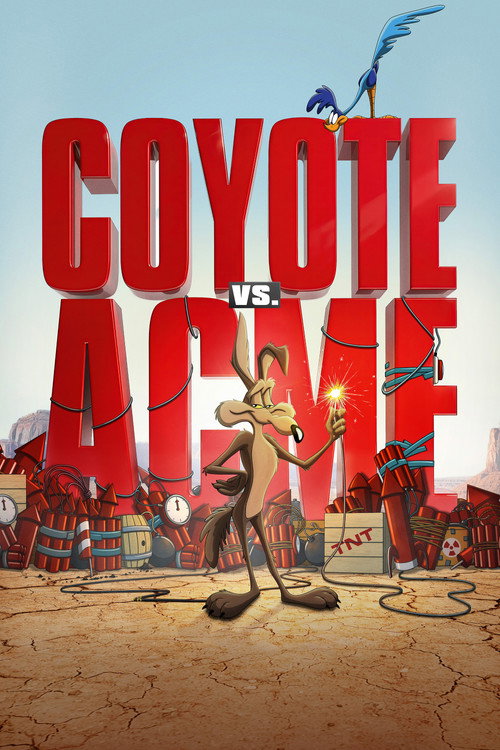
Coyote vs. Acme (2026)
Directed by Dave Green · $47.8M domestic
No · Based
How we score movies →Consciousness Markers
The film's entire premise is a cartoon consumer suing a predatory megacorporation for selling defective products, and critics at multiple outlets explicitly framed it as a satire of corporate greed and monopolistic power. The meta-irony of a Warner Bros. film mocking Warner Bros.-style corporate accounting tricks, including a gag about Acme participating 'for accounting purposes only,' elevates this well above incidental commentary.
The ensemble is genuinely diverse, featuring Lana Condor, Tone Bell, Luis Guzmán, and Kenneth Choi in notable roles. The casting reads as standard modern Hollywood practice rather than a narrative statement, and critics noted the diversity without controversy or ideological framing.
The film carries a populist, pro-consumer, pro-labor undercurrent that is hard to miss, and the real-world advocacy by cast and crew lent it a certain soapbox quality in the press. Within the film itself, the corporate satire appears to be played for laughs rather than sermons, keeping the lecture energy moderate.
Lana Condor plays Paige Avery, an ambitious law intern headed to Oxford, which gives the film a capable female character in a professional context. This does not appear to be a thematic focus; she functions as a co-lead, not a feminist manifesto.
The diverse cast exists without any apparent racial consciousness woven into the narrative. No character's race is treated as a story element, a source of conflict, or a teachable moment.
No LGBTQ+ themes, characters, or narrative elements are present in the available research or plot summary. The film is silent on this axis entirely.
There is no climate messaging, environmental allegory, or ecological commentary anywhere in the film's premise, critical reception, or plot summary. Zero.
No body positivity themes are present. The film does not engage with this marker in any detectable way.
No neurodivergence themes are present. Wile E. Coyote's compulsive roadrunner pursuit has never been formally diagnosed, and the film does not appear to pursue this reading.
The film is not engaged in recontextualizing history. It is a courtroom comedy about a cartoon coyote. History is not on trial here, only Acme.
Synopsis
After Acme products fail him one too many times in his dogged pursuit of the Roadrunner, Wile E. Coyote decides to hire a billboard lawyer to sue the Acme Corporation.
Why it received this score
*Coyote vs. Acme* arrives bearing a premise so elegantly simple that it is almost insulting: a cartoon desert predator, having been maimed, scorched, flattened, and otherwise product-liability-tested by decades of defective merchandise, finally decides to lawyer up. The film is adapted from Ian Frazier's 1990 *New Yorker* piece, which means its anti-corporate instincts predate the current cultural moment by several decades. This is either a mitigating factor or a damning one, depending on your tolerance for the genre of comedy in which a large, faceless corporation is revealed to be bad.
The film's most interesting cultural artifact is not on screen. It is the fact that Warner Bros. Discovery attempted to shelve a completed $70 million film for a $30 million tax write-off, inadvertently making the studio itself into Acme Corporation: a powerful, indifferent institution whose products harm the people who rely on them, operated by executives who treat creative labor as a ledger entry. When Foghorn Leghorn delivers a gag about participating "for accounting purposes only," the film is not being subtle. It knows exactly what it is doing. The lecture energy is present, but it is delivered via cartoon chicken, which softens the blow considerably. The ensemble is diverse in the modern studio fashion, with Lana Condor, Tone Bell, Luis Guzmán, and Kenneth Choi filling out the cast in roles that exist to serve the story rather than to annotate their own demographic significance. This is the correct approach and deserves no special commendation, only the absence of criticism.
On the wokeness spectrum, *Coyote vs. Acme* is a film that lands firmly in the territory of populist anti-corporate comedy, a tradition with roots stretching back well before anyone coined the term. It is not interested in identity politics, climate allegory, or the fine points of intersectional theory. It is interested in the proposition that corporations should be held accountable when their products explode. This is, technically, a conservative position in the original sense of the word. The irony is noted. It is filed away. We move on.
Analysis generated by our Consciousness Algorithm
Critic Reviews
“As the title suggests, Coyote vs Acme is a courtroom drama, but it’s also a conspiracy thriller, corporate satire, screwball farce, slapstick masterclass, and surprisingly touching bromance.”
“The best part of all is that “Coyote vs. Acme” is a superb piece of filmmaking, a loving tribute to the most hapless of all Looney Tunes characters and the many fans who love him.”
“A charming, laugh-out-loud funny tribute to decades of animated history, even as it reflects a world of harsh realities.”
“This is a film only personal injury attorneys could love.”