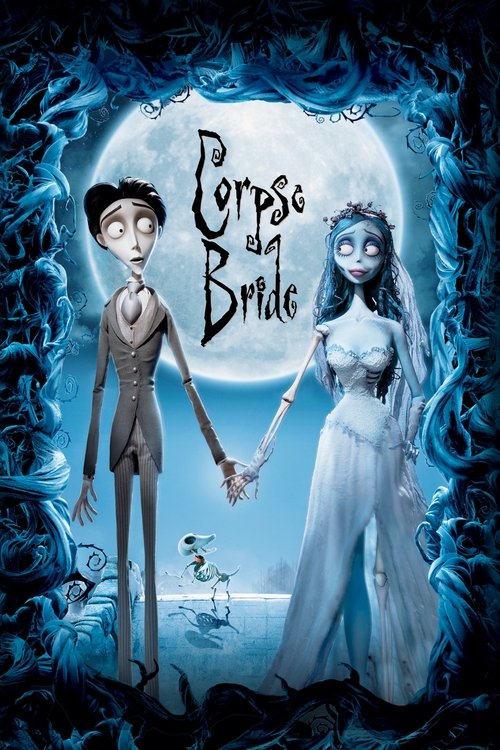
Corpse Bride (2005)
Directed by Mike Johnson
No · Based
How we score movies →Consciousness Markers
Emily and Victoria are sympathetic female characters with agency, and the film critiques arranged marriage as an institution, showing women trapped by social expectations. However, this represents pre-2015 feminist critique rather than contemporary progressive sensibility, and the film does not center women's liberation as a thematic priority.
The film contains light preachy elements about acceptance and the nature of love transcending death, but it prioritizes entertainment and Gothic atmosphere over pedagogical messaging.
The film depicts class differences and includes satirical commentary on the nouveau riche fish merchant family and impoverished aristocrats, but this is traditional class satire rather than contemporary anti-capitalist messaging.
The cast reflects traditional Victorian-era demographics with no apparent effort toward contemporary diversity representation. The film makes no comment on or challenge to historical casting norms.
No LGBTQ+ themes, characters, or representation appear in the film. The narrative centers entirely on heterosexual romantic entanglement.
The film contains no racial consciousness, commentary on racism, or effort to address racial representation. It exists in a racially unmarked Victorian fantasy setting.
There are no environmental themes, climate commentary, or ecological concerns present in the narrative.
No body positivity themes are evident. Emily is presented as a skeletal corpse bride, Victor as conventionally attractive, and there is no commentary celebrating diverse body types.
No neurodivergent characters, representation, or themes appear in the film.
The film is a fantasy set in a fictional 19th-century village and makes no claim to historical accuracy or revisionism of actual events.


Synopsis
In a 19th-century European village, a young man about to be married is whisked away to the underworld and wed to a mysterious corpse bride, while his real bride waits bereft in the land of the living.
Why it received this score
Corpse Bride arrives at the intersection of Gothic whimsy and domestic satire, a place where Burton's sensibilities find purchase without requiring any particular contemporary consciousness. The film gently critiques arranged marriage and class pretension, topics that animated Victorian-era fantasies might address regardless of the year of production. Emily, the titular corpse bride, possesses agency and pathos, yet her characterization functions within the logic of romantic tragedy rather than progressive reimagining. She is sympathetic because she is wronged, not because the film wishes to deconstruct patriarchal structures or interrogate gender performance in any sustained way.
What arrests the attention here is the film's disinterest in the concerns that would come to dominate cultural discourse two decades later. There exists no acknowledgment of racial hierarchies, no celebration of bodily difference, no LGBTQ+ presence, no environmental consciousness, no direct critique of capitalism as a system worthy of dismantling. The underworld sequences, populated by various skeletal creatures, contain no neurodivergent representation or preachy messaging about disability. The film simply does not concern itself with these matters, which is to say it was made in 2005 as a commercial entertainment product, not as a vehicle for progressive instruction.
The satire present operates at a level of gentle mockery toward the wealthy and the pretentious, a mode that predates our current moment by centuries. Victor's bumbling and his family's vulgar prosperity are presented as amusing character traits rather than as symptoms of systemic injustice requiring revolutionary response. We observe the film as a solid piece of craftsmanship from a distinctive artistic voice, but one untouched by the cultural forces that would reshape popular entertainment in the years to follow.
Analysis generated by our Consciousness Algorithm
Critic Reviews
“A wondrous flight of fancy, a stop-motion-animated treat brimming with imaginative characters, evocative sets, sly humor, inspired songs and a genuine whimsy that seldom finds its way into today's movies.”
“But the real marvel is that beneath the ghoulish in-jokes and horror-geek allusions, there's a core of the same bittersweet truth that makes the best fairy tales resonate from one generation to the next.”
“A lush, modern valentine to old-fashioned sentiment, and to old-fashioned moviemaking, too.”
“Corpse Bride has more warmth and appeal than its title would indicate, but it is finally more grotesque than good-humored. And, even at 75 minutes, it feels longer than its content can comfortably support.”