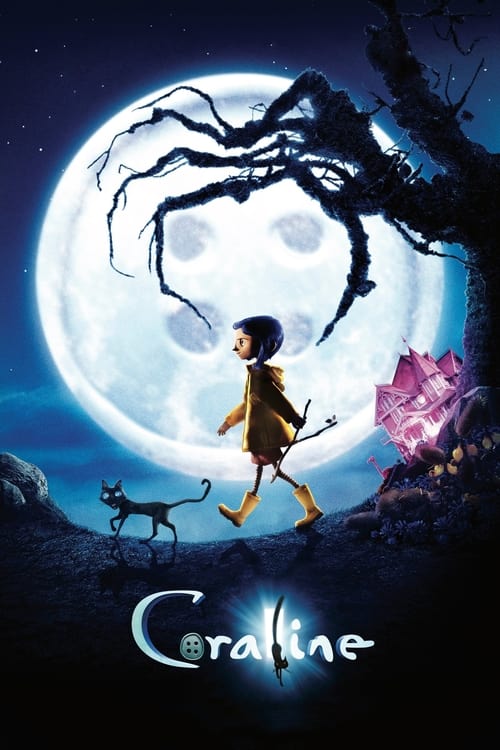
Coraline (2009)
Directed by Henry Selick
No · Ultra Based
How we score movies →Consciousness Markers
While the protagonist is a capable female character who demonstrates agency and courage, this reflects competent character writing rather than explicit feminist messaging or consciousness.
The cast is composed of established actors appropriate to their roles. No evidence of casting decisions motivated by contemporary diversity frameworks or representation consciousness.
The film contains no LGBTQ+ themes, characters, or subtext. Romantic or sexual relationships are entirely absent from the narrative.
The film contains no racial themes, discourse about racial identity, or deliberate exploration of racial dynamics. Race is not a narrative concern.
No environmental or climate-related themes appear in the film. The narrative is entirely divorced from ecological concerns.
The film presents no critique of capitalism, class systems, or wealth inequality. Economic systems are not thematically relevant to the story.
Body positivity discourse does not appear in the film. Physical appearance is used for gothic horror effect rather than as a vehicle for contemporary body acceptance messaging.
No characters are coded as neurodivergent, nor does the film engage with disability or neurodivergence as a thematic concern.
The film is set in an indeterminate contemporary period with no historical narrative to revise or recontextualize.
The film maintains narrative momentum without pausing for preachy exposition about social issues or ideological positions.


Synopsis
Wandering her rambling old house in her boring new town, 11-year-old Coraline discovers a hidden door to a strangely idealized version of her life. In order to stay in the fantasy, she must make a frighteningly real sacrifice.
Why it received this score
Coraline presents a curious case study in historical displacement. Examined through the lens of contemporary cultural markers, the film registers as almost entirely unremarkable, which is to say it was made in 2009 with the sensibilities of 2009 firmly intact. The protagonist is female and resourceful, but this derives from Neil Gaiman's source material and the basic requirements of functional storytelling rather than from any conscious engagement with modern progressive frameworks. The film concerns itself with gothic horror, themes of courage, and the alienation of childhood, none of which intersect with the specific markers of twenty-first century social consciousness we now scrutinize with such devotion.
The film's restraint in this regard is almost admirable. It does not pause its narrative to lecture us about representation, nor does it retrofit contemporary concerns onto its deliberately timeless aesthetic. The other mother is a monstrous figure of pure predation, not a stand-in for capitalist exploitation. The parallel world is strange and ultimately hollow, but the film does not weaponize this observation toward any particular ideological end. What we have instead is a straightforward tale of a young person confronting genuine danger and prevailing through wit and determination.
This is not to suggest the film is progressive in the contemporary sense. It is simply not engaged with the project at all. Stop-motion animation, a creeping sense of dread, and a child protagonist who acts with agency comprised the entire brief. The film succeeds on these terms completely and remains indifferent to our modern taxonomies of cultural consciousness. One might argue this indifference itself constitutes a kind of integrity, though such arguments are beyond our present scope.
Analysis generated by our Consciousness Algorithm
Critic Reviews
“This thrilling stop-motion animated adventure is a high point in Selick's career of creating handcrafted wonderlands of beauty blended with deep, disconcerting creepiness.”
“Selick's fantastical adaptation of Neil Gaiman's novel will be too dazzlingly rich for many; it'll be like "caviare to the general," as Hamlet said of a complex play enacted for a public with lazy minds.”
“A classic fairy tale with a contemporary sensibility and a spooky horror under the candy-house fantasy.”
“Coraline is distinguished, if you can call it that, by a creepiness so deep as to seem perverse, and the film finally succumbs to terminal deficits in dramatic energy, narrative coherence and plain old heart.”