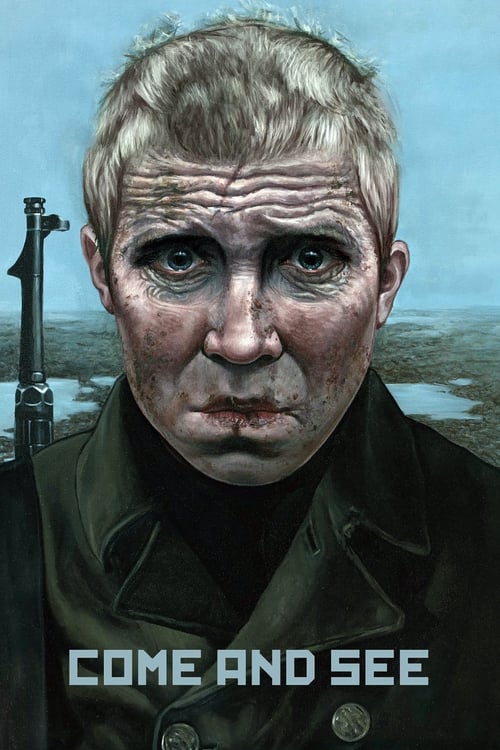
Come and See (1985)
Directed by Elem Klimov
No · Ultra Based
How we score movies →Consciousness Markers
The film features Soviet and Eastern European actors in roles reflecting the actual population of Belarus during WWII. No contemporary conscious casting choices or diversity statements are evident.
Glasha appears as a female character but is not presented through an explicitly feminist lens. She functions as a war orphan within the narrative without gender-conscious commentary.
The film depicts Nazi occupation and Soviet resistance but does not frame the conflict through racial consciousness or racial justice messaging. It presents the conflict as military and ideological rather than racial.
While the film depicts brutality and occupation, these are not framed through an anti-capitalist ideological lens. The film is a war narrative rather than a critique of capitalism.
The film contains anti-war moral messaging but conveys it through visceral, immersive imagery rather than preachy exposition. The message emerges from the experience rather than explicit instruction.
No LGBTQ+ themes, characters, or messaging appear in this film. The narrative contains no romantic subplot or queer representation.
No environmental or climate themes appear in this film. The narrative focuses entirely on wartime survival and does not engage with ecological concerns.
The film contains no body positivity messaging. It depicts bodies destroyed and traumatized by war, which is antithetical to body positivity frameworks.
No representation or discussion of neurodivergent characters or conditions appears in this film. The narrative does not engage with disability or neurodiversity.
The film presents WWII history from a Soviet perspective without rewriting history to serve contemporary progressive narratives. It offers a straightforward historical account of Nazi occupation.


Synopsis
The invasion of a village in Belarus by German forces sends young Florya into the forest to join the weary Resistance fighters, against his family's wishes. There he meets a girl, Glasha, who accompanies him back to his village. On returning home, Florya finds his family and fellow peasants massacred. His continued survival amidst the brutal debris of war becomes increasingly nightmarish, a battle between despair and hope.
Why it received this score
Elem Klimov's 1985 masterpiece stands as perhaps the most devastating anti-war film ever committed to celluloid, which is precisely why it contains almost none of the cultural markers we have come to associate with contemporary progressive sensibilities. This is a Soviet war film made during the Cold War, created to communicate the horrors of Nazi occupation through the eyes of a child, not to advance any particular modern social justice framework. The film's moral weight derives from its unflinching commitment to depicting trauma and loss, not from any conscious effort to deconstruct power structures or amplify marginalized voices.
The narrative follows Florya, a boy of perhaps thirteen or fourteen, who finds a rifle and joins partisan fighters with romantic notions of resistance. What follows is a descent into a nightmarish landscape of brutality that systematically destroys his innocence and humanity. His female companion, Glasha, exists in the story as another victim of war rather than as a vehicle for feminist messaging. Their relationship carries no contemporary gender-conscious subtext. The film simply shows us two children trying to survive in an impossible circumstance, and that suffices. There is no need to add layers of cultural analysis to what is already so profoundly human.
What we observe in "Come and See" is a film of genuine moral seriousness made before the current vocabulary of social consciousness even existed. It is anti-war in the most basic, pre-ideological sense: it argues that war destroys people. This message requires no theoretical framework, no celebration of diverse perspectives, no acknowledgment of systemic oppression. The horror of what Klimov shows us is sufficient unto itself. We score it low not because it fails to meet modern progressive standards, but because it predates them entirely, operating in a different register of human meaning altogether.
Analysis generated by our Consciousness Algorithm
Critic Reviews
“It suggests that a war's horrors were the ultimate unassimilable experience of the shadowy depths of the human mind.”
“Even if the acting and sound make it dated, they don't blunt the provocative anti-war message Klimov and his crew were getting across.”