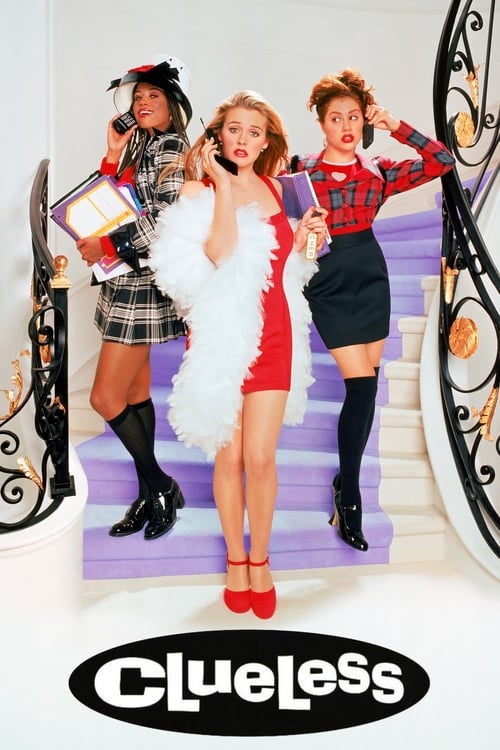
Clueless (1995)
Directed by Amy Heckerling
No · Based
How we score movies →Consciousness Markers
Female characters drive the narrative and make autonomous decisions. Cher exercises agency and control over her own life and choices. However, this operates within a consumerist framework and the female power is largely confined to social and romantic domains rather than systemic critique.
The film features a genuinely diverse cast including Black characters in normalized roles (Stacey Dash as Dionne, Donald Faison as Murray), but diversity appears incidental to the narrative rather than thematically intentional. Integration is presented as natural rather than examined.
While the cast is racially diverse, there is minimal racial consciousness or exploration of race as a theme. Black characters exist in the narrative but are not subjects of racial awareness or commentary.
The film maintains a light comedic tone and avoids preachy moralizing. There is minimal sense of the narrative stopping to deliver lessons about social issues.
The transformation of Tai through makeover implies that physical change equals social acceptance. While not hostile to diverse body types, the film does not champion body positivity as a principle.
No LGBTQ themes or representation are present in the film. Sexual orientation and gender identity are not addressed or explored.
No climate-related themes or environmental consciousness appears in the film.
The film actively celebrates wealth, consumption, and capitalist aesthetics without critique. The Beverly Hills setting and designer fashion are presented as desirable endpoints rather than subjects of interrogation.
No representation of neurodivergence or exploration of cognitive difference appears in the film.
The film is set in contemporary 1995 and contains no historical revisionism or reframing of past events.


Synopsis
Shallow, rich and socially successful Cher is at the top of her Beverly Hills high school's pecking scale. Seeing herself as a matchmaker, Cher first coaxes two teachers into dating each other. Emboldened by her success, she decides to give hopelessly klutzy new student Tai a makeover. When Tai becomes more popular than she is, Cher realizes that her disapproving ex-stepbrother was right about how misguided she was -- and falls for him.
Why it received this score
Clueless presents a curious case study in temporal cultural positioning. Released in 1995, it features a diverse ensemble cast and centers female agency in ways that were genuinely progressive for mainstream teen comedy at that moment. Cher Horowitz, played by Alicia Silverstone, drives the narrative, makes decisions, and experiences genuine character development independent of male validation. The film includes Black characters (Stacey Dash and Donald Faison) in integrated social spaces without the narrative pausing to make them symbols of anything larger. Yet we must be honest about what this film is not. It traffics in class comfort, celebrates conspicuous consumption without irony, and treats the social hierarchy of Beverly Hills as a naturalized given. The makeup montage that transforms Tai exists within a framework where physical transformation equals social acceptance, a logic that cuts against body acceptance sensibilities. The film's progressive elements feel accidental rather than intentional, byproducts of a director who happened to think women were interesting and who cast a genuinely multiracial high school rather than an all-white one.
The film contains no discernible climate consciousness, no critique of capitalism (it actively celebrates wealth), no exploration of neurodivergence, and no LGBTQ representation of any substance. The revisionist history marker is absent; this is a period piece about contemporary 1995. There is feminist energy in Cher's refusal to be defined by male desire and her control over her own narrative, but it operates within a fundamentally consumerist framework. The "lecture energy" is negligible; the film traffics in surface-level observations about high school social dynamics rather than any sustained critique.
What we have is a film that benefits from retrospective cultural credit it did not entirely earn. It was made by a woman, features women making choices, and casts actors of color in normal roles rather than stereotypical ones. These facts matter and should not be diminished. But they also do not constitute the specific constellation of modern progressive consciousness we are calibrating here. Clueless is a smart comedy that happened to be somewhat forward-thinking for 1995. It is not a film animated by contemporary social justice sensibilities.
Analysis generated by our Consciousness Algorithm
Critic Reviews
“Effervescent, unflappable, supremely pleased with herself, Cher (delightfully played by the much-publicized Alicia Silverstone) is the comic centerpiece of Clueless, a wickedly funny teen-age farce from writer-director Amy Heckerling that, like its heroine, turns out to have more to it than anyone could anticipate. [19 July 1995]”
“Never was a title more misleading. This is sophisticated pleasure.”
“A fresh, disarmingly bright and at times explosively funny comedy well worth a trip to the mall, even if it eventually runs out of gas.”
“Michael Lehmann's "Heathers" followed the same sort of story line to much better effect in 1989, and Clueless leaves you itching to race over to the video store in search of just that.”