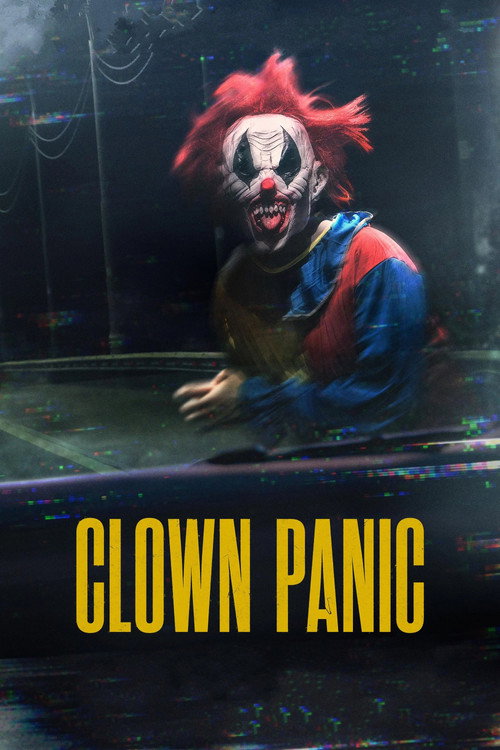
Is Clown Panic (2026) Woke?
Clown Panic · 2026 · Directed by Ed Perkins
Woke Score
CriticCritic Score
Woke-Adjacent
Critics rated this 7 points above its woke score. Among Woke-Adjacent films, this critic score ranks #101 of 170.
Answer: Partly
Woke Score 58/100 · Verdict: Woke-Adjacent
Strongest markers: Racial Consciousness (72) · Lecture Energy (62) · Revisionist History (30)
Representation Casting
Score: 0/100
As a documentary, casting in the traditional sense does not apply. The interview subjects reflect the communities involved in the 2016 events organically, without any apparent curation for representational optics.
LGBTQ+ Themes
Score: 0/100
No LGBTQ+ themes, subjects, or framing appear in the film or any of the research gathered. The clowns, to our knowledge, were not making a statement about queer identity.
Feminist Agenda
Score: 0/100
No feminist framework is applied to the subject matter. The documentary does not appear to examine the panic through the lens of gender dynamics or patriarchal structures.
Racial Consciousness
Score: 72/100
This is the film's primary social thesis: the initial sightings in low-income Black communities in Greenville County were dismissed by law enforcement and media, with serious coverage and action only materializing once the panic reached whiter, more affluent suburbs. The film explicitly foregrounds this disparity as a structural argument about whose fear is taken seriously in America.
Climate Crusade
Score: 0/100
No climate or environmental themes are present. The documentary is concerned with social hysteria, not ecological catastrophe, though the two are not mutually exclusive in the current cultural moment.
Eat the Rich
Score: 18/100
The film touches on class dynamics in its discussion of impoverished communities being ignored, and the plight of working-class professional clowns who lost income due to the hysteria. These elements carry a faint anti-capitalist undertone but are framed as human interest rather than systemic critique.
Body Positivity
Score: 0/100
No body positivity themes are present. The film does not appear to engage with questions of body image, size, or physical self-acceptance in any meaningful way.
Neurodivergence
Score: 0/100
No neurodivergence themes are present. Witnesses who reported clown sightings are not framed through a neurodivergent lens, despite what some might consider an invitation to do so.
Revisionist History
Score: 30/100
The film reframes a pop-culture curiosity as a revealing symptom of deep American social dysfunction, drawing explicit parallels to the 1980s Satanic Panic. Repositioning a viral meme as a diagnostic window into systemic racism and political polarization qualifies as mild revisionism of a recent and widely misremembered event.
Lecture Energy
Score: 62/100
Multiple critics flagged the film's grand unifying thesis, that 'the story of the clowns is the story of America,' as the kind of declaration that does not leave much room for the audience to reach its own conclusions. The documentary apparently strains under the weight of its own argument, pivoting from viral horror nostalgia to a comprehensive indictment of American social pathology.

Synopsis
Revisits the bizarre nationwide hysteria of 2016, which began with reports of creepy clowns hiding near woods in South Carolina and quickly spiraled into widespread panic, school lockdowns, and police interventions across the United States. This in-depth documentary features interviews with eyewitnesses, law enforcement officials, cultural commentators, and professional clowns whose livelihoods were impacted by the craze.
Why it received this score
Ed Perkins has looked at a nation briefly terrorized by men in greasepaint lurking near tree lines and concluded, with apparent sincerity, that this is the most clarifying lens through which to examine the American condition. It is a bold thesis. It is the kind of thesis that arrives pre-assembled, looking for footage to confirm it. To his credit, Perkins does find genuinely compelling material in the film's early passages: the documented indifference of law enforcement and media to initial reports from low-income Black communities in Greenville County, South Carolina, followed by their sudden galvanization once the panic migrated to more affluent suburban zip codes. That is a real and specific observation. The film is at its most persuasive when it stays close to that specific disparity and lets it breathe.
The trouble arrives when *Clown Panic* decides that no single insight is sufficient and begins constructing a grander architecture. The 2016 clown hysteria becomes a metaphor for political polarization, then for media manipulation, then for the Satanic Panic, then for the general state of American civilization. By the time the film announces that the story of the clowns is the story of America, we have traveled some distance from the woods of South Carolina. Critics have described the result as buckling under the weight of its own thesis, which is a generous way of saying the documentary occasionally resembles a graduate seminar that has been given a Halloween theme. The professional clowns whose livelihoods were destroyed by the hysteria provide the film's most quietly devastating material, precisely because their suffering requires no grand interpretive framework to land.
Perkins, whose prior work on *Black Sheep* demonstrated a genuine gift for embedding structural critique within intimate human portraiture, is clearly most comfortable when the argument emerges from the people on screen. Here, the argument arrives first and the people are arranged around it. The racial consciousness framing is legitimate and well-evidenced. The sermonizing is less so. *Clown Panic* is a documentary that knows exactly what it thinks before the first interview subject has opened their mouth, and it wears that certainty the way a professional clown wears a red nose: visibly, and with a commitment that forecloses certain kinds of conversation.
Analysis generated by our Consciousness Algorithm
Critic Reviews
“Scarier still is a culture of such profound mistrust that hatred of clowns becomes the only thing that people can agree on.”
“Clown Panic is not sensationalist, grounded in the distinctly human knee-jerk reaction to fear with a mob mentality.”
“A solid documentary that effectively shows how hysteria can build and how viral moments can get out of control.”
“There was a distinct sense that Clown Panic would have more of a focus on the political unrest that made it possible, but it only touches on this superficially.”
Related rankings
Consciousness Markers
As a documentary, casting in the traditional sense does not apply. The interview subjects reflect the communities involved in the 2016 events organically, without any apparent curation for representational optics.
No LGBTQ+ themes, subjects, or framing appear in the film or any of the research gathered. The clowns, to our knowledge, were not making a statement about queer identity.
No feminist framework is applied to the subject matter. The documentary does not appear to examine the panic through the lens of gender dynamics or patriarchal structures.
This is the film's primary social thesis: the initial sightings in low-income Black communities in Greenville County were dismissed by law enforcement and media, with serious coverage and action only materializing once the panic reached whiter, more affluent suburbs. The film explicitly foregrounds this disparity as a structural argument about whose fear is taken seriously in America.
No climate or environmental themes are present. The documentary is concerned with social hysteria, not ecological catastrophe, though the two are not mutually exclusive in the current cultural moment.
The film touches on class dynamics in its discussion of impoverished communities being ignored, and the plight of working-class professional clowns who lost income due to the hysteria. These elements carry a faint anti-capitalist undertone but are framed as human interest rather than systemic critique.
No body positivity themes are present. The film does not appear to engage with questions of body image, size, or physical self-acceptance in any meaningful way.
No neurodivergence themes are present. Witnesses who reported clown sightings are not framed through a neurodivergent lens, despite what some might consider an invitation to do so.
The film reframes a pop-culture curiosity as a revealing symptom of deep American social dysfunction, drawing explicit parallels to the 1980s Satanic Panic. Repositioning a viral meme as a diagnostic window into systemic racism and political polarization qualifies as mild revisionism of a recent and widely misremembered event.
Multiple critics flagged the film's grand unifying thesis, that 'the story of the clowns is the story of America,' as the kind of declaration that does not leave much room for the audience to reach its own conclusions. The documentary apparently strains under the weight of its own argument, pivoting from viral horror nostalgia to a comprehensive indictment of American social pathology.