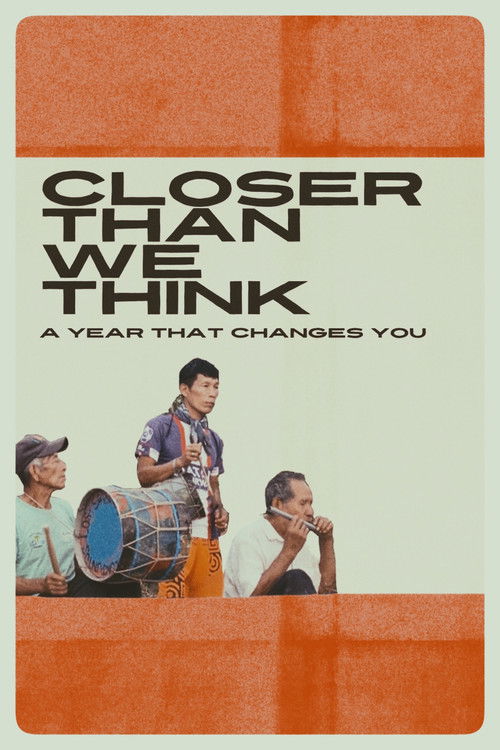
Closer Than We Think: A Year That Changes You (2026)
Directed by Cash Davenport
No · Ultra Based
How we score movies →Consciousness Markers
The documentary features service participants and beneficiaries, but without explicit attention to demographic representation or casting as a statement. Appears to reflect actual participant demographics rather than curated diversity.
Service work includes international and domestic projects with communities of varying demographics, but lacks explicit interrogation of race, colonialism, or systemic inequality as organizing frameworks.
The film maintains an observational documentary style rather than adopting a preachy posture. Minimal voiceover or explicit messaging suggests lower lecture energy, though the humanitarian mission itself contains implicit values.
International service work in Peru could invite historical consciousness, but the documentary does not appear to engage with colonialism, indigenous perspectives, or revisionist historical framing.
The organization presents itself as a 501c3 nonprofit focused on service, but makes no critique of capitalism or economic systems. Framing is apolitical rather than counter-capitalist.
No evidence of LGBTQ+ themes, representation, or thematic engagement. The focus remains on humanitarian service without any visible engagement with sexual or gender identity.
No discernible feminist framing or gendered analysis of power structures. Female participants appear to be present but are not positioned as making a specifically feminist statement.
No evidence of climate consciousness or environmental themes. The documentary does not engage with ecological concerns or positioning service within climate discourse.
No engagement with body positivity, body image, or disability representation as thematic concerns. Absent from the documentary's scope.
No visible engagement with neurodivergence, disability representation, or neurodivergent frameworks. Not addressed in the documentary.
Synopsis
A Documentary on the humanitarian organization, Youthlinc.
Why it received this score
This twenty-two minute documentary represents what we might call a textbook example of contemporary humanitarian media, though one notably devoid of the self-conscious cultural apparatus that has come to define such work in recent years. Cash Davenport's film documents Youthlinc, a Utah-based nonprofit dedicated to youth service, and does so with the straightforward earnestness of an organization genuinely focused on its mission rather than on performing its progressivism for an external audience. The film chronicles service projects in Peru and domestically, emphasizing the transformative power of direct engagement with communities in need. There is a refreshing absence of the preachy framing that typically accompanies such material.
What distinguishes this work from the current cultural moment is precisely its refusal to weaponize its subject matter. The humanitarian impulse here remains uncomplicated by contemporary identity frameworks or ideological scaffolding. Youthlinc presents itself as a service organization open to all comers, rather than as an instrument for validating particular worldviews or correcting historical consciousness. The documentary does not interrogate structures of power, nor does it position itself as an intervention in ongoing cultural debates. It simply shows young people doing good work and suggests that such work changes both the server and the served.
This restraint registers as almost quaint in 2026, a year in which even the most modest charitable endeavor risks being conscripted into some larger narrative about systemic transformation or performative allyship. The film's genuine disinterest in these frameworks, combined with its apparent assumption that service speaks for itself, places it squarely outside the contemporary discourse it ostensibly inhabits. It is, in short, a humanitarian documentary that has not yet learned to be anxious about its own existence.
Analysis generated by our Consciousness Algorithm