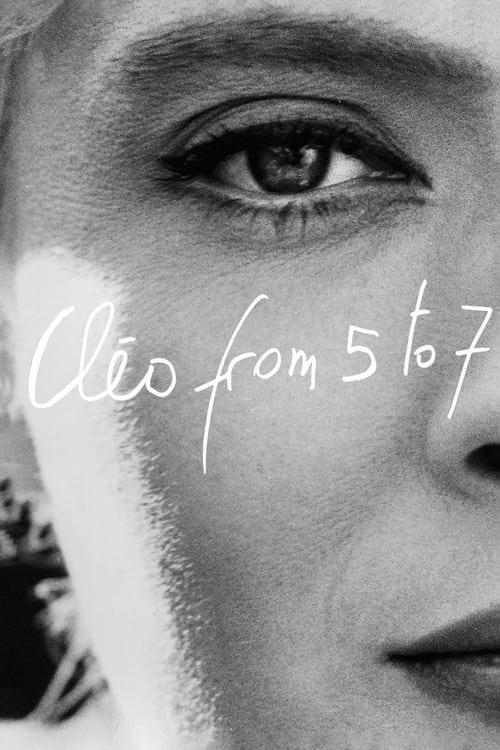
Cléo from 5 to 7 (1962)
Directed by Agnès Varda
No · Ultra Based
How we score movies →Consciousness Markers
The film centers female consciousness and anxiety with genuine depth, which was progressive for 1962. However, it lacks explicit feminist rhetoric or systemic critique. Varda's approach is psychological rather than ideological.
The cast is primarily white and European, reflecting 1962 Paris demographics but offering no conscious diversity programming. Cléo is the central character, but her prominence stems from narrative focus, not representation strategy.
The film presents the female body without particular celebration or criticism. Cléo's appearance matters to her socially and professionally, reflecting period attitudes rather than promoting body positivity.
Cléo is a singer dependent on commercial success, and the film observes her economic precarity with some sympathy, but offers no systematic critique of capitalism or wealth inequality.
Set in Paris in 1962, the film reflects the demographics of its setting without conscious attention to racial dynamics or representation. No commentary on colonialism, racism, or racial identity appears.
Varda's directorial approach emphasizes observation and ambiguity over preachiness. The film trusts viewers to draw their own conclusions rather than explaining its themes.
No LGBTQ themes are present in the film. A same-sex couple appears briefly as part of the urban landscape, but without commentary or thematic integration.
Climate concerns are entirely absent. The film captures urban Paris but makes no environmental commentary or climate-conscious messaging.
No representation of neurodivergence or disability is present. Mental health anxiety appears, but not framed through a neurodivergent lens.
The film makes no attempt to rewrite historical narratives or correct historical erasures. It is a contemporary portrait, not a historical statement.


Synopsis
Agnès Varda eloquently captures Paris in the sixties with this real-time portrait of a singer set adrift in the city as she awaits test results of a biopsy. A chronicle of the minutes of one woman's life, Cléo from 5 to 7 is a spirited mix of vivid vérité and melodrama, featuring a score by Michel Legrand and cameos by Jean-Luc Godard and Anna Karina.
Why it received this score
Varda's 1962 masterpiece presents a woman's consciousness with rare interiority and formal innovation, centering female anxiety and urban experience at a time when cinema largely ignored such subjects. The film's achievement lies in its psychological honesty and cinematic artistry rather than any programmatic social messaging. We find ourselves watching a portrait of individual vulnerability, not a statement about systemic inequality or group identity.
The film remains resolutely non-preachy. Cléo's crisis is existential and personal, her interactions with others captured as lived moments rather than opportunities for representation debates or social commentary. The supporting cast includes people of various stations, but they function as characters in her story, not as conscious correctives to historical erasure. This is cinema that trusts observation over explanation.
To score this film on modern progressive cultural markers is somewhat like rating a medieval tapestry on its color temperature. Varda was undeniably a woman working in a male-dominated medium, and her films consistently centered female subjectivity at a time when this was genuinely transgressive. But transgression in 1962 and cultural activism in 2024 are not the same phenomenon. This is a beautiful, important film that does not need retroactive credentials to justify its existence. It speaks for itself, in its own language, to its own era.
Analysis generated by our Consciousness Algorithm
Critic Reviews
“The rebelliousness of the French New Wave, the embrace of invention, are all there.”
“The passage of time has been kinder to Varda's films than some of theirs, and Cléo from 5 to 7 plays today as startlingly modern.”
“From a place of fearless independence, Varda's film investigates the nature of female identity with a series of thematic and formal contradictions.”
“Varda captures the vibrant social world and its easy rhythms in creamy black and white with graceful long takes, bringing an almost tactile quality to Cléo's personal odyssey.”