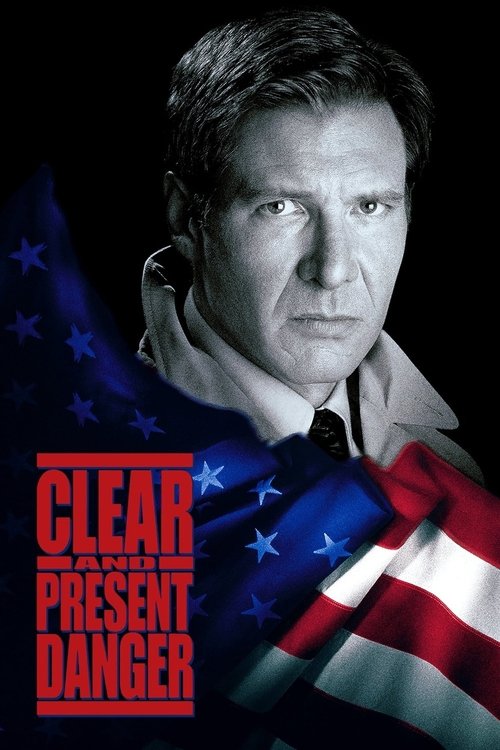
Clear and Present Danger (1994)
Directed by Phillip Noyce
No · Ultra Based
How we score movies →Consciousness Markers
The film presents CIA intervention in Colombia through an American heroic lens, avoiding historical complexity about American foreign policy or its consequences.
The cast includes minimal racial diversity and what diversity exists lacks intentional representation narrative. Characters of color occupy predictable roles without subverting expectations.
Expository dialogue explains political situations and bureaucratic processes, but this serves plot mechanics rather than delivering moral instruction or social commentary.
Anne Archer appears in a supporting role as a presidential aide, but the character exists within traditional power structures with no feminist commentary or critique.
The film depicts corporate corruption through the murdered businessman plot, but this serves the thriller narrative rather than any coherent anti-capitalist critique.
Latin American characters are portrayed primarily as drug dealers and operatives within Cold War geopolitical frameworks. No critical examination of colonial history or structural inequality appears.
No LGBTQ+ themes, characters, or subtext appear in the film. This is entirely absent from the narrative.
Climate consciousness is entirely absent from this geopolitical thriller. Environmental themes play no role whatsoever.
No engagement with body diversity or body positivity appears. The film adheres to conventional Hollywood aesthetics.
No neurodivergent representation or themes present in the film.


Synopsis
Agent Jack Ryan becomes acting Deputy Director of Intelligence for the CIA when Admiral Greer is diagnosed with cancer. When an American businessman, and friend of the president, is murdered on his yacht, Ryan starts discovering links between the man and drug dealers. As former CIA agent John Clark is sent to Colombia to kill drug cartel kingpins in retaliation, Ryan must fight through multiple cover-ups to figure out what happened and who's responsible.
Why it received this score
Clear and Present Danger exists in that peculiar space occupied by early 1990s action thrillers: it takes itself very seriously indeed, yet remains fundamentally unconcerned with the apparatus of progressive cultural consciousness. The film presents a straightforward geopolitical narrative in which American institutional power, as embodied by Harrison Ford's earnest bureaucrat, confronts both foreign corruption and domestic malfeasance. There is nothing here that would register as culturally provocative by 2020s standards, which is to say there is nothing here that would register as culturally conscious at all.
The cast reflects the demographic realities of mid-90s Hollywood without any apparent intention toward diverse representation as a narrative statement. Willem Dafoe appears as a morally compromised operative, while Latin American characters populate the film primarily as drug cartel members or local operatives, roles that carry the unexamined weight of their era's geopolitical anxieties. The film's treatment of Colombia and its people operates entirely within the framework of American strategic interests rather than any engagement with local complexity or historical injustice. Anne Archer provides a female presence in a supporting capacity, which satisfies no particular progressive mandate beyond her mere existence in the cast.
What lingers most is the film's profound disinterest in examining its own assumptions about power, intervention, and American righteousness. This is not a work that courts controversy or invites reexamination of its ideological foundations. It is simply a product of its moment, confident in its action sequences and political thriller mechanics, utterly innocent of the cultural self-consciousness that would come to define prestige filmmaking decades later.
Analysis generated by our Consciousness Algorithm
Critic Reviews
“The result, except for the stock action climax, is sharp, fast, bitter. [19 September 1994, p. 38]”
“The filmmakers haven't simply tamed the rogue elephant of Clancy's narrative; they've turned it into something that moves as gracefully and as powerfully as a gazelle.”
“Another fast, gripping spy story with some good tricks up its sleeve.”
“True-blue Ford keeps 'Clear' out of danger. [3 August 1994, p.D1]”