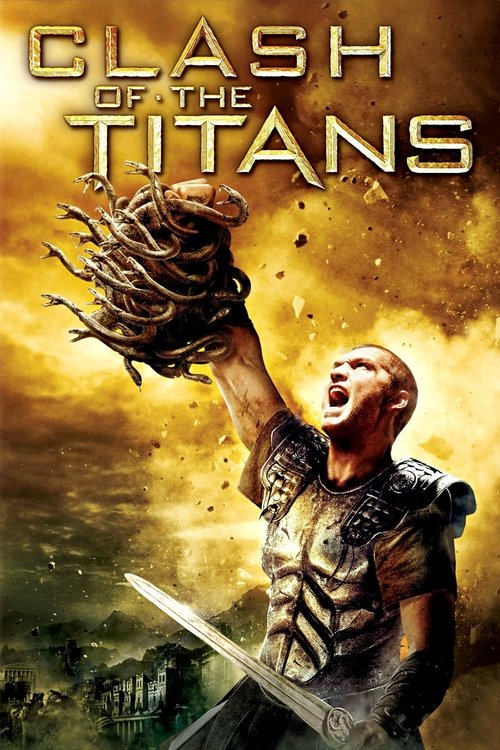
Clash of the Titans (2010)
Directed by Louis Leterrier
No · Ultra Based
How we score movies →Consciousness Markers
Gemma Arterton plays Io with some agency and combat capability, though she remains primarily a love interest and exposition device within a male-centered narrative.
The cast is predominantly white European with one supporting actor of Middle Eastern descent in an ensemble role. No particular effort is made to diversify or comment on casting choices.
No LGBTQ+ themes, characters, or representation present in the film.
The film contains no racial consciousness or commentary on race. It adapts Greek mythology without interrogating the cultural implications of its casting or narrative choices.
No environmental themes or climate-related content appears in this mythological action film.
No anti-capitalist themes or critique of economic systems present in the narrative.
The film features idealized action hero physiques without commentary on body diversity or acceptance.
No representation of neurodivergence or disability representation in the film.
This is an adaptation of Greek mythology, not a revisionist take on historical events. It does not reinterpret actual history through a contemporary lens.
The film contains no preachy elements or social messaging. It prioritizes spectacle and action over any attempt to educate or persuade regarding social issues.


Synopsis
Born of a god but raised as a man, Perseus is helpless to save his family from Hades, vengeful god of the underworld. With nothing to lose, Perseus volunteers to lead a dangerous mission to defeat Hades before he can seize power from Zeus and unleash hell on earth. Battling unholy demons and fearsome beasts, Perseus and his warriors will only survive if Perseus accepts his power as a god, defies fate and creates his own destiny.
Why it received this score
Clash of the Titans represents a curious artifact from 2010, a moment when contemporary cinema had not yet fully internalized the progressive sensibilities that would come to dominate studio filmmaking. This is a film of straightforward purpose: gods clash, monsters perish, a hero learns to embrace his birthright. The narrative carries no apparent anxiety about its own mythological source material or the cultural implications of adapting ancient Greek stories for modern audiences. The cast is predominantly white European, with Ashraf Barhom appearing as a supporting warrior in an ensemble that otherwise reflects the demographic assumptions of mainstream action cinema circa 2010. There is no interrogation of gender dynamics, no meaningful exploration of power structures beyond the literal clash of deities, no sense that the filmmakers felt compelled to complicate their source material with contemporary concerns. The film is, in this sense, refreshingly unconcerned with the apparatus of modern social consciousness.
What minimal progressive elements exist emerge almost accidentally. The film features Gemma Arterton as Io, a priestess character with agency and combat capability, though she functions primarily as romantic interest and exposition device. The inclusion of Ashraf Barhom in the warrior ensemble might be noted, though the film makes no particular point of it, nor should it. These elements are too incidental and underexplored to constitute genuine representation consciousness. The film is preoccupied with 3D spectacle, with the technical achievement of rendering monstrous creatures, with the simple pleasure of watching mythological figures battle one another. There is no lecture, no agenda, no visible strain toward contemporary relevance. It is merely a big-budget remake that assumes its audience came for action and visual effects, not for commentary on social structures or cultural awareness. By the standards of modern studio filmmaking, this restraint is almost scandalous.
Analysis generated by our Consciousness Algorithm
Critic Reviews
“For its intended audience, I suspect this will play as a great entertainment. I enjoyed myself, particularly after they released the Kraken.”
“A roaring old-school action adventure for kids, with as many mythical beasts as a year at Hogwarts and a healthy dose of smiting without the crazed bloodlust of “300.””
“A popcorn movie that reaches back to the fantasy epics of old and forward into the digital future, where the word "unimaginable" no longer exists.”
“Clash seems to be deliberately steering clear of camp, when in fact it should have steered straight into camp and stepped on the gas.”