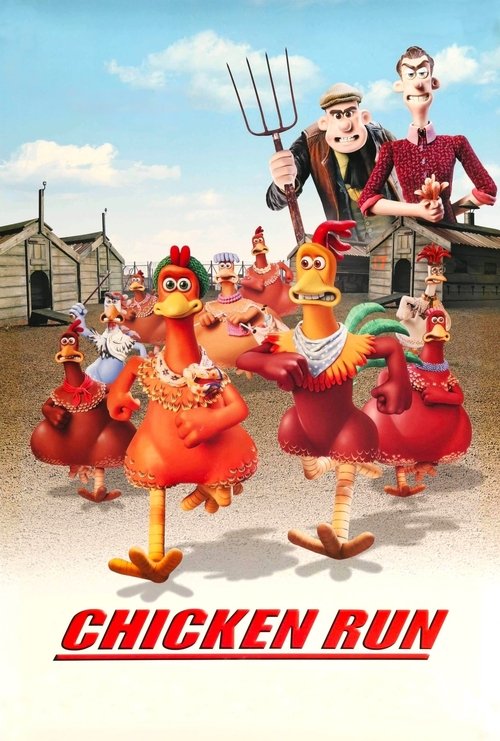
Chicken Run (2000)
Directed by Peter Lord
No · Ultra Based
How we score movies →Consciousness Markers
Ginger serves as the primary protagonist and decision-maker, demonstrating agency and leadership. However, this reflects basic character writing rather than deliberate feminist messaging, and the film contains no sustained examination of gender dynamics or patriarchal critique.
The voice cast includes both male and female actors, with Ginger as a strong female lead character. However, the film predates modern casting consciousness and shows no deliberate effort toward diverse representation beyond basic gender balance.
The farm represents a system of exploitation, and the chickens seek freedom from it. However, this is presented as a straightforward escape narrative rather than as anti-capitalist social commentary or critique of economic systems.
No LGBTQ+ themes, characters, or representation present in the film. The narrative contains no subtext or explicit content related to sexual orientation or gender identity.
The film contains no racial consciousness, racial commentary, or engagement with racial themes. As an animated film about chickens, racial identity is absent from the narrative entirely.
No climate-related themes, environmental messaging, or ecological consciousness appears in the film. The story focuses on individual escape rather than systemic or environmental concerns.
No body positivity messaging is evident. The characters are stylized cartoon animals with no commentary on body diversity, body image, or acceptance of different physical forms.
The film contains no representation of neurodivergence, no characters coded as neurodivergent, and no engagement with disability or neurological difference.
No historical content is present, and therefore no revisionist interpretation of history. The film exists in a timeless cartoon setting with no historical claims or reframing.
The film maintains a comedic tone throughout with no preachy messaging, moral lectures, or attempts to instruct the audience on social issues. Entertainment remains the priority.


Synopsis
The creators of Wallace & Gromit bring you an exciting and original story about a group of chickens determined to fly the coop–even if they can't fly! It's hardly poultry in motion when Rocky attempts to teach Ginger and her feathered friends to fly…but, with teamwork, determination and a little bit o' cluck, the fearless flock plots one last attempt in a spectacular bid for freedom.
Why it received this score
Chicken Run arrives as a peculiar artifact in the annals of animated cinema, a film so thoroughly committed to the business of slapstick humor and heist narrative that it scarcely pauses to consider the ideological implications of anything whatsoever. The plot, such as it is, concerns a group of chickens attempting to escape from a farm before they become dinner, which the film treats with the moral gravity of a Looney Tunes short. Ginger, the female lead, possesses agency and determination, though whether this constitutes deliberate feminist messaging or simply competent character writing remains a question the film itself shows no interest in answering.
The film's engagement with progressive sensibilities amounts to something approaching nil. There is a faint undercurrent of anti-authoritarian sentiment in the chickens' rebellion against farm life, but this registers as narrative convenience rather than ideological statement. The voice cast, featuring both male and female actors, reflects the basic demographics of casting rather than any conscious effort toward representation. One observes no racial consciousness, no LGBTQ+ themes, no climate messaging, no body positivity, no neurodivergent representation, and certainly no lecture energy. The film appears to have been assembled in a time before such considerations existed in the collective consciousness of mainstream animation.
This is, in many respects, to the film's credit. Chicken Run commits itself entirely to the proposition that animated comedy for families need not carry the weight of contemporary social consciousness. It is a film about chickens who want to escape a farm, rendered in meticulous stop-motion, and it does not pretend to be anything more. The cultural moment of 2000 permitted such innocence. Modern audiences may find this refreshing or, depending on one's disposition, evidence of a more innocent era.
Analysis generated by our Consciousness Algorithm
Critic Reviews
“It's aimed at adults as much as children, with jokes that work on multiple levels, and contraptions.”
“People who have seen it seem to be crazy about it.”
“It will be the most talked-about comedy of summer.”
“A combination of "Barnyard Follies" and "Schindler's List."”