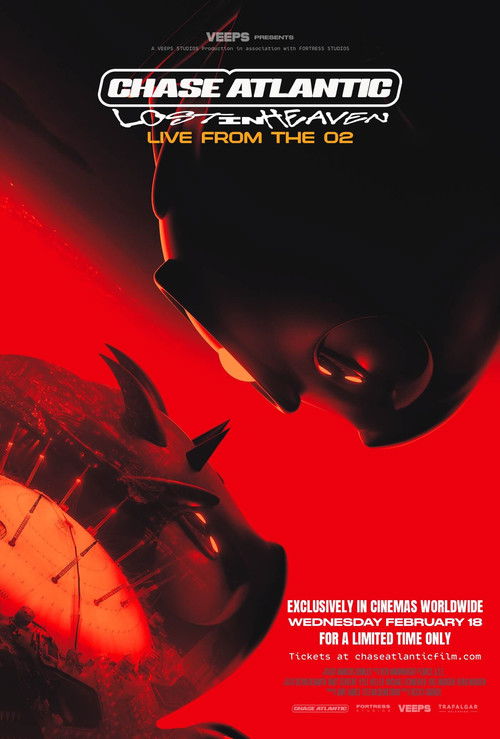
Chase Atlantic: Lost in Heaven (2026)
Directed by Becky Garner
No · Ultra Based
How we score movies →Consciousness Markers
The band consists of three male performers of largely unremarkable demographic presentation. The audience contains diverse attendees, but this reflects natural demographic distribution rather than intentional casting strategy.
The concert format allows for minimal preachy messaging. The band performs music and speaks briefly between songs, avoiding extended moralizing or educational content delivery.
The audience is visibly diverse, suggesting the band appeals across racial demographics. However, the film presents no explicit commentary on race or racial justice. Diversity exists as demographic fact rather than cultural statement.
The performers present their bodies in performance without apparent self-consciousness, and the camera captures diverse body types in the audience. This reflects natural body diversity rather than deliberate body positivity messaging.
While emotional vulnerability in performance could be read as challenging traditional masculinity, this appears incidental rather than intentional. No explicit feminist messaging or female-centric narrative emerges from the concert documentation.
The film documents a commercial concert event within the entertainment industry. While the band emphasizes emotional authenticity over commercial calculation in interviews, the film itself celebrates their commercial success and arena-filling capacity.
No apparent LGBTQ+ themes or representation are present in the film's documentation of the concert. The band members present as heterosexual, and their music focuses on romantic struggle without specific reference to sexual orientation.
No climate-related themes, messaging, or environmental consciousness appears in the concert film. The subject is music performance, not planetary concerns.
No representation of neurodivergent characters or themes appears in the concert documentation. The band's discussion of emotional struggle does not extend to explicit neurodivergence representation.
A concert film contains no historical narrative to revise. The work documents contemporary performance without engaging with historical reinterpretation.
Synopsis
Chase Atlantic's concert film captures their epic O2 Arena show closing the LOST IN HEAVEN Tour. The Australian trio, plus touring members, showcase years of growth that led to filling major venues and earning billions of streams.
Why it received this score
Chase Atlantic: Lost in Heaven is a concert film stripped of pretense, which is to say it suffers from the absence of any cultural agenda whatsoever. The Australian trio performs their music in front of an adoring crowd at the O2 Arena, and the camera captures this transaction with professional competence. We are treated to excellent cinematography, a diverse audience demographic, and what appears to be genuine emotional connection between performers and listeners. Yet none of this constitutes what we might call progressive cultural consciousness. The band performs songs about heartbreak, personal struggle, and vulnerability, which are universal human experiences rather than markers of social awareness.
The film makes no apparent attempt to interrogate systems of power, celebrate marginalized identities as a conceptual project, or engage with contemporary social movements. The three male performers are presented as individuals rather than as representatives of any broader cultural commentary. The audience contains people of various backgrounds, but this reflects simple demographic reality rather than a deliberate statement about representation. The touring members supporting the band are similarly unremarkable from a cultural consciousness standpoint. This is, in essence, a document of a rock concert, executed with technical proficiency and emotional sincerity.
One cannot fault the film for what it does not attempt. It is honest about its scope and purpose. The woke score reflects not a failure of the film but rather its fundamental disinterest in the cultural conversations that now dominate critical discourse. It is a relic of an older entertainment paradigm, one in which a band could perform music and audiences could simply enjoy it without contemplating the social implications of every aesthetic choice. This is either refreshing or tedious depending on one's perspective.
Analysis generated by our Consciousness Algorithm