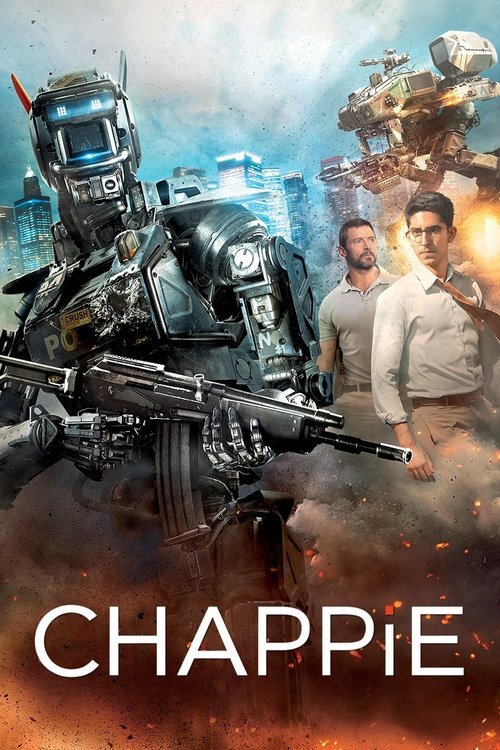
Chappie (2015)
Directed by Neill Blomkamp
No · Based
How we score movies →Consciousness Markers
The film engages with South African urban context and features predominantly Black and South African cast members, but treats race and inequality as backdrop rather than subject of genuine critical examination.
The film features South African cast members and shoots in Johannesburg, but the representation is complicated by the controversial casting of Die Antwoord and the flattening of South African urban reality into aesthetic backdrop.
The film contains occasional expository dialogue about AI consciousness and corporate control, but generally avoids heavy-handed moralizing in favor of action and spectacle.
The film depicts corporate villains (the weapons manufacturer played by Hugh Jackman) and explores themes of technology serving state control, but lacks any coherent anti-capitalist critique or vision.
Chappie's development as an artificial consciousness with emerging emotions could be read as neurodivergence allegory, but this is not developed with any intentionality or specificity.
Sigourney Weaver appears in a supporting role as a corporate executive, but the film contains minimal examination of gender dynamics or feminist themes.
No LGBTQ+ themes, characters, or representation present in the film.
No climate themes or environmental consciousness present in the film.
No body positivity themes are present in the film.
The film does not attempt to reinterpret historical events or narratives.


Synopsis
Every child comes into the world full of promise, and none more so than Chappie: he is gifted, special, a prodigy. Like any child, Chappie will come under the influence of his surroundings, some good, some bad, and he will rely on his heart and soul to find his way in the world and become his own man. But there's one thing that makes Chappie different from any one else: he is a robot.
Why it received this score
Blomkamp's third feature arrives with the weight of good intentions and the execution of a director attempting to comment on South African inequality through the lens of an AI robot raised by gangsters. The film is set and shot in Johannesburg, which provides an authentic backdrop for its exploration of urban violence and socioeconomic desperation. Yet the film's engagement with these themes remains largely superficial, treating the South African context as mere aesthetic rather than as a site for genuine interrogation of systemic violence or class struggle.
The most curious element is the casting of Die Antwoord, the South African hip-hop group known for provocative and often offensive imagery, in the role of criminal mentors. This choice reads as either a bold artistic statement about authenticity or an unfortunate miscalculation that privileges shock value over thoughtful representation. The film frames these characters as criminals without meaningful exploration of the structural forces that produce criminality, nor does it interrogate whether platforming Die Antwoord's particular brand of transgression serves the narrative or merely courts controversy. The gangsters teach Chappie to think and feel, but the film offers no sustained critique of the economic systems that have pushed them toward criminal activity.
The robot protagonist functions as a blank slate onto which various ideologies are projected, but this setup yields no meaningful insights about class, race, or the nature of consciousness itself. The film remains more interested in spectacular action sequences and the novelty of its casting choices than in the urgent questions its premise raises.
Analysis generated by our Consciousness Algorithm
Critic Reviews
“This hugely entertaining oddity could never be mistaken for the work of any other filmmaker.”
“Between the charming Copley performance, the ingenious visuals, the absolutely incredible all-electronic Hans Zimmer score (seriously, this is one of his best ever), and the propulsive narrative thrust (Blomkamp is rarely singled out for how swiftly he moves things along, plot holes be damned), there is a lot to appreciate and even love about Chappie.”
“It’s a good sci-fi action movie, too. Far be it from me to give this movie the kiss of death by making it seem too serious for its core audience. Chappie is everything it has to be — but it’s everything it should be, too.”
“A misjudgment from metallic head to titanium toe.”