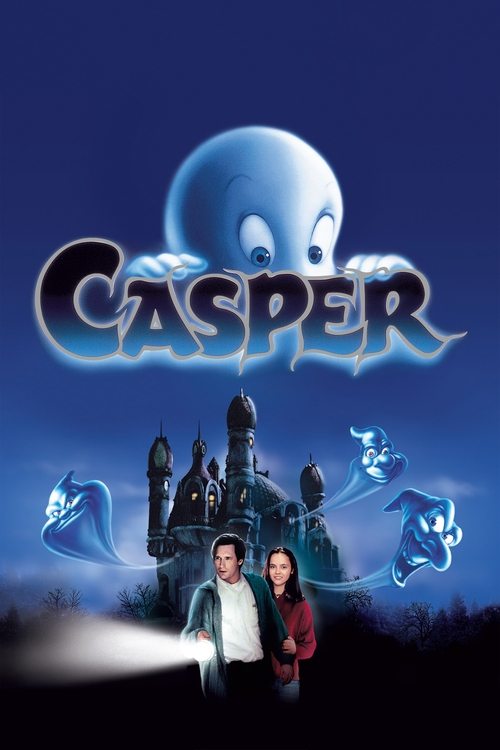
Casper (1995)
Directed by Brad Silberling
No · Ultra Based
How we score movies →Consciousness Markers
Kat is a capable teenage protagonist, though the romantic plot centers on her falling for Casper, maintaining traditional gender dynamics of the era.
The cast is predominantly white and reflects 1990s Hollywood demographics without deliberate diversification. No meaningful representation work is evident.
The film contains gentle moral messaging about acceptance and kindness, but this reflects humanist values rather than contemporary cultural lecturing.
There is no LGBTQ+ content, themes, or representation in the film.
The film contains no engagement with racial themes, consciousness, or commentary.
Climate or environmental concerns do not factor into the narrative.
There is no critique of capitalism or wealth systems in the film.
Body positivity or discussions of physical appearance are absent from the narrative.
The film makes no reference to neurodivergence or disability awareness.
As a fantasy film set in an undefined present, it does not engage in historical revisionism.


Synopsis
Casper is a kind young ghost who peacefully haunts a mansion in Maine. When specialist James Harvey arrives to communicate with Casper and his fellow spirits, he brings along his teenage daughter, Kat. Casper quickly falls in love with Kat, but their budding relationship is complicated not only by his transparent state, but also by his troublemaking apparition uncles and their mischievous antics.
Why it received this score
Casper arrives before the cultural moment we now call social consciousness, a ghost story that predates the specific markers we use to measure contemporary progressive sensibility. Brad Silberling's 1995 film is content to be a simple tale about a friendly specter and the teenage girl who falls for him, animated by genuine warmth and an interest in acceptance. The narrative asks us to sympathize with Casper and his uncles, to see them not as threats but as troubled beings deserving of compassion. This is humanist work, not the kind of cultural work we are measuring.
The film's gender politics are unremarkable for its era. Christina Ricci plays Kat as intelligent and resourceful, yet the central romantic tension still positions her as an object of Casper's affection, a girl to be won over rather than an agent pursuing her own desires. The supporting cast is uniformly pale, reflecting the default assumptions of mainstream 1990s filmmaking. There is no engagement whatsoever with questions of representation, identity, systemic inequality, or any of the specific cultural anxieties that define 2020s progressive cinema. The film does not even attempt to address these concerns.
What remains is a competent piece of family entertainment built on themes of kindness and coexistence. These are virtues, certainly, but they are not what we are measuring. A film about supernatural beings learning to get along peacefully is not the same as a film engaging in cultural consciousness. Casper is innocent of the charge of progressive messaging because it was made before such messaging became a recognizable aesthetic category. It is, in this sense, perfectly neutral ground.
Analysis generated by our Consciousness Algorithm
Critic Reviews
“Like The Flintstones and The Addams Family, Casper is an attempt to bring cartoons to life while incorporating them with real actors and sets. As a technical achievement, it's impressive, and entertaining. ”
“A better- than-average children's film, dolled up with some high-priced art direction and extraordinary special effects.”
“Casper is more an elaborate mechanism than a fully realized movie, and the silly plot is merely an excuse to indulge the amazing special effects. But first-time director Brad Silberling never lets the magic overwhelm his characters. Best known as Wednesday in the Addams family movies, Ricci has grown into an appealing young star who nicely complements Pullman's trademark sensitivity, and together they add the necessary touch of special to the visual effects. [26 May 1995, p.G3]”
“The movie is pallid, bloated and light enough to evaporate from the mind 10 minutes after you leave the theatre. [26 May 1995]”