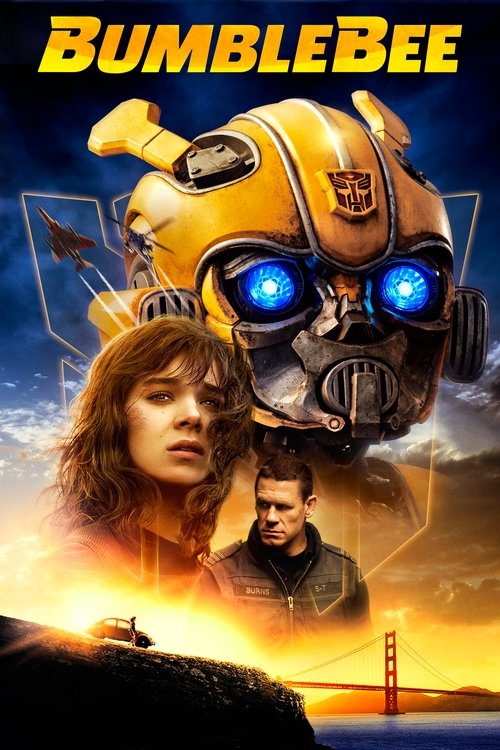
Bumblebee (2018)
Directed by Travis Knight
No · Ultra Based
How we score movies →Consciousness Markers
The film features a female protagonist and a diverse supporting cast, though their inclusion lacks deeper thematic purpose or exploration of identity beyond surface-level presence.
Charlie Watson demonstrates agency and independence, but the film treats her coming-of-age journey with generic sincerity rather than specific feminist consciousness or critique of gender dynamics.
The film contains minimal preachy elements, though occasional moments of Charlie's emotional introspection approach earnestness without crossing into explicit moralizing.
No LGBTQ+ themes, characters, or representation are present in the film.
While the cast includes characters of various ethnic backgrounds, there is no exploration of racial themes, systemic racism, or racial identity in the narrative.
The film contains no engagement with environmental themes, climate change, or ecological consciousness.
There is no critique of capitalism, corporate power, or wealth inequality present in the film.
The film makes no deliberate engagement with body positivity or challenges to conventional beauty standards.
No neurodivergent characters or themes related to neurodiversity are present in the narrative.
The film is set in 1987 but does not reinterpret historical events or offer revisionist historical commentary.


Synopsis
On the run in the year 1987, Bumblebee finds refuge in a junkyard in a small Californian beach town. Charlie, on the cusp of turning 18 and trying to find her place in the world, discovers Bumblebee, battle-scarred and broken. When Charlie revives him, she quickly learns this is no ordinary yellow VW bug.
Why it received this score
Bumblebee presents itself as a softer entry point into the Transformers franchise, trading the aggressive maximalism of its predecessors for something approximating genuine charm. The film's central conceit, pairing a teenage girl with an extraterrestrial robot, allows for moments of genuine emotional connection that distinguish it from the bombast typical of Michael Bay's tenure. Yet beneath this veneer of earnestness lies a fundamentally conventional action film that mistakes the presence of a female protagonist for meaningful engagement with contemporary social consciousness.
The film's progressive credentials begin and end with its casting choice. Hailee Steinfeld's Charlie Watson is allowed agency within the narrative, pursuing her own interests and driving plot developments rather than serving as mere decoration. Her character arc involves typical adolescent struggles with identity and belonging. However, the film treats these themes with the sort of generic sincerity one finds in any coming-of-age picture, offering no particular insight into the specific pressures facing young women in 1987 or any era. The supporting cast includes characters of varying ethnic backgrounds, though their presence functions as demographic representation rather than meaningful characterization.
The film's 1987 setting provides convenient distance from contemporary political engagement. There is no interrogation of systemic inequality, no reckoning with historical injustice, no climate anxiety, and no critique of military-industrial apparatus despite the obvious availability of such themes. What remains is a film that has accepted the formal conventions of inclusivity without absorbing any of the deeper cultural work such choices might entail. It is a perfectly serviceable family entertainment that mistakes representation for consciousness.
Analysis generated by our Consciousness Algorithm
Critic Reviews
“What Bumblebee does best is remember that this is a franchise for the young, and embrace that fact without any shame while also still delivering on the action. There’s no self-importance, no grafting of ultra-patriotism and too-dense mythology onto what should be a simple narrative.”
“John Cena is top billed, and though his brick-jawed military man doesn’t actually get many scenes, he does get a disproportionate share of the script’s best lines. He gives good muscle, but Bumblebee brings something even more important — and actually transforming — to the series: a sense of humor, and a heart.”
“Bumblebee is, again and easily, the best “Transformers” movie. Heck, it’s probably the only genuinely good “Transformers” movie, with nary a caveat to be found. But it’s also a lively and earnest 1980s nostalgia trip, made with affection for the era and its characters and its soundtracks and its storytelling styles and, yes, even its toys.”
“There's not only nothing new here, there's nothing convincing either. And if I'm supposed to judge Bumblebee based on how well it succeeds at what it tries to do (rather than what came before it), it's still not very good.”