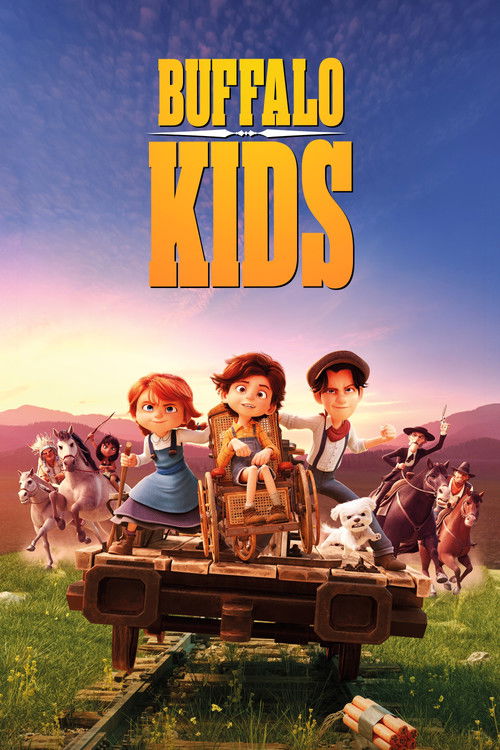
Buffalo Kids (2024)
Directed by Pedro Solís
Partly · Woke-Adjacent
How we score movies →Consciousness Markers
The film features a character with cerebral palsy as a fully realized member of the ensemble cast, treated with dignity and agency. This is the strongest element of the film's social consciousness.
The cast appears to be primarily Spanish and European, with no apparent effort toward ethnic diversity in the voice acting or character design beyond the narrative setting. Irish characters are present but unremarkably so.
The female protagonist Mary is active and capable within the adventure narrative, but the film does not emphasize gender politics or challenge period-appropriate gender roles in any overt way.
The animation style is conventional for family film, with no apparent emphasis on diverse body types or deliberate body positivity messaging.
While the film is set in a historical period, it does not appear to engage in deliberate revisionist history or reframe historical events through contemporary perspectives.
The film is set during a period of significant racial conflict in American history, but avoids explicit engagement with these themes. Indigenous peoples appear in the narrative without substantial development or critique.
The narrative involves orphans seeking reunion and survival, which implicitly critiques economic hardship, but the film does not mount any systematic critique of capitalism or wealth inequality.
The film contains typical found family dynamics common to children's media, but no explicit LGBTQ+ representation or themes are evident from available information.
The film is designed as entertainment for children and avoids preachy messaging or explicit lectures about social issues. Its progressive elements are integrated subtly rather than emphasized.
There is no evidence of environmental consciousness or climate-related messaging in this 1886-set adventure film.


Synopsis
In 1886, orphaned Irish siblings Mary and Tom arrive in New York City via ocean liner, and quickly find themselves on a wild, cross-country journey aboard a transcontinental 'Orphan Train', where they meet an extraordinary new friend who will change their lives forever.
Why it received this score
Buffalo Kids presents itself as an adventure narrative about Irish orphans in 1886 America, but functions primarily as a vehicle for what we might call progressive cultural awareness, particularly regarding disability representation. The film is dedicated to the memory of writer-director Pedro Solís's son, who lived with cerebral palsy, and this biographical fact infuses the entire project with a certain earnestness about inclusion. One character with cerebral palsy is integrated into the story not as a subplot or teaching moment, but as an integral member of the group, treated with the same agency and dimensionality as other characters. This represents a genuine departure from historical animation norms, where disability is either invisible or narratively overemphasized. The film does not make the character's disability the entire point of their existence, which is arguably the bare minimum we should expect, yet somehow remains noteworthy enough to generate critical discussion.
What complicates the scoring here is the film's historical setting. Set in 1886 America, Buffalo Kids must navigate the tension between period authenticity and contemporary values. The presence of Irish protagonists in a narrative about American westward expansion creates certain implicit commentary about immigration and belonging, though the film never quite articulates this with the kind of explicit social consciousness one finds in more overtly political contemporary animation. The story operates at the level of simple adventure and found family dynamics rather than systemic critique. There are no speeches about the treatment of Irish immigrants or Indigenous peoples, though the latter appear in the narrative. The film traffics in western adventure tropes rather than interrogating them.
Ultimately, Buffalo Kids represents a middle position: it contains elements of contemporary progressive sensibility without being structured around them. The disability representation is genuinely noteworthy, the found family narrative carries subtle queer-coded undertones common to many modern children's films, and the female protagonist is active and capable without any particular fanfare about it. Yet none of these elements feel like they were designed to make a statement. They simply exist in the film, which is either admirable restraint or a failure to commit fully to its own apparent values, depending on one's interpretive disposition.
Analysis generated by our Consciousness Algorithm