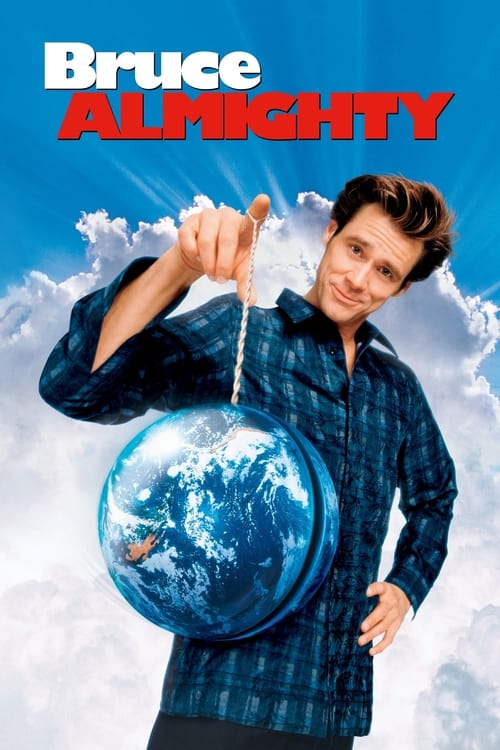
Bruce Almighty (2003)
Directed by Tom Shadyac
No · Ultra Based
How we score movies →Consciousness Markers
The film contains a soft spiritual message about gratitude and humility, delivered through the narrative rather than through explicit moralizing. The tone remains comedic rather than preachy.
Morgan Freeman as God represents some diversity in major casting, though the film makes no explicit commentary on this choice. The supporting cast is predominantly white and male.
While Morgan Freeman's casting could suggest colorblind diversity, the film contains no explicit racial consciousness or commentary. His character exists outside racial specificity.
Jennifer Aniston's character exists primarily as a romantic motivation rather than as an autonomous agent. She is presented as a prize to be won, not as a fully realized character.
Bruce's job as a TV reporter is presented as unfulfilling, but this critique is personal rather than systemic. There is no examination of capitalism or economic structures.
No LGBTQ+ themes, characters, or representation of any kind. The film is entirely heteronormative in its focus.
No climate-related themes or messaging. The film's concerns are entirely personal and spiritual.
No body positivity messaging. The film makes no commentary on bodies or body standards.
No representation of neurodivergence or disability. Carrey's physical comedy does not constitute representation of any specific condition.
No historical revisionism. The film contains no historical content whatsoever.


Synopsis
Bruce Nolan toils as a "human interest" television reporter in Buffalo, NY, but despite his high ratings and the love of his beautiful girlfriend, Bruce remains unfulfilled. At the end of the worst day in his life, he angrily ridicules God — and the Almighty responds, endowing Bruce with all of His divine powers.
Why it received this score
Bruce Almighty exists in a pre-conscious era of cinema when Jim Carrey's rubber-faced antics and the promise of divine hijinks sufficed as entertainment. The film contains no discernible agenda beyond the straightforward moral that abusing godlike powers teaches humility, a lesson delivered with all the subtlety of a slapstick pratfall. Morgan Freeman's casting as God could be read as colorblind casting at best, or as an unconscious embrace of racial diversity at worst, but the film itself makes no commentary on this choice whatsoever.
The supporting cast exists primarily to react to Carrey's performances rather than to develop as characters with agency or depth. Jennifer Aniston's girlfriend serves the traditional narrative function of the love interest, present mainly to provide motivation for the protagonist's character arc. The film's humor derives entirely from physical comedy and absurdist scenarios rather than from any engagement with social structures or cultural awareness. There is no climate content, no disability representation, no LGBTQ+ themes, and no attempt at revisionist history.
What this yields is a straightforward product of mid-2000s studio comedy: competently made, occasionally funny, and utterly indifferent to the cultural consciousness that would come to define cinema a decade later. It is not hostile to progressive values so much as it simply predates them.
Analysis generated by our Consciousness Algorithm
Critic Reviews
“Carrey is so gifted a physical comedian that even mediocre material shines in his talented hands, not to mention his talented feet, face, elbows, ears, hair and, ahem, derriere. ”
“Bruce Nolan is one deeply disgruntled barrel of laughs--the emotional kin of Bill Murray's cynical weatherman in "Groundhog Day."”
“Aniston, as a sweet kindergarten teacher and fiancee, shows again (after "The Good Girl") that she really will have a movie career.”
“Even the most narcissistic jerk, like the one played by Jim Carrey in the loathsome comedy Bruce Almighty, would be expected to dream up untold pleasures for himself, acting as a self-serving genie with infinite wishes. ”