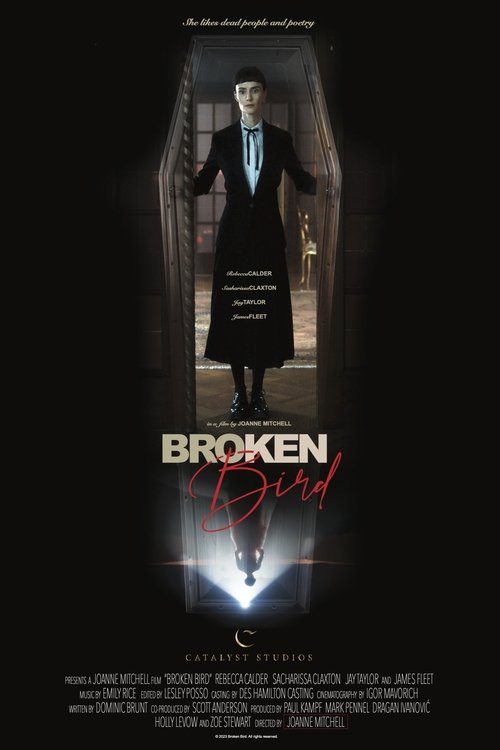
Broken Bird (2024)
Directed by Joanne Mitchell
No · Based
How we score movies →Consciousness Markers
The film centers three female characters and features a predominantly female creative vision with director Joanne Mitchell, but the casting choices appear driven by character requirements rather than explicit diversity mandates. The representation feels naturalistic rather than performative.
The film's central concern with mental health and psychological deterioration suggests engagement with neurodivergence, though not necessarily as a progressive statement. The depiction of Sybil's disconnection from normal social behavior could be read as neurodivergent representation, but this remains implicit rather than explicit.
While the film centers women's experiences and mental health, it does not deploy feminist ideology as narrative framework. The focus on female suffering is thematic rather than political, with no apparent critique of gender-based systems or patriarchal structures.
Given the gothic horror genre and the film's preoccupation with death and decay, body positivity messaging appears absent. The film engages with bodies primarily as objects of morbid fascination rather than celebration.
The funeral industry setting provides minimal anti-capitalist commentary. While the work environment is depicted as isolating and melancholic, there is no systematic critique of capitalism or class structures.
The film demonstrates minimal preachy impulse or moralizing tendency. Its focus remains on atmospheric storytelling and character psychology rather than delivering messages or lessons to the audience about social issues.
The film appears to feature minimal racial diversity in its cast and makes no apparent engagement with racial themes or consciousness. The narrative centers on universal themes of psychological deterioration rather than racialized experience.
No evidence of LGBTQ+ themes or representation in the available material. The film concerns itself with heterosexual obsession and personal deterioration without incorporating queer narratives or perspectives.
No evidence of climate-related themes or environmental consciousness in this intimate psychological horror. The film remains entirely divorced from ecological or climate-related concerns.
A contemporary fictional narrative set in the present day with no historical elements. The film contains no engagement with historical revisionism or reframing of past events.


Synopsis
Whilst working at a funeral parlour, a lonely mortician develops a dark obsession with a local man.
Why it received this score
Joanne Mitchell's feature directorial debut stands as a curious case study in contemporary horror cinema: a film that has been deliberately constructed around progressive sensibilities regarding mental health representation without ever quite subordinating its narrative to those concerns. The film centers three female characters whose psychological deterioration unfolds across interconnected storylines, a choice that reads less as ideological positioning and more as genuine thematic interest in the varieties of human suffering. Rebecca Calder's performance as Sybil, the protagonist mortician, carries the weight of a character who exists in a state of performative normalcy, mimicking human behavior rather than inhabiting it, which the production team has positioned as a vehicle for exploring women's mental health on screen.
Yet this is where we encounter the film's central tension. Mental health representation, however well-intentioned, does not inherently constitute what we might call progressive cultural consciousness in the contemporary sense. The film explores psychological breakdown with atmospheric precision and genuine craftsmanship, but it does so without the auxiliary apparatus of modern social awareness that one finds in films actively engaged with current cultural debates. There is no interrogation of systemic conditions, no examination of power structures, no deployment of identity politics as narrative framework. The film is simply a gothic horror exploring private anguish and obsession, which happens to center women experiencing that anguish.
This is not a criticism. It is an observation about the distinction between films that are genuinely about something and films that are simply well-made and feature characters of a particular demographic. "Broken Bird" belongs firmly to the latter category. It is a competent, atmospheric piece of filmmaking that takes its subject matter seriously and refuses to sentimentalize mental illness. Producers greenlit a story about women's psychological deterioration without requiring it to become a parable about systemic oppression or social commentary. In the current moment, this restraint itself becomes noteworthy.
Analysis generated by our Consciousness Algorithm