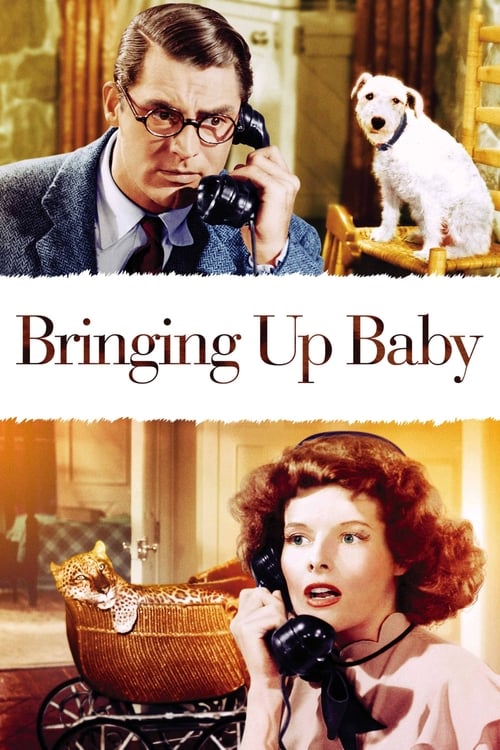
Bringing Up Baby (1938)
Directed by Howard Hawks
No · Ultra Based
How we score movies →Consciousness Markers
Susan Vance exhibits agency and refuses conventional feminine roles, but this reflects individual personality rather than systemic consciousness. The film has no awareness of gender as a political category.
Katharine Hepburn carries the film with unusual agency for a female lead in 1938, but the entire cast is exclusively white and drawn from a narrow social stratum. No meaningful representation of any demographic outside this group.
The film is primarily concerned with entertainment and contains minimal preachy content, though the paleontology elements provide occasional technical exposition.
No LGBTQ+ themes, representation, or subtext of any significance. The film operates entirely within heterosexual romantic conventions.
Entirely absent. The film depicts a world of racial and ethnic homogeneity without any acknowledgment or critique of this fact.
No environmental themes or ecological consciousness present in the narrative.
The film celebrates wealth and privilege without irony or critique. Capitalism is the invisible water in which these characters swim.
No body positivity themes. The film operates under conventional Hollywood aesthetic standards of the era.
No representation of or engagement with neurodivergence. The concept would have been unrecognizable in this historical context.
Not applicable to this film. There is no historical narrative being revised or reinterpreted.


Synopsis
David Huxley is waiting to get a bone he needs for his museum collection. Through a series of strange circumstances, he meets Susan Vance, and the duo have a series of misadventures which include a leopard called Baby.
Why it received this score
Bringing Up Baby presents a curious artifact in the genealogy of cultural self-awareness. Released in 1938, it features a female lead who drives the narrative, makes unilateral decisions, and suffers no meaningful consequences for her chaos and manipulation. Susan Vance operates with the confidence of someone who has never been told no, and the film treats this not as pathology but as charm. Whether this constitutes progressive sensibility or merely reflects the particular anxieties of its moment remains contested among critics, though the degree to which the film inverts traditional power dynamics in romantic comedy cannot be dismissed. The supporting cast is entirely white, heterosexual, and coded through conventional class and professional markers that betray no awareness of anything beyond this narrow demographic universe.
The screwball comedies of the 1930s occupy an ambiguous space in retrospective cultural analysis. They are neither genuinely progressive in any coherent political sense, nor are they transparently reactionary. Bringing Up Baby grants its female protagonist agency within the diegetic world while the film itself remains a product of its era: a world without racial diversity, without queer representation, without even the slightest indication that such absences warrant attention. The film's feminism, such as it is, operates at the level of individual personality rather than systemic consciousness. Susan Vance wears trousers and refuses domestication, but she does so as a wealthy white woman whose only real adversary is a paleontologist too distracted by bones to notice her.
What we have here is a film that exhibits some surface-level characteristics that later generations might associate with gender consciousness, yet lacks entirely the apparatus of modern social awareness. It is a period piece in the most literal sense: bound to its moment, incapable of imagining alternatives to its world, and therefore not genuinely aligned with contemporary progressive sensibilities in any meaningful way. The charm of Susan Vance derives not from her challenging patriarchy but from her indifference to it, a luxury available only to women of her particular standing. This is comedy as social conformity wearing the mask of rebellion.
Analysis generated by our Consciousness Algorithm
Critic Reviews
“Hawks powers through all of this, keeping his performers busy with a torrent of one-liners and physical comedy moves that only the extremely talented could even hope to grapple with. It's perfect.”
“Bringing Up Baby is very funny. It leaves one in awe at the speed and timing of Grant and Hepburn, as well as their goofy, lopsided humanity...Don't trust the public to recognise a masterpiece.”
“After the first five minutes of the Music Hall's new show - we needed those five to orient ourselves - we were content to play the game called "the cliche expert goes to the movies" and we are not at all proud to report that we scored 100 per cent against Dudley Nichols, Hagar Wilde and Howard Hawks, who wrote and produced the quiz. Of course, if you've never been to the movies, Bringing Up Baby will be all new to you - a zany-idden product of the goofy farce school. But who hasn't been to the movies?”