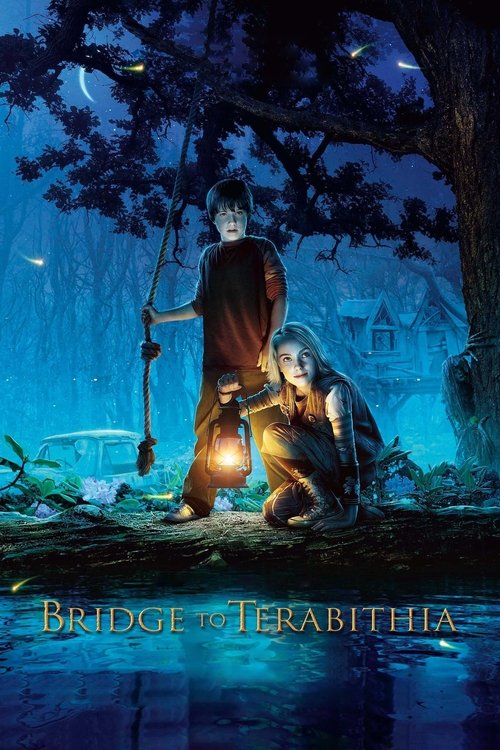
Bridge to Terabithia (2007)
Directed by Gábor Csupó
No · Ultra Based
How we score movies →Consciousness Markers
Leslie Burke is an independent, athletic female character who outperforms boys, but this derives from the 1977 source material and is presented as character trait rather than conscious feminist messaging.
The narrative acknowledges class difference between characters, contrasting rural poverty with urban wealth, but treats this as personal circumstance rather than systemic critique or anti-capitalist messaging.
The cast is predominantly white with no apparent diversity considerations. While the two leads include a girl in a prominent role, this reflects the source material rather than modern casting consciousness.
No LGBTQ+ themes, characters, or subtext are present in the film.
The film contains no exploration of race, racial identity, or racial dynamics. The cast composition reflects standard 2007 studio practice without conscious representation choices.
No climate-related themes, messaging, or environmental consciousness appear in the film.
No body positivity messaging or non-traditional body representation is present in the film.
No neurodivergent characters or neurodiversity representation appears in the narrative.
The film contains no revisionist historical elements or reinterpretation of historical events.
The film does not feature preachy or preachy dialogue designed to instruct the audience about social issues.


Synopsis
Jesse Aarons trained all summer to become the fastest runner in school. So he's very upset when newcomer Leslie Burke outruns him and everyone else. Despite this and other differences including that she's rich, he's poor, she's a city girl, and he's a country boy the two become fast friends. Together they create Terabithia, a land of monsters, trolls, ogres, and giants where they rule as king and queen.
Why it received this score
Bridge to Terabithia adapts Katherine Paterson's 1977 novel with the kind of earnest sincerity one expects from a Disney family film circa 2007. The narrative centers on class difference between its protagonists, contrasting Jesse's rural poverty with Leslie's urban wealth, yet this thematic material is handled as character development rather than cultural commentary. The film presents a girl character who is intelligent, athletic, and unburdened by conventional femininity, but this too emerges organically from the source material's pre-conscious era, where such traits were simply rendered as character traits rather than conscious representation choices. There is no evidence of the film attempting to deconstruct or interrogate these differences through a modern progressive lens.
The cast is predominantly white, which reflects both the source material and the straightforward casting practices of mid-2000s children's cinema. No characters are coded as LGBTQ+, neurodivergent, or disabled. The film contains no climate messaging, anti-capitalist rhetoric beyond the mild observation that rich people and poor people are different, or body positivity subtext. The narrative remains firmly centered on personal relationships and childhood imagination rather than systemic critique. This is a work concerned with the interior lives of children discovering friendship, not with updating 1970s source material to reflect contemporary social consciousness.
The production operates as faithful adaptation rather than revisionist exercise. Josh Hutcherson and AnnaSophia Robb occupy the leads with straightforward competence, and the supporting cast reflects standard studio practice. This is essentially a time capsule of pre-woke family entertainment, well-intentioned but operating outside any framework of modern cultural awareness. The film succeeds on its own modest terms as children's fantasy drama, which is precisely the measure by which it should be evaluated, not by the cultural standards of an era it predates.
Analysis generated by our Consciousness Algorithm
Critic Reviews
“Director Gabor Csupo of Rugrats "fame" steer clear of cutesy tween stereotypes, but it's Jess's relationship with his father, played by Robert Patrick, that elevates Terabithia from a good kids movie to a classic contender.”
“The news is good for Bridge to Terabithia fans. The beloved children's book has not just survived but thrived in its adaptation to the screen.”
“A wonderfully heart-wrenching love story for tweens, teens, and even adults who fondly remember when a friendship could be ignited by a gesture as simple as offering a stick of Juicy Fruit.”
“Though the first-time director, Gabor Csupo, has achieved distinction as an animation artist, he lacks experience directing actors. The best adult performance in the film is that of Zooey Deschanel; she comes off -- again, agreeably -- as self-directed.”