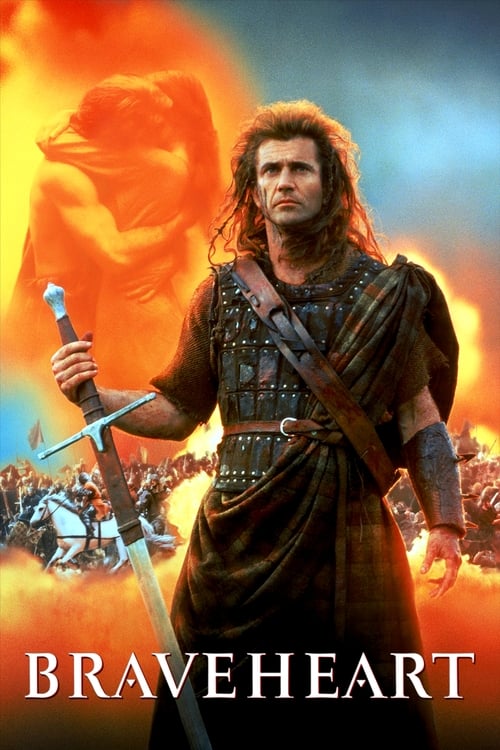
Braveheart (1995)
Directed by Mel Gibson
No · Ultra Based
How we score movies →Consciousness Markers
Cast is predominantly white and male, reflecting 1990s mainstream cinema norms. Women are severely underrepresented in meaningful roles, with female characters functioning primarily as romantic motivation rather than as agents with independent narrative arcs.
The film depicts resistance to feudal oppression and economic exploitation, but this stems from the historical subject matter rather than from contemporary anti-capitalist ideology. The critique is not explicitly framed in modern economic terms.
While the film depicts colonial oppression, it does not engage in contemporary racial consciousness or address systemic racism in any explicit way. The conflict is framed as national rather than racial.
The narrative is structured around male heroism and masculine struggle. Female characters exist to motivate male action rather than to pursue their own goals or challenge gender hierarchies.
The film's historical inaccuracies are numerous, but they reflect dramatic license rather than conscious revisionist reframing through a progressive lens. The distortions serve narrative convenience, not ideological goals.
The film presents its narrative straightforwardly without preachy commentary or heavy-handed messaging about social issues. There is minimal sense of the film lecturing the audience about contemporary values.
No LGBTQ+ themes, representation, or subtext present. The film presents a entirely heteronormative world without any acknowledgment of queer identity or relationships.
No environmental or climate themes are present in the narrative. The film shows no concern with ecological consciousness or sustainability.
The film presents conventional Hollywood standards of masculine beauty and physicality. There is no engagement with body positivity or celebration of diverse body types.
No representation of neurodivergence or disability is present in the film. Characters are presented without acknowledgment of neurodivergent experiences.


Synopsis
Enraged at the slaughter of Murron, his new bride and childhood love, Scottish warrior William Wallace slays a platoon of the local English lord's soldiers. This leads the village to revolt and, eventually, the entire country to rise up against English rule.
Why it received this score
Braveheart arrives to us as a curious artifact of pre-woke cinema, a film so thoroughly committed to its 1995 sensibilities that examining it through contemporary cultural lenses feels almost unfair. Mel Gibson directs and stars as William Wallace, a masculine hero whose struggles are presented as universal and unencumbered by any sense of contemporary social awareness. The film's narrative treats its subject matter as straightforward heroic mythology rather than as an opportunity for revisionist historical commentary or cultural interrogation. Women exist primarily as romantic motivation, a narrative device rather than agents of their own stories. The film's vision of Scottish identity and independence is romantic nationalism, not progressive consciousness.
The film's lack of representation diversity reflects the casting choices of mainstream 1990s cinema, where such concerns were not yet central to production decisions. There is no attempt at gender parity in the narrative, no queer subtext or explicit LGBTQ+ themes, no environmental consciousness, and no examination of economic systems beyond the simple oppressor-oppressed binary of colonial conflict. The film's historical inaccuracies are legion, but they stem from dramatic license rather than any conscious effort at revisionist reinterpretation through a progressive lens. This is not a film attempting to reframe history according to contemporary values, but rather one that treats history as raw material for action cinema spectacle.
What we observe in Braveheart is a historical epic constructed according to the conventions of its era, before the constellation of modern social consciousness markers became central to cultural production. The film's earnestness about masculine heroism, its straightforward narrative of resistance against tyranny, and its complete absence of self-reflexive cultural awareness place it firmly outside the contemporary discourse we are tasked with evaluating. It is, in a sense, innocent of wokeness through simple historical timing.
Analysis generated by our Consciousness Algorithm
Critic Reviews
“Offeris an exhilarating, and occasionally touching, experience that has viewers leaving the theater caught up in an afterglow of wonder. These days, heros like William Wallace are as rare as motion picture displays of this high, uncompromising quality.”
“One of the most spectacular entertainments in years.”
“Tempers moments of despair with deliriously romantic passages abetted by James Horner's traditionally lush score and photography by John Toll ("Legends of the Fall's" Oscar winner).”