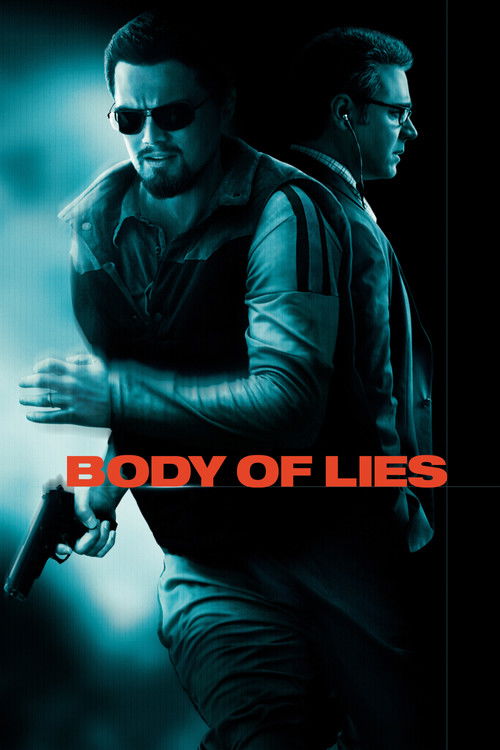
Body of Lies (2008)
Directed by Ridley Scott
No · Ultra Based
How we score movies →Consciousness Markers
The film includes Middle Eastern and Iranian actors in supporting roles, but this casting reflects functional storytelling rather than conscious progressive representation politics.
Golshifteh Farahani plays a female doctor in a romantic subplot, but the character lacks agency or feminist consciousness in her narrative function.
While the film engages extensively with Middle Eastern settings and characters, it does not examine or critique systemic racism or present a modern racial consciousness framework.
While the film explores moral questions about intelligence and deception, it does so through narrative and character rather than preachy exposition or speeches.
No LGBTQ+ themes, characters, or storylines are present in the film.
No environmental or climate-related themes appear in this geopolitical thriller.
The film contains no critique of capitalism or examination of economic systems and wealth inequality.
No body diversity, body positivity messaging, or discussion of physical appearance standards is present.
No representation, discussion, or portrayal of neurodivergent characters or conditions appears in the film.
The film does not attempt to reframe or revise historical narratives, instead engaging with contemporary geopolitical events as presented.


Synopsis
The CIA's hunt is on for the mastermind of a wave of terrorist attacks. Roger Ferris is the agency's man on the ground, moving from place to place, scrambling to stay ahead of ever-shifting events. An eye in the sky – a satellite link – watches Ferris. At the other end of that real-time link is the CIA's Ed Hoffman, strategizing events from thousands of miles away. And as Ferris nears the target, he discovers trust can be just as dangerous as it is necessary for survival.
Why it received this score
Ridley Scott's 2008 espionage thriller operates with the sensibilities of its era, which is to say it operates with almost no conscious engagement with the markers of contemporary progressive sensibility. The film concerns itself with the moral ambiguities of post-9/11 intelligence operations, a serious enough subject, but its seriousness is of the old-fashioned variety: geopolitical intrigue, the ethics of deception, the cost of counterterrorism. Leonardo DiCaprio plays a CIA operative navigating the Middle East with linguistic fluency and local knowledge, while Russell Crowe barks orders from a satellite control room thousands of miles away. The conflict between their approaches gives the film its narrative spine, but it never becomes a platform for examining systemic power structures or interrogating the nature of Western intervention through a modern lens.
The cast includes Middle Eastern actors and a female character portrayed by Golshifteh Farahani, but their presence serves the plot rather than making any statement about representation. This is neither progressive nor reactionary, simply functional. The film's treatment of terrorism, intelligence work, and international relations reflects the post-9/11 consensus of its moment, a period when such stories could be told as straightforward thrillers without the irony or self-interrogation that would come later. Scott directs with his customary technical proficiency, and the screenplay by William Monahan adapts David Ignatius' 2007 novel with fidelity to its source material's intelligence-community perspective.
What we have here is a competent thriller from a decade before the cultural markers of 2020s progressivism became dominant. It asks whether its characters can trust one another in a dangerous world, not whether the institutions they serve deserve to exist. The moral questions it raises are real, but they operate within a pre-contemporary framework. One watches it now and recognizes it as a document of its time, when filmmakers could treat geopolitical conflict as raw material for drama without feeling obligated to contextualize it within systems of power and oppression.
Analysis generated by our Consciousness Algorithm
Critic Reviews
“Body of Lies neither panders nor condescends. It involves current events and has a political viewpoint, but it overplays neither.”
“The crisply photographed and edited Body of Lies reveals some ambition, for while it certainly works as pure entertainment, this tale of a good man trying to extract himself from an impossible situation offers some commentary on America's feelings about being in Iraq.”
“Its generic attributes (and title) notwithstanding, Scott's film may be the sharpest of all the post-9/11 thrillers--and also the most purely entertaining--in the way it maps the vectors and currents of the modern intelligence-gathering game without losing us in its dense narrative thicket.”
“Most of this just seems, you know, so three years ago, so "Bourne" again.”