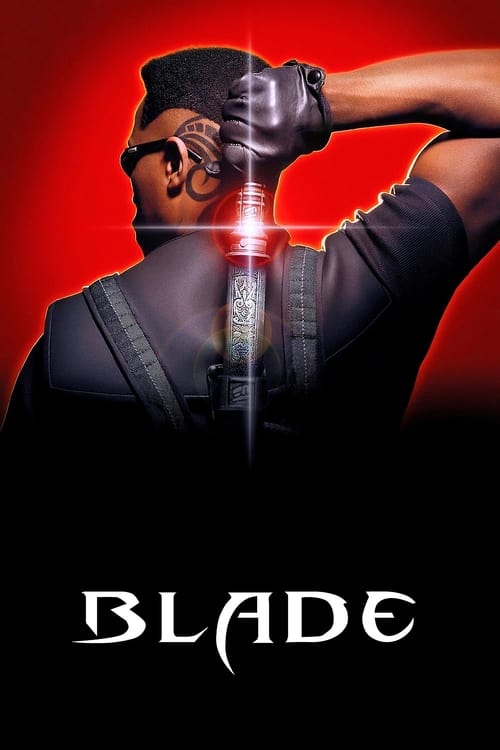
Blade (1998)
Directed by Stephen Norrington
No · Ultra Based
How we score movies →Consciousness Markers
Wesley Snipes carries the lead role and N'Bushe Wright appears in the cast, but the film contains no thematic engagement with representation or identity. The diversity is incidental to the plot rather than intentional social commentary.
While the film stars a Black protagonist, it contains no explicit engagement with race, racism, or racial consciousness. The narrative treats race as incidental rather than thematic.
Minimal lecture energy, though Kris Kristofferson's mentor character provides some exposition about vampire mythology and the protagonist's hybrid nature, delivered more as plot explanation than moral instruction.
No LGBTQ+ themes, characters, or representation are present in the film.
The film contains no feminist themes or gender-consciousness. Female characters serve functional roles without thematic exploration of gender dynamics.
No climate themes or environmental consciousness appear in this vampire action film.
The film contains no critique of capitalism, class struggle, or economic systems. The vampire plot operates independently of capitalist critique.
No body positivity messaging or exploration of body diversity appears in the film.
No representation of neurodivergence or neurodivergent characters is present.
The film contains no historical claims or revisionist engagement with historical events.


Synopsis
The Daywalker known as "Blade" - a half-vampire, half-mortal man - becomes the protector of humanity against an underground army of vampires.
Why it received this score
Blade stands as a curious artifact in the annals of action cinema, a 1998 vehicle that predates contemporary cultural discourse by nearly two decades. Wesley Snipes delivers a charismatic lead performance as the titular half-vampire protagonist, navigating a plot concerned almost entirely with vampire lore and martial arts choreography rather than social commentary of any kind. The film's primary interest lies in kinetic action sequences and gothic horror aesthetics, not in interrogating systemic inequality or progressive social consciousness.
The presence of a Black lead actor in a mainstream action blockbuster was, by 1998 standards, noteworthy for the industry, yet the film itself contains no thematic engagement with racial identity, racism, or any structural examination of power dynamics. The supporting cast includes some diversity, but characters exist within their narrative functions without commentary on representation or identity politics. The vampire mythology operates as pure genre exercise, untethered from any attempt to deploy the metaphor toward contemporary social analysis.
Blade suffers from a complete absence of the markers that would register as culturally progressive by 2020s standards. There is no LGBTQ+ representation, no climate consciousness, no critique of capitalism, no discussion of neurodivergence or body diversity, no revisionist historical claims, and no perceptible lecture energy attempting to educate the audience on social matters. The film is, at its core, a competent action-horror picture that happens to star a Black actor, which is not the same thing as being socially conscious in the modern sense. It is a 1998 movie that feels like a 1998 movie.
Analysis generated by our Consciousness Algorithm
Critic Reviews
“A pulsing, wooshing, visceral experience that amounts to great fun and an entirely disposable movie.”
“Blade is just good, plain action movie fun. It runs like a smooth roller-coaster and has excellent replay value.”
“Blade is an entertainingly macabre and excitingly staged action horror, with a propulsive energy and a prototype “bullet time” sequence one year before the Wachowskis made it famous in The Matrix.”
“Working from a script by David S. Goyer ("Dark City") that lacks any sense of humor or character, Snipes seems unsure if he should vamp it up or play it straight, while Dorff just plain sucks.”