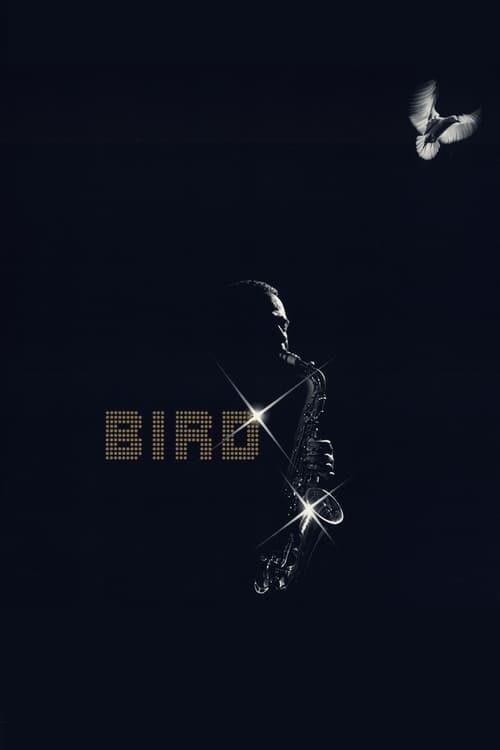
Bird (1988)
Directed by Clint Eastwood
No · Ultra Based
How we score movies →Consciousness Markers
The film centers on a Black protagonist and features a predominantly Black cast in a respectful biographical context, though this appears to be natural casting rather than deliberate representation consciousness.
While centered on a Black jazz musician, the film is a personal biography without contemporary engagement with racial politics or systemic racism critique.
The female character Chan Parker is portrayed as a supportive wife attempting to help with her husband's addiction, reflecting traditional gender roles rather than progressive feminist themes.
No LGBTQ+ themes or content present in this biographical drama.
No environmental or climate-related themes present.
No anti-capitalist messaging or critique of wealth and corporate structures.
No body positivity themes or content evident in the film.
While addiction is central to the narrative, it is framed as personal tragedy rather than neurodivergence representation or awareness.
The film presents a straightforward biographical account without revisionist historical reinterpretation.
The film does not employ preachy or preachy exposition explaining social issues or progressive values.


Synopsis
Saxophone player Charlie 'Bird' Parker comes to New York in 1940 and is quickly noticed for his remarkable way of playing. He becomes a drug addict but his loving wife Chan tries to help him.
Why it received this score
Clint Eastwood's 1988 biographical drama Bird presents the life of saxophonist Charlie Parker with the careful restraint one might expect from a film about artistic genius and personal dissolution. Forest Whitaker delivers a performance of considerable depth in the lead role, capturing both Parker's musical virtuosity and his descent into addiction. The film treats its subject matter with respect, allowing the music and the tragedy to speak for themselves rather than imposing contemporary moral frameworks onto the historical narrative.
The film's lack of progressive cultural markers should not be mistaken for moral failing. It simply exists in a different era, before the constellation of social consciousness metrics that define modern cultural discourse. The casting of Black actors in the central roles reflects historical accuracy rather than deliberate representation strategy. Diane Venora's portrayal of Chan Parker follows the traditional supporting-spouse archetype, neither celebrating nor critiquing traditional gender dynamics, merely depicting them as they were.
Bird is a straightforward artist's biography that predates the contemporary impulse to load narrative with social awareness by more than a decade. The film's cultural value lies in its musical subject matter and Eastwood's directorial restraint, not in its alignment with modern progressive sensibilities. This is neither a criticism nor a compliment, simply an observation about the film's place in cinema history.
Analysis generated by our Consciousness Algorithm
Critic Reviews
“n a remarkable directorial effort, Eastwood shows a great flair for atmosphere and composition and presents a nuanced, complex, humane portrait of Parker's talents, obstacles, virtues and failings. Whitaker gives a towering performance as the tortured musical genius, and Venora is equally impressive as the independent, compassionate Chan.”
“Clint Eastwood's ambitious 1988 feature about the great Charlie Parker (Forest Whitaker) is the most serious, conscientious, and accomplished jazz biopic ever made, and almost certainly Eastwood's best picture as well.”
“Bird wisely does not attempt to "explain" Parker's music by connecting experiences with musical discoveries. This is a film of music, not about it, and one of the most extraordinary things about it is that we are really, literally, hearing Parker on the soundtrack.”
“You'll leave Bird's smooth flow of nightclub images, dark motel rooms and recharged Parker tracks with new respect for Eastwood the Director. But you'll also leave none the wiser about Parker the Man.”