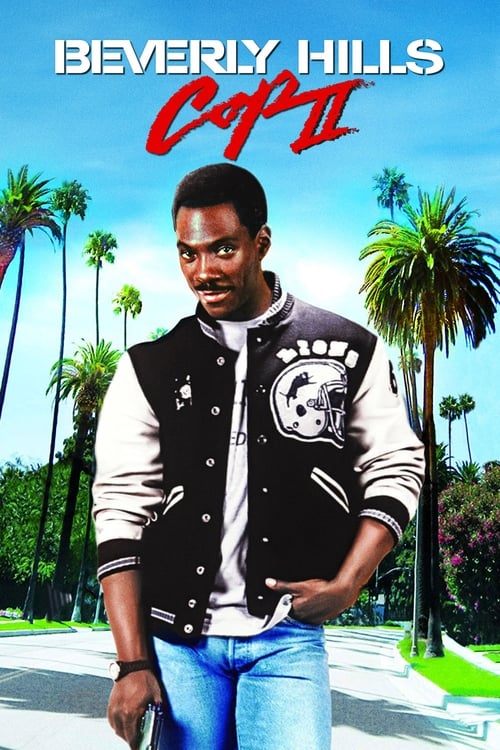
Beverly Hills Cop II (1987)
Directed by Tony Scott
No · Ultra Based
How we score movies →Consciousness Markers
Eddie Murphy as the lead provides representation through casting, but the film treats this as incidental rather than meaningful. His race is never addressed or explored in the narrative.
While Murphy's character is Black, the film makes no conscious effort to explore racial themes or institutional racism. His race is treated as incidental to his role as a cop.
Brigitte Nielsen appears as a supporting character, but the film contains no feminist consciousness or engagement with gender dynamics. She is a conventionally attractive supporting player.
The antagonist is a weapons kingpin motivated by profit, but the film presents no critique of capitalism or wealth accumulation. The villainy is personal rather than systemic.
The film is primarily concerned with entertainment and contains minimal preachy intent. Any social commentary is entirely absent rather than preachy.
No LGBTQ+ themes, characters, or representation present in the film. The narrative contains no romance or sexual content of any kind.
No climate themes, environmental consciousness, or ecological concerns present. The narrative is entirely focused on crime and action.
No body positivity messaging or inclusive representation of different body types. The cast conforms to conventional Hollywood aesthetics.
No neurodivergence representation or acknowledgment. Characters are not written with any particular psychological or neurological diversity.
The film contains no historical content or revisionist elements. It is set in contemporary 1987 and makes no claims about history.


Synopsis
Axel Foley returns to the land of sunshine and palm trees to investigate the near-fatal shooting of police Captain Andrew Bogomil. With the help of Sgt. Taggart and Det. Rosewood, they soon uncover that the shooting is associated with a series of "alphabet" robberies masterminded by a heartless weapons kingpin and the chase is on.
Why it received this score
Beverly Hills Cop II arrives as a monument to the action-comedy excess of the Reagan era, a film so thoroughly unconcerned with contemporary social consciousness that it achieves a kind of artlessness. Eddie Murphy's presence as the lead detective provides a baseline level of representation simply through casting, yet the film makes no particular effort to interrogate this or deploy it as commentary. Murphy's character is a wisecracking cop who happens to be Black, not a vehicle for exploring the complexities of that identity within institutional power structures. The plot concerns itself entirely with explosions, heist mechanics, and the interpersonal dynamics of the police precinct, each pursued with cheerful indifference to any broader context.
Tony Scott's direction prioritizes kinetic energy and surface-level entertainment over thematic depth. The film contains no discernible feminist consciousness, no LGBTQ+ representation or themes, no climate content, and no particular racial consciousness beyond Murphy's comedic persona. The antagonist is a weapons kingpin whose villainy is purely mercenary, not ideological. The supporting cast performs their duties in a film that treats law enforcement as fundamentally benign, a backdrop for buddy-cop banter rather than an institution warranting scrutiny. There is no revisionist history, no lecture energy, no body positivity messaging, and certainly no neurodivergence representation of any substance.
This is a film from before the cultural markers of contemporary progressive sensibility became visible as such. Beverly Hills Cop II is not hostile to these values; it is simply indifferent to their existence. It belongs to a moment when an action-comedy could succeed entirely on the basis of charm, spectacle, and premise, with no obligation to signal awareness of social questions. We might view this as either liberation or blindness, depending on temperament. The film itself would not care which.
Analysis generated by our Consciousness Algorithm
Critic Reviews
“Aside from the plot -- and if you can figure out the plot, the CIA's special projects unit wants to talk to you -- Cop II is a rarity: a sequel that's as good as the original, if not better.”
“If imitation is the sincerest form of flattery, then Eddie Murphy has just paid himself a heartfelt compliment. Cut for cut, his Beverly Hills Cop II is almost a perfect match for the wildly successful "Beverly Hills Cop I," with only the crimes and the shticks changed to protect fans of the original. It could have been written by a witty computer. That's not all bad, given the quality of the model. [20 May 1987, p.C13]”
“Cop II doesn't sizzle like the original. It plays like a movie made by the numbers, an excuse to trot out Murphy and let him reprise the moves that earned the first Cop $350 million and status as the top-grossing comedy in film history. [20 May 1987, p.D1]”
“Part 2 seems even more like a Stallone vehicle than the first movie. I'm not even sure it's intended as a comedy. It's filled wall to wall with the kind of routine action and violence that Hollywood extrudes by the yard and shrink-wraps to order.”