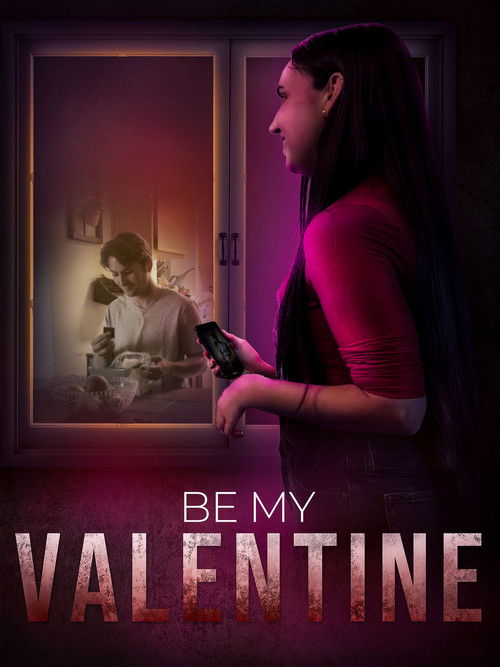
Be My Valentine (2026)
Directed by Stefanie Davis
Partly · Woke-Adjacent
How we score movies →Consciousness Markers
The film's central premise of a female stalker inverts traditional gender roles in the thriller genre, where men typically occupy the predator role. This conscious gender inversion suggests engagement with feminist critique of genre conventions.
The film's explicit framing of its gender inversion as noteworthy suggests a degree of preachy intent, positioning itself as commentary on genre expectations. However, horror's nature limits overt pedagogical tone.
The cast appears predominantly white with no visible commitment to diverse representation. While the lead is female and played by a woman, this alone does not constitute progressive casting practice.
The protagonist's obsessive behavior and delusion could be interpreted through a neurodivergence lens, though the film likely pathologizes rather than affirms such conditions within the horror genre framework.
Without access to the full film, body positivity cannot be assessed. Horror films typically employ bodily transgression and violence as aesthetic tools rather than celebrating diverse body representation.
No evidence of LGBTQ+ themes or representation in the available plot information. The central relationship appears heterosexual and obsessive in nature.
No apparent engagement with racial themes, diversity in casting, or racial consciousness in the narrative. The film appears to operate within a racially unmarked space.
No climate-related themes or environmental consciousness evident in this intimate psychological horror film focused on interpersonal obsession.
The film shows no apparent critique of capitalism, wealth inequality, or systemic economic oppression. The narrative centers on personal psychology rather than structural systems.
This contemporary found footage thriller engages with no historical narratives or revisionist historical claims. It operates entirely within present-day interpersonal dynamics.
Synopsis
Gina has fallen in love with a man she hasn't met. As she documents her relationship journey, she becomes more and more obsessed with Zach to the point of bloody consequences.
Why it received this score
Be My Valentine arrives as a found footage horror film that inverts a familiar genre convention by centering a female perpetrator of obsessive, predatory behavior. The film's central conceit, that we will witness "predatory behaviors that we do not typically see from a female character," suggests a deliberate engagement with gender role expectations and the ways popular media has historically gendered aggression and stalking. The found footage format allows the film to position its audience as witness to the documentation of this behavior, creating a self-aware commentary on the voyeurism inherent in both the medium and the surveillance culture that enables contemporary stalking.
Yet the film's progressive gesture toward gender inversion does not necessarily extend throughout its entire ideological framework. While centering female agency in the role of antagonist could constitute a form of gender consciousness, the execution matters considerably. The question of whether the film critiques the conditions that produce such behavior, interrogates the male gaze that typically positions women as objects, or simply swaps genders without deeper interrogation remains unresolved by the available evidence. Horror as a genre has long been comfortable with female violence when it serves narrative convenience, and inversion alone does not guarantee substantive engagement with systemic power dynamics.
The film's found footage approach and its Tampa-area location filming suggest a commitment to independent production values and a local sensibility. However, the cast composition and thematic framework reveal limited engagement with broader social consciousness markers. We are presented with what appears to be a largely white ensemble navigating an intimate psychological thriller, with no apparent engagement with racial diversity, climate concerns, economic critique, or the myriad other sensibilities that characterize contemporary progressive filmmaking. The film remains primarily invested in gender as its organizing principle, leaving other dimensions of social awareness largely untouched.
Analysis generated by our Consciousness Algorithm