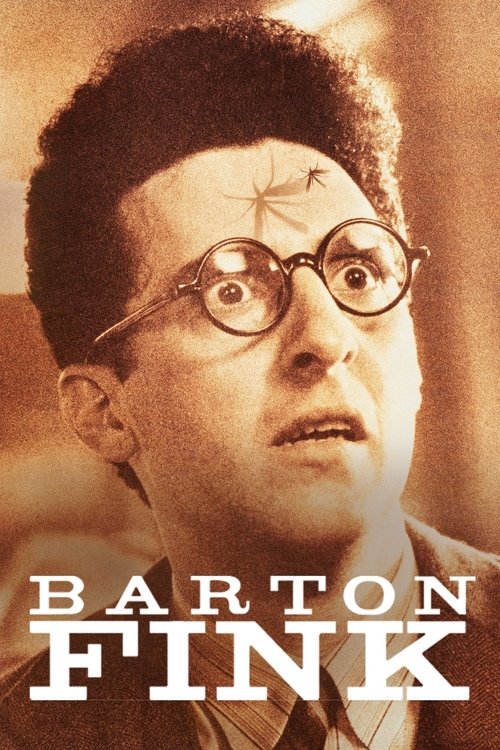
Barton Fink (1991)
Directed by Joel Coen
No · Ultra Based
How we score movies →Consciousness Markers
The film contains sophisticated Marxist critique of capitalism and artistic exploitation within the studio system, though this operates through existential philosophy rather than modern progressive sensibility.
The film maintains a deadpan satirical tone that trusts the viewer to understand its social critique without explicit moral instruction or explanatory dialogue.
The film features an all-white male-centered narrative with no conscious casting choices reflecting demographic diversity or representation consciousness.
No LGBTQ+ themes, characters, or subtext are present in the film.
Female characters exist in the film but are peripheral to the narrative and not presented through a feminist lens or consciousness.
The film contains no acknowledgment of racial hierarchies, segregation, or racial consciousness despite being set in 1940s Hollywood.
Climate themes are entirely absent from this film about Hollywood and artistic compromise.
No body positivity messaging or conscious casting choices related to body diversity are present.
No neurodivergent characters or representation are present in the film.
The film does not engage in revisionist history or reframing of historical narratives from a progressive perspective.


Synopsis
A renowned New York playwright is enticed to California to write for the movies and discovers the hellish truth of Hollywood.
Why it received this score
Barton Fink remains a masterwork of class critique and Hollywood satire, yet it is fundamentally a product of its era, operating in registers that predate contemporary social consciousness frameworks. The film savages the culture industry with surgical precision, depicting the systematic erosion of artistic integrity when creative ambition meets commercial machinery. John Turturro's protagonist embodies the intellectual's delusion that principled suffering grants moral authority, a posture the Coen Brothers dismantle with merciless efficiency. The film's genius lies in its refusal to offer easy moral positions or redemptive arcs.
What prevents Barton Fink from registering as culturally aware by modern standards is its complete indifference to representation or identity politics. The film exists in a hermetically sealed masculine universe where women function as either obstacles or abstractions. There are no LGBTQ+ subtext, no acknowledgment of racial hierarchies within 1940s Hollywood, no body-conscious casting choices, no neurodivergent representation offered as progressive inclusion. The film's anti-capitalist critique operates at the level of existential philosophy and Marxist class analysis rather than through the identity-inflected social consciousness that characterizes contemporary cinema.
The movie earns its minimal score not through contemporary sensibility but through its honest engagement with exploitation and power imbalances, albeit without the interpretive scaffolding modern audiences have come to expect. It is a film that trusts viewers to recognize systemic corruption without having it explained. For a work from 1991, this restraint itself constitutes a form of sophistication, though one that sits uneasily with contemporary progressive frameworks.
Analysis generated by our Consciousness Algorithm
Critic Reviews
“Creepily beautiful, acted with relish, Barton Fink is a savagely original work. It lodges in your head like a hatchet. [26 Aug 1991]”
“Stimulating entertainment, as rigorously challenging and painfully funny as anything the Coens have done. But it's necessary to meet the Coens halfway. If you don't, Barton Fink is an empty exercise that will bore you breathless. If you do, it's a comic nightmare that will stir your imagination like no film in years.”
“An unqualified winner. Here is a fine dark comedy of flamboyant style and immense though seemingly effortless techniqe...It's an exhilarating original. [21 Aug 1991]”
“Billed as a comedy, but it could also be billed as a drama, a satire, an allegory, or a film (partially) noir. It wouldn't matter, or help... Not since Robert Altman has any American filmmaker been as overrated as this pair. [30 Sept 1991]”