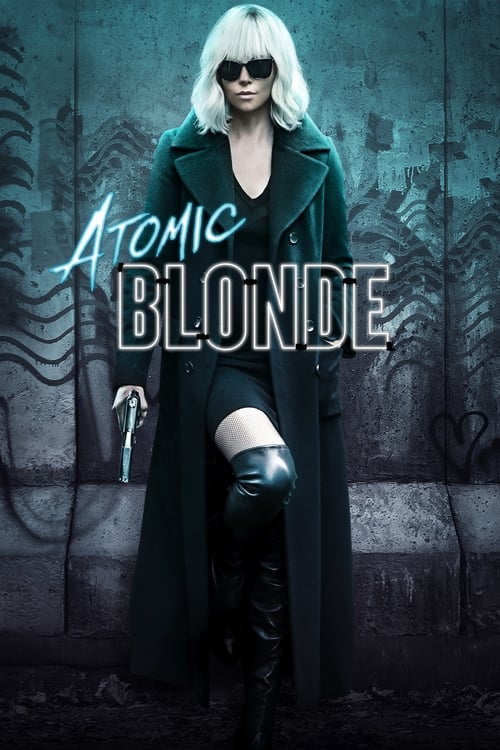
Atomic Blonde (2017)
Directed by David Leitch
No · Ultra Based
How we score movies →Consciousness Markers
Theron's character is competent and action-capable, presented as a given rather than as a statement. The film contains no explicit feminist commentary or deconstruction of gender dynamics.
The lead protagonist is female and capable, but the supporting cast remains predominantly white and male. The film does not engage in deliberate diversification or progressive amplification of this representation.
The film is a straightforward action-thriller with minimal expository dialogue. Spy briefing scenes are functional rather than preachy.
No LGBTQ+ themes, representation, or commentary present in the film.
No engagement with racial themes or consciousness. The Cold War setting and narrative do not explore race relations or amplify racial representation.
No environmental or climate themes present.
Despite Cold War espionage setting, the film contains no critique of capitalism or anti-capitalist messaging.
No body positivity themes. The film features conventionally attractive actors in standard action roles.
No neurodivergent representation or thematic engagement.
The film does not attempt to reframe or reinterpret Cold War history through a contemporary progressive lens.


Synopsis
An undercover MI6 agent is sent to Berlin during the Cold War to investigate the murder of a fellow agent and recover a missing list of double agents.
Why it received this score
Atomic Blonde represents the contemporary action film at a crossroads, one where the presence of a female lead has become sufficiently unremarkable that it requires no comment or justification. Charlize Theron's portrayal of Lorraine Broughton is competent and physically commanding, yet the film treats her capability as a baseline rather than an achievement worth celebrating. She performs her espionage duties with the same pragmatic efficiency one might expect from any skilled operative, regardless of gender. The screenplay offers no speeches about breaking barriers, no moments where her abilities are questioned on account of her sex, and no narrative arc concerned with overcoming masculine institutional resistance. She is simply present, doing her job.
The film's aesthetic sophistication, drawn from its 1980s Berlin setting and propulsive action choreography, might suggest a layer of cultural awareness beneath the surface. Yet this visual polish masks a fundamental absence of contemporary social consciousness. There is no engagement with class dynamics, no interrogation of geopolitical power structures through a modern lens, no attempt to reframe Cold War history through progressive sensibilities. The supporting cast remains overwhelmingly white and male, the narrative concerns itself entirely with plot mechanics, and the film's moral universe operates according to straightforward spy-thriller conventions established decades prior.
Atomic Blonde is content to exist as a stylish entertainment, indifferent to the social currents swirling around it. It benefits from the cultural moment in which it was released, one where female action heroes had become commercially viable, without necessarily participating in any broader project of cultural transformation.
Analysis generated by our Consciousness Algorithm
Critic Reviews
“Punch kick stab shoot. Borrow from “Bourne” and Bond. Rinse and repeat. This is the recipe for the quite ridiculous, ultra-violent and deliriously entertaining Atomic Blonde.”
“Atomic Blonde is bold, brazen and frequently bonkers. But it’s also killer.”
“For repeated breathless sequences involving hand-to-hand combat, assassination attempts, and a wicked climactic car chase, shout out to Director Leitch.”
“The tediously forestalled twists suck away time from what should be the film's focus—its action—and leaves only two scenes worthy of celebration.”