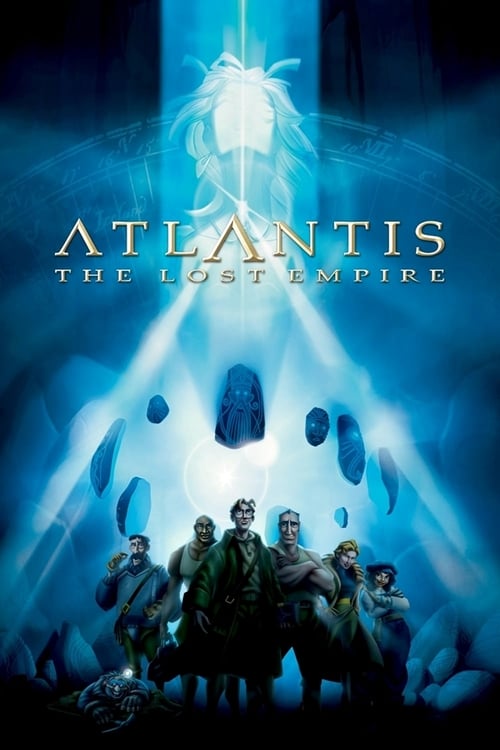
Atlantis: The Lost Empire (2001)
Directed by Gary Trousdale
No · Based
How we score movies →Consciousness Markers
The voice cast includes Black actors (Cree Summer, Phil Morris) and a Latina actress (Jacqueline Obradors), reflecting early-2000s casting diversity. However, these actors occupy supporting roles without significant narrative agency.
The narrative includes criticism of military-industrial interests and corporate greed, with antagonists motivated by profit and power. This represents a genuine anti-capitalist impulse, though not particularly sophisticated or developed.
The film critiques Western militarism and corporate exploitation but does not genuinely examine racial power dynamics or colonialism's structural nature. The Atlantean culture is presented visually but not given full narrative voice.
The film reimagines Atlantis mythology but does not engage in revisionist history of actual events. It uses fantasy to frame themes of exploitation but remains firmly in the realm of legend rather than historical reinterpretation.
The film occasionally indulges in exposition-heavy moments explaining Atlantean culture and history, but does not devolve into preachy lecturing. The adventure plot generally maintains narrative momentum over message delivery.
Claudia Christian voices Kida, a princess character who possesses agency and combat capability. However, the narrative still centers male characters, and Kida ultimately becomes a prize and romantic interest rather than a fully autonomous figure.
No LGBTQ+ themes, representation, or subtext present in the film. The narrative focuses entirely on heterosexual relationships and contains no queer elements.
The film contains no environmental themes or climate consciousness. The destruction of Atlantis is framed as mythology rather than as commentary on ecological collapse or environmental stewardship.
No body positivity themes are present. Character designs follow conventional animated film aesthetics without commentary on body diversity or acceptance.
No representation of neurodivergence or disability is present in the film. Characters are not coded as neurodivergent, and no storylines address neurological difference.


Synopsis
A young linguist named Milo Thatch joins an intrepid group of explorers to find the mysterious lost continent of Atlantis.
Why it received this score
Atlantis: The Lost Empire presents itself as a progressive artifact from the early 2000s, one of Disney's more ambitious animated experiments in ensemble storytelling. The voice cast includes notable Black actors (Cree Summer, Phil Morris) and a Latina actress (Jacqueline Obradors), placed within a narrative framework that ostensibly challenges Western imperialism through its critique of military-industrial exploitation. However, this critique remains surface-level, more interested in adventure spectacle than genuine interrogation of colonial power dynamics. The film gestures toward social consciousness without committing to it.
The story itself, however, contains troubling DNA. A white male intellectual (the linguist Milo) is positioned as the moral and intellectual center of the narrative, the one who understands and mediates the indigenous Atlantean culture. This dynamic echoes the problematic savior narrative structure, where the outsider protagonist becomes the voice of reason and conscience. The Atlanteans themselves, while visually distinct and culturally specific in design, function largely as passive recipients of external judgment. The film's anti-militarism, while present, does not extend to genuine examination of how Western knowledge systems impose themselves on other cultures.
Representation without meaningful agency or narrative weight accumulates into what we might call performative diversity. The diverse cast members are present, but they inhabit supporting roles that do not challenge the fundamental structure of the story. The film remains, ultimately, a 2001 product shaped by early-2000s sensibilities rather than a work that anticipated contemporary social consciousness. It contains fragments of progressive intention without the sustained commitment required for genuine cultural critique.
Analysis generated by our Consciousness Algorithm
Critic Reviews
“A thrilling tale smartly told, with an abundance of wit and invention. It's a classic.”
“Rousing in an old pulp science fiction sort of way, but the climactic scene transcends the rest, and stands by itself as one of the great animated action sequences.”
“A monumental treat as well as a crafty assemblage of mythologies.”
“Doesn't seem geared to kids at all: It's so adult that it's massively boring.”