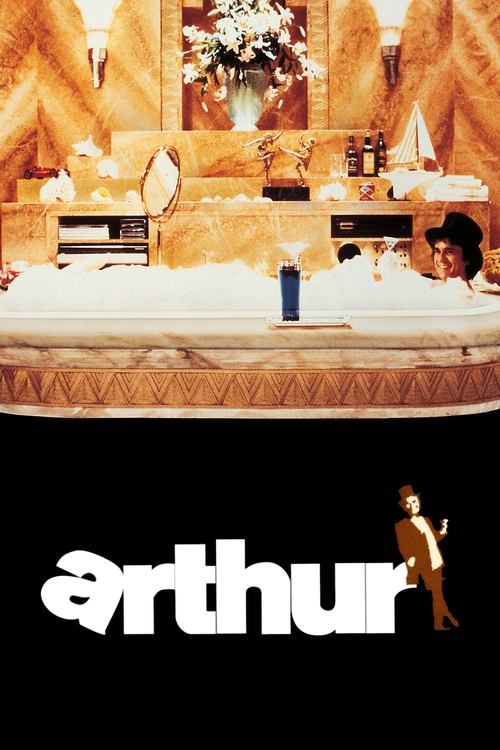
Arthur (1981)
Directed by Steve Gordon
No · Ultra Based
How we score movies →Consciousness Markers
The film occasionally suggests moral lessons about the emptiness of wealth, but these suggestions are gentle and never coalesce into anything resembling preachy messaging.
Cast includes some diversity in supporting roles, but characters of color appear primarily in service positions without meaningful development or agency in the narrative.
While the film presents a nominal critique of wealth through Arthur's character arc, it ultimately celebrates his ability to use money to solve problems and win love. The system itself is never questioned.
The female lead serves primarily as a redemptive force for the male protagonist rather than as an autonomous character. She exists to civilize and reform him through love.
Supporting characters include people of color, but they occupy subordinate roles and the film shows no awareness of racial dynamics or systemic issues.
No deliberate engagement with body positivity. The film reflects 1980s conventional beauty standards without commentary or challenge.
No LGBTQ+ representation or themes present in the film. The narrative is entirely heteronormative.
No environmental or climate-related themes appear in the film whatsoever.
Arthur's alcoholism is played for comedy rather than treated as a genuine condition deserving of nuance or understanding.
The film contains no historical narrative or revisionist elements. It is set in contemporary 1980s New York.


Synopsis
Arthur is a 30-year-old child who will inherit $750 million if he complies with his family's demands and marries the woman of their choosing.
Why it received this score
Arthur arrives as a curious relic of early 1980s comedy, a film concerned primarily with the romantic tribulations of a man with an inexhaustible supply of money and a crippling alcohol dependency. The narrative hinges on the notion that love transcends class boundaries, which sounds progressive until one realizes the film's actual thesis: that a wealthy man can purchase his way into the heart of a working-class woman by virtue of his charm and resources. The woman in question exists chiefly as a corrective force, a moral compass designed to rehabilitate the protagonist through the simple act of being loved. This is less a statement about the destructive nature of capitalism and more a celebration of its capacity to make even its worst excesses endearing.
The film's one modest gesture toward critical consciousness arrives via John Gielgud's character, a cynical butler who observes the proceedings with barely concealed disdain. Yet his observations amount to gentle ribbing rather than genuine indictment. The working-class characters are portrayed with a kind of patronizing warmth, their poverty rendered charming and quaint rather than systemic or tragic. Arthur himself learns nothing about the actual conditions that create inequality; he learns only that having money is less important than having someone to spend it on, a conclusion that requires no fundamental restructuring of his worldview. The film asks us to celebrate his redemption while never questioning whether redemption demands actual sacrifice or merely emotional availability.
From a representational standpoint, Arthur traffics in the conventions of its era without challenge or innovation. The female lead exists to support the male protagonist's character arc. Supporting characters of color appear in service roles without complexity. The film contains no engagement with feminist critique, no acknowledgment of systemic issues, and no recognition that the romance plot might constitute a problematic power dynamic. What we have here is not progressive consciousness but rather comfortable sentimentality dressed in the clothing of a love story. The film is a celebration of wealth and its capacity to smooth over all complications, including its own contradictions.
Analysis generated by our Consciousness Algorithm
Critic Reviews
“A fairly close remake of the great 1981 Dudley Moore movie, with pleasures of its own.”
“Easy on the eyes, intermittently amusing and never downright awful.”
“When remaking a popular film, you must remember this: First, do no harm to the original. Arthur accomplishes this, with Russell Brand slurring his way neatly through the title role. ”
“In Arthur, the spectacularly grating remake of Steve Gordon's 1981 P. G. Wodehouse simulation (this time, Peter Baynham miswrote, Jason Winer misdirected), Russell Brand gives a career-killing performance.”