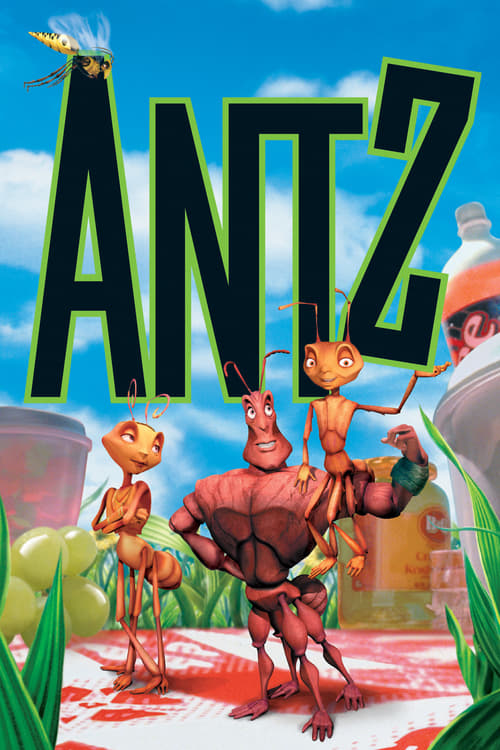
Antz (1998)
Directed by Eric Darnell
No · Based
How we score movies →Consciousness Markers
The film presents a worker ant rebelling against hierarchical authority and conformity to the colony's rigid system. However, this functions as individualism rather than systemic critique of economic structures.
The protagonist is portrayed as neurotic and anxious (coded through Woody Allen's characteristic voice acting), but this is played for comedy rather than presented as neurodivergence requiring understanding or accommodation.
The film contains light moralizing about individualism and nonconformity, but stops short of preachy messaging. The themes are embedded in narrative rather than explicitly lectured.
The cast reflects late-1990s star-driven voice acting with limited attention to diverse representation. Jennifer Lopez appears in a minor role, but overall casting prioritizes established comedians over representation concerns.
The princess character serves primarily as a romantic interest with limited agency. While she is presented as rebellious, her arc centers on romance rather than independent narrative development.
No LGBTQ+ themes or representation present in the film.
No racial themes or consciousness evident in the film. The story concerns ants and termites without racial allegory or commentary.
No climate or environmental themes present in the narrative.
No body positivity themes or commentary present. Characters are animated insects without human body type considerations.
No historical narrative or revisionist elements present. The film is a fictional comedy about anthropomorphic insects.


Synopsis
A neurotic worker ant in love with a rebellious princess rises to unlikely stardom when he switches places with a soldier. Signing up to march in a parade, he ends up under the command of a bloodthirsty general. But he's actually been enlisted to fight against a termite army.
Why it received this score
Antz arrives as a curious artifact from the late 1990s, a moment when DreamWorks was still finding its voice in computer animation and had not yet developed the reflexive consciousness about representation that would become its hallmark. The film centers on an anxious Jewish-coded protagonist (Woody Allen's neurotic delivery ensures this cannot be missed) navigating a militaristic ant colony and discovering individualism as a transcendent value. There is something almost quaint about its earnestness in championing nonconformity as the ultimate virtue, a theme that registers as vaguely progressive for 1998 but without the specific cultural markers that define contemporary social consciousness.
The voice cast, while star-studded, reflects the casting practices of its era: established comedians and actors lending their voices rather than any particular commitment to diverse representation. Sharon Stone voices the princess, Dan Aykroyd the soldier, Gene Hackman the general. Jennifer Lopez appears in the credits, though her role is minor. The film's treatment of gender, embodied primarily through a princess character whose agency consists mainly of romantic interest in the protagonist, would not survive modern scrutiny. The termites, coded as the enemy force, are presented as mindless destroyers without nuance or complexity.
The film's anti-capitalist and anti-establishment impulses, such as they are, center on the worker ant's rebellion against the colony's rigid hierarchy. This reads as a straightforward celebration of individual liberty rather than any systematic critique of power structures. There is no interrogation of labor, no examination of exploitation, merely a fantasy of escape. Antz is a film about personal autonomy and romantic fulfillment, themes that predate modern progressive consciousness by centuries. It remains a competent comedy of its moment, but one innocent of the social awareness that would eventually become expected in children's entertainment.
Analysis generated by our Consciousness Algorithm
Critic Reviews
“Sophisticated, funny, and joyously subversive animated bug epic. ”
“A charmer, complete with cute critters voiced by the ultrafamous.”
“Brief enough, clocking in at 83 minutes, but its story is too predictable to make an impact even in such a short space. Unlike "Toy Story," the dialogue here, written by Todd Alcott and Chris & Paul Weitz, is pro forma all the way.”